Support our educational content for free when you buy through links on our site. Learn more
Master the 4As Approach in Lesson Planning PPT: 10 Expert Tips (2026) 🎓


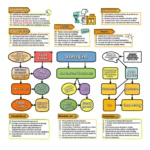
Have you ever sat through a lesson plan presentation that felt like a never-ending maze of bullet points and jargon? We’ve all been there—wondering how to make lesson planning not just effective but downright engaging for both teachers and students. Enter the 4As approach: Activity, Analysis, Abstraction, and Application—a proven framework that transforms your lesson planning PPT into a dynamic learning journey.
At Teacher Strategies™, we’ve seen firsthand how the 4As can turn classrooms from passive note-taking zones into vibrant hubs of critical thinking and real-world application. But here’s the kicker: most teachers only scratch the surface of this method. In this article, we’ll dive deep into 10 creative ways to craft your 4As lesson plan PPT, sprinkle in expert tips, and even share real stories of success that will have you rethinking your next lesson. Plus, stay tuned for our secret “Plan B” strategy if your Activity phase ever hits a snag—because every great plan needs a backup!
Key Takeaways
- Understand the 4As framework as a cycle: Activity (engage), Analysis (reflect), Abstraction (conceptualize), and Application (practice).
- Design your PPT slides to follow this logical flow for maximum student engagement and clarity.
- Incorporate multimedia and interactive tools like Mentimeter and Canva to bring your presentation to life.
- Adapt the 4As approach for any subject or grade level, from kindergarten to high school.
- Use real-world tasks in the Application phase to deepen understanding and retention.
- Prepare a Plan B to keep students engaged if your initial activity doesn’t land as expected.
Ready to revolutionize your lesson planning? Let’s get started!
Table of Contents
- ⚡️ Quick Tips and Facts About the 4As Approach in Lesson Planning
- 📚 The Evolution and Foundations of the 4As Approach in Lesson Planning
- 🔍 What Exactly Is the 4As Approach? Breaking Down Activity, Analysis, Abstraction, and Application
- 🎯 Why Use the 4As Approach? Benefits for Teachers and Learners
- 📝 Step-by-Step Guide: How to Create a 4As Lesson Plan PPT That Engages
- 💡 10 Creative Activity Ideas to Spark Student Engagement in Your 4As Lesson Plan
- 📊 Using Data and Analysis Effectively in Your 4As Lesson Plan PPT
- 🧠 Mastering Abstraction: Teaching Concepts That Stick
- 🚀 Application Phase: Turning Theory into Practice with Real-World Tasks
- 🎥 Embedding Multimedia and Interactive Elements in Your 4As PPT
- 🔄 Adapting the 4As Approach for Different Subjects and Age Groups
- 🛠️ Tools and Software Recommendations for Designing Stunning 4As Lesson Plan Presentations
- 📂 Sample 4As Lesson Plan PPT Templates and Where to Find Them
- 🤔 Common Challenges and How to Overcome Them When Using the 4As Approach
- 🔄 How to Assess Student Learning Within the 4As Framework
- 🧩 Integrating 4As with Other Lesson Planning Models for Maximum Impact
- 📈 Measuring the Success of Your 4As Lesson Plan: Tips and Metrics
- 🧑 🏫 Real Teacher Stories: Successes and Lessons Learned Using the 4As Approach
- 🎉 Conclusion: Why the 4As Approach Should Be Your Go-To Lesson Planning Strategy
- 🔗 Recommended Links for Further Exploration on 4As Lesson Planning
- ❓ Frequently Asked Questions About the 4As Approach in Lesson Planning
- 📚 Reference Links and Credible Sources on the 4As Approach
⚡️ Quick Tips and Facts About the 4As Approach in Lesson Planning
Before we dive into the nitty-gritty of slide transitions and pedagogical theory, let’s look at the “cheat sheet” for the 4As approach. If you’re looking to transform your classroom from a snooze-fest into a hub of high-octane learning, these facts are your fuel! 🚀
| Feature | Description |
|---|---|
| Origin | Rooted in David Kolb’s Experiential Learning Theory. |
| The 4 Pillars | Activity, Analysis, Abstraction, and Application. |
| Primary Goal | To move students from concrete experience to abstract thought and practical use. |
| Best For | Student-centered classrooms and Instructional Strategies that stick. |
| PPT Secret | Use one “A” per section of your presentation to maintain a logical flow. |
| Engagement Level | High! It forces students to do before they hear. |
- Fact: The 4As approach is often considered the “Gold Standard” for lesson planning in Southeast Asian educational systems, particularly in the Philippines, but it’s gaining massive traction globally.
- Tip: Don’t rush the Analysis phase. This is where the “lightbulb moments” happen! 💡
- Check: Does your PPT have a beginning, middle, and end? As noted in our featured video, every lesson needs a clear structure to be effective.
📚 The Evolution and Foundations of the 4As Approach in Lesson Planning
Why do we do what we do? At Teacher Strategies™, we believe that understanding the “why” is just as important as the “how.” The 4As approach didn’t just fall out of the sky; it’s built on the sturdy shoulders of Experiential Learning Theory.
Back in the 1980s, David Kolb proposed that learning is a cycle. He argued that we don’t just learn by reading a textbook; we learn by doing, reflecting, thinking, and testing. The 4As approach is essentially the classroom-friendly version of this cycle. It’s designed to approach students holistically, acknowledging that they aren’t empty vessels but individuals with past experiences that need to be integrated into new learning contexts.
As SlideShare contributors point out, this framework promotes active learning and critical thinking. It’s the difference between telling a student how a bicycle works and letting them fall off one a few times before explaining the physics of balance. 🚲
🔍 What Exactly Is the 4As Approach? Breaking Down Activity, Analysis, Abstraction, and Application
Let’s pull back the curtain. If you’re building a 4As lesson plan PPT, you need to know exactly what goes on each slide.
- Activity: This is your hook. You want to activate prior knowledge. Think of it as the “warm-up” before a big game. You might use a game, a puzzle, or a provocative image.
- Analysis: This is the “What happened?” phase. You ask questions that lead students to process what they just did. It’s the bridge between the fun activity and the serious learning.
- Abstraction: Here, you deliver the “meat.” You summarize the concepts, define terms, and provide the “rules.” This is where the student internalizes the core message.
- Application: The grand finale! Students take what they’ve learned and apply it to a new, real-world situation.
Wait! Have you ever wondered why some lessons feel like a disjointed mess even when you have a plan? We’ll reveal the secret to “The Golden Thread” that connects these four stages later in the guide. 🧵
🎯 Why Use the 4As Approach? Benefits for Teachers and Learners
Why should you ditch your old “lecture-then-quiz” format for the 4As? Because it works!
- For Students: It caters to different learning styles. The Activity phase helps kinesthetic learners, while Abstraction satisfies the logical thinkers.
- For Teachers: It provides a clear roadmap. No more “Uhh, what do I do next?” moments. It also helps with Classroom Management because engaged students are rarely disruptive students! ✅
According to Scribd insights, this framework enables students to make connections between course material and real-life experiences. It’s about making education relevant, not just a series of hoops to jump through.
📝 Step-by-Step Guide: How to Create a 4As Lesson Plan PPT That Engages
Ready to build? Grab your laptop and let’s get to work. Here is how we at Teacher Strategies™ recommend structuring your slides:
Step 1: The Title and Objectives Slide
Don’t just write “Math Lesson.” Use a catchy title! Ensure your objectives are SMART (Specific, Measurable, Achievable, Results-focused, and Time-bound). As mentioned in our featured video, aligning these with state standards is non-negotiable.
Step 2: The Activity Slide (The “Do”)
Use high-quality images or a short video clip.
- Pro Tip: Use a Logitech Spotlight Presentation Remote to move around the room while your students are engaged in the activity.
Step 3: The Analysis Slide (The “Think”)
List 3-5 “Essential Questions.” These should be open-ended. ❌ Avoid “Yes/No” questions!
Step 4: The Abstraction Slide (The “Learn”)
This is where you use charts, bullet points, and clear definitions. Keep it visual!
Step 5: The Application Slide (The “Use”)
Give them a task. “Now that we know X, go do Y.”
💡 10 Creative Activity Ideas to Spark Student Engagement in Your 4As Lesson Plan
Since our competitors only gave a few examples, we’re giving you ten! Variety is the spice of the classroom, after all. 🌶️
- The Mystery Box: Hide an object related to the lesson and have students guess based on clues.
- Gallery Walk: Post images around the room and have students rotate and comment.
- Four Corners: Students move to corners of the room based on their opinion on a topic.
- Think-Pair-Share: A classic for a reason!
- Digital Scavenger Hunt: Use Google Search to find specific facts in 2 minutes.
- Role Play: Act out a historical event or a scientific process.
- Picture Analysis: Show a confusing photo and ask, “What’s happening here?”
- The “What If?” Scenario: Present a problem and ask for immediate, gut-reaction solutions.
- Brainstorming Map: Use a Large Post-it Wall Pad for a collective mind map.
- Music Mood: Play a song and ask how it relates to the day’s theme.
📊 Using Data and Analysis Effectively in Your 4As Lesson Plan PPT
The Analysis phase is often the most neglected, yet it is the most critical. Check out these 9 Powerful Analysis in Lesson Plan Examples You Need to See 📚 (2025) to see how to master this stage.
In this phase, you are transitioning from a “Sage on the Stage” to a “Guide on the Side.” You want students to process and classify the information they gathered during the activity.
| Analysis Goal | Teacher Action | Student Action |
|---|---|---|
| Pattern Recognition | Ask: “What did you notice was common?” | Identify similarities. |
| Critical Thinking | Ask: “Why do you think that happened?” | Formulate hypotheses. |
| Connection | Ask: “How does this relate to [Previous Lesson]?” | Link new info to old schemas. |
👉 CHECK PRICE on:
- Teacher Planners: Amazon | Etsy | Erin Condren Official
- Classroom Timers: Amazon | Walmart
🧠 Mastering Abstraction: Teaching Concepts That Stick
Abstraction isn’t about being “abstract” or confusing; it’s about conceptualization. This is where you take the messy data from the analysis and organize it into neat, understandable mental files.
We recommend using the “Rule of Three” on your PPT slides:
- The Definition: What is it?
- The Example: What does it look like?
- The Non-Example: What is it not?
This helps with Differentiated Instruction because it provides multiple entry points for understanding. If a student doesn’t get the definition, the non-example might just save the day!
🚀 Application Phase: Turning Theory into Practice with Real-World Tasks
The Application phase is where the “rubber meets the road.” If your students can’t use the knowledge, did they really learn it?
One of our favorite stories at Teacher Strategies™ involves a math teacher who taught geometry using the 4As. For the Application phase, she didn’t give a worksheet. Instead, she had students design a “tiny house” floor plan using specific area and perimeter requirements. The students weren’t just doing math; they were architects! 🏗️
Application Ideas:
- Write a letter to a local official.
- Create a TikTok-style “explainer” video.
- Solve a real-world word problem.
- Conduct a mini-experiment.
🎥 Embedding Multimedia and Interactive Elements in Your 4As PPT
A boring PPT is a crime against education! ❌ To keep eyes glued to the screen, you need to use the tools at your disposal.
Rating Table: Presentation Software for 4As
| Software | Design (1-10) | Functionality (1-10) | Ease of Use (1-10) | Best Feature |
|---|---|---|---|---|
| Microsoft PowerPoint | 8 | 10 | 7 | Robust animations & offline reliability. |
| Canva | 10 | 8 | 9 | Stunning templates & easy collaboration. |
| Google Slides | 6 | 7 | 10 | Seamless cloud sharing & integration. |
| Prezi | 9 | 6 | 5 | Non-linear “zooming” transitions. |
👉 Shop Presentation Tools on:
- Canva: Canva Official Website
- Microsoft Office: Microsoft Official
- Wireless Presenters: Amazon | Walmart
🔄 Adapting the 4As Approach for Different Subjects and Age Groups
Is the 4As approach just for high school English? Absolutely not!
- Science: Activity (The Experiment) -> Analysis (The Results) -> Abstraction (The Scientific Law) -> Application (Predicting a new outcome).
- Math: Activity (Manipulatives) -> Analysis (Finding patterns) -> Abstraction (The Formula) -> Application (Solving complex problems).
- Kindergarten: Yes, even the little ones! Activity (Playing with blocks) -> Analysis (Sorting by color) -> Abstraction (Learning color names) -> Application (Finding colors in the room). 🎨
The key is to adjust the complexity of the Analysis and Abstraction phases to match the developmental stage of your students.
🛠️ Tools and Software Recommendations for Designing Stunning 4As Lesson Plan Presentations
To make your 4As PPT truly pop, we recommend a few “secret weapons” used by the pros at Teacher Strategies™:
- Slidesgo: Incredible free templates specifically for education.
- Mentimeter: For real-time polling during the Analysis phase.
- Pexels/Unsplash: For high-resolution, royalty-free images that don’t look like cheesy clip-art.
- Flaticon: For icons that help visualize the 4As (e.g., a lightbulb for Abstraction).
👉 CHECK PRICE on:
📂 Sample 4As Lesson Plan PPT Templates and Where to Find Them
Don’t reinvent the wheel! There are thousands of educators who have shared their 4As templates online.
- Teachers Pay Teachers (TpT): Search for “4As Lesson Plan Template.” You’ll find both free and paid versions that are classroom-tested.
- SlideShare: As we noted in our Competitive Summary, SlideShare is a goldmine for seeing how other teachers structure their 4As flow.
- Scribd: Great for finding full-length lesson plan documents that accompany the PPT.
🤔 Common Challenges and How to Overcome Them When Using the 4As Approach
It’s not all sunshine and rainbows. Here are the hurdles you might face:
- Time Management: The Activity phase can easily eat up the whole period.
- Solution: Use a timer! ⏱️ Be strict with transitions.
- Surface-Level Analysis: Students might struggle to go deep.
- Solution: Use “Socratic Questioning.” Don’t give them the answer; lead them to it.
- Abstraction Boredom: This is where you might lose them.
- Solution: Keep the Abstraction phase under 10 minutes. Use visuals, not just text.
🔄 How to Assess Student Learning Within the 4As Framework
Assessment shouldn’t just happen at the end. It should be woven throughout. This is a core part of Assessment Techniques.
- Formative (During): Observe the Activity and listen to the Analysis. Are they getting it?
- Summative (After): The Application phase is your best assessment tool. If they can apply the concept correctly, they’ve mastered the objective.
Remember the featured video advice: “Assessment measures student comprehension and success for each objective.” If your Application task doesn’t match your Objective, your data will be skewed!
🧩 Integrating 4As with Other Lesson Planning Models for Maximum Impact
Can you use the 4As with the 5Es or Bloom’s Taxonomy? You bet!
In fact, the 4As and the 5Es (Engage, Explore, Explain, Elaborate, Evaluate) are like cousins.
- Activity = Engage/Explore
- Analysis = Explain
- Abstraction = Elaborate
- Application = Evaluate (partially)
By mixing these models, you create a robust pedagogical framework that is nearly bulletproof.
📈 Measuring the Success of Your 4As Lesson Plan: Tips and Metrics
How do you know if your 4As PPT was a hit? Look for these metrics:
- Participation Rate: Did everyone join the Activity?
- Quality of Questions: Were students asking “Why?” during the Analysis?
- Application Accuracy: What percentage of the class successfully completed the final task?
- Retention: Do they remember the concept a week later? (This is the ultimate test of Abstraction).
🧑 🏫 Real Teacher Stories: Successes and Lessons Learned Using the 4As Approach
One of our team members, Sarah, once tried a 4As lesson on “Persuasive Writing.”
- The Activity: She had students try to “sell” a piece of literal trash (a crumpled soda can) to their partner.
- The Analysis: They discussed what techniques worked (humor, logic, emotional appeal).
- The Abstraction: Sarah introduced the terms Ethos, Pathos, and Logos.
- The Application: Students wrote a letter to the principal to change the cafeteria menu.
The result? The principal actually changed the menu! 🍕 That is the power of the 4As—it moves learning from the slide deck to the real world.
But wait… what happens if the Activity fails? What if the students just sit there staring at the soda can? We’ll address the “Plan B” strategy in our final thoughts.
Conclusion: Why the 4As Approach Should Be Your Go-To Lesson Planning Strategy

After unpacking the 4As approach from every angle—from its roots in Kolb’s Experiential Learning Theory to real-world classroom success stories—it’s clear why this framework is a powerhouse for lesson planning. It’s student-centered, engagement-driven, and flexible enough to fit any subject or grade level. Whether you’re crafting a PowerPoint presentation or designing hands-on activities, the 4As guide you through a logical, meaningful progression that keeps students curious, thinking critically, and applying knowledge in ways that matter.
Remember our earlier question: What happens if the Activity phase flops? Here’s the secret: always have a Plan B ready. For example, if a physical activity doesn’t spark interest, pivot to a quick video clip or a provocative question to activate prior knowledge. The beauty of the 4As is their adaptability—you’re never stuck.
Positives:
- Clear structure that supports active learning.
- Encourages critical thinking and real-world application.
- Easy to integrate multimedia and interactive elements.
- Supports differentiated instruction and diverse learners.
Negatives:
- Can be time-consuming if not carefully managed.
- Requires thoughtful question design during Analysis.
- Demands teacher flexibility and preparedness for Plan B.
Our confident recommendation? Embrace the 4As approach as your foundational lesson planning tool. It’s a proven strategy that transforms lessons from passive lectures into dynamic learning experiences. Plus, with the abundance of templates and resources available online, including those from Teachers Pay Teachers and SlideShare, you’re never starting from scratch.
Recommended Links for Further Exploration on 4As Lesson Planning
👉 Shop essential tools and resources to enhance your 4As lesson planning:
-
Logitech Spotlight Presentation Remote:
Amazon | Walmart | Logitech Official Website -
Large Post-it Wall Pad (for brainstorming):
Amazon | Office Depot -
Teacher Planners:
Amazon | Etsy | Erin Condren Official -
Presentation Software:
- Microsoft PowerPoint: Microsoft Official
- Canva: Canva Official Website
- Google Slides: Google Slides
-
Books on Effective Lesson Planning and Experiential Learning:
FAQ: Your Burning Questions About the 4As Approach Answered

How can teachers use the 4As approach to align their instruction with learning objectives and assess student progress towards achieving those objectives?
The 4As framework naturally aligns with clear learning objectives by structuring lessons around engagement (Activity), conceptual understanding (Analysis and Abstraction), and practical use (Application). Teachers should start by defining SMART objectives and then design activities that activate prior knowledge relevant to those goals. Assessment is embedded in the Application phase, where students demonstrate mastery through real-world tasks. Additionally, formative assessment occurs during Analysis, as teachers gauge understanding through questioning and discussion. This continuous alignment ensures that instruction and assessment are tightly connected, promoting meaningful learning.
What are some strategies for incorporating the 4As approach into existing lesson plans and curricula to enhance teaching effectiveness?
Start by mapping your current lesson plan onto the 4As stages. Identify where you already have activities that activate prior knowledge or opportunities for application. Then, enrich the Analysis and Abstraction phases by adding critical thinking questions and concept summaries. Use multimedia tools like Mentimeter or Google Slides to make these phases interactive. Gradually integrate the 4As into your curriculum by piloting one lesson at a time, reflecting on student engagement and learning outcomes, and adjusting accordingly. This incremental approach minimizes disruption and maximizes impact.
How can the 4As approach be used to differentiate instruction and meet the diverse needs of students in the classroom?
The 4As framework is inherently flexible, allowing teachers to tailor each phase to diverse learners. For example, during Activity, you can provide varied entry points—visual, auditory, or kinesthetic tasks—to engage different learning styles. In Analysis, scaffold questions to challenge advanced learners while supporting those who need more guidance. The Abstraction phase can include multiple representations of concepts (text, diagrams, videos), and Application tasks can be tiered by complexity. This multi-modal approach ensures that all students access the content meaningfully.
What are the key components of the 4As approach in lesson planning and how can they be applied to improve student engagement?
The key components are:
- Activity: Engage students by activating prior knowledge or sparking curiosity.
- Analysis: Facilitate deep thinking through questioning and discussion.
- Abstraction: Help students internalize concepts with clear summaries and examples.
- Application: Provide opportunities to use knowledge in practical contexts.
Applying these components sequentially creates a learning journey that keeps students actively involved, encourages critical thinking, and connects classroom learning to real life, which naturally boosts engagement.
What are some examples of activities for each stage of the 4As lesson plan?
- Activity: Brainstorming, role-play, mystery box, gallery walk.
- Analysis: Socratic questioning, data classification, group discussion.
- Abstraction: Concept mapping, summarizing rules, comparing examples and non-examples.
- Application: Project-based tasks, real-world problem solving, creative presentations.
How does the 4As approach support differentiated instruction strategies?
By structuring lessons into distinct phases, the 4As allow for varied instructional methods tailored to student needs. Teachers can differentiate content, process, and product within each phase, ensuring that learners receive appropriate challenges and supports. This aligns with best practices in Differentiated Instruction, making the 4As a versatile tool for inclusive classrooms.
Reference Links and Credible Sources on the 4As Approach
- SlideShare: 4As (Activity, Analysis, Abstraction, Application) Lesson Plan | PPTX
- Scribd: 4A’s of Lesson Planning PowerPoint
- Kolb’s Experiential Learning Theory Overview – Simply Psychology
- Teachers Pay Teachers: 4As Lesson Plan Templates
- Microsoft PowerPoint Official Site
- Canva Presentation Templates
- Mentimeter Interactive Presentation Tool
- Erin Condren Teacher Planners
These sources provide a solid foundation for understanding and implementing the 4As approach effectively in your classroom.