Support our educational content for free when you buy through links on our site. Learn more
21 Classroom Lessons That Make Learning Click ✨

The best classroom lessons give students a clear learning goal, plenty of chances to think and practice, and feedback they can use right away. You don’t need a room full of gadgets or an elaborate project; you need a purposeful plan that helps learners do the thinking.
We’ve seen a simple vocabulary match turn a restless class into a room full of careful readers—especially when students had to explain why a word fit, not just race to the answer. That’s the secret behind engaging lessons: the activity is fun, but the learning is doing the real work.
Key Takeaways
- Start with a clear learning objective and decide what evidence will show students have met it.
- Choose the teaching method to fit the goal: explain and model when needed, then make room for practice, inquiry, collaboration, or hands-on learning.
- Check understanding throughout the lesson with questions, quick responses, student work, or exit tickets.
- Plan for different learners with useful supports, accessible materials, and meaningful extensions.
- Use classroom activities and free teaching resources thoughtfully. Preview them, adapt them to your students, and keep the learning goal in focus.
Table of Contents
- ⚡ Quick Tips and Facts About Classroom Lessons
- 📚 What Are Classroom Lessons? A Brief History of Teaching and Lesson Planning
- 🎯 Why Effective Classroom Lessons Matter
- 🧭 Types of Classroom Lessons and Teaching Methods
- Direct Instruction and Explicit Teaching
- Project-Based and Inquiry-Based Learning
- Collaborative, Experiential, and Play-Based Lessons
- Blended, Online, and Flipped Classroom Lessons
- 📝 How to Plan a Classroom Lesson Step by Step
- Set Learning Objectives and Success Criteria
- Choose Activities, Materials, and Lesson Timing
- Plan Checks for Understanding and Assessment
- Prepare Differentiation and Extension Options
- 🎨 21 Engaging Classroom Lesson Ideas by Subject and Grade
- Elementary Classroom Lesson Ideas
- Middle School Classroom Lesson Ideas
- High School Classroom Lesson Ideas
- Cross-Curricular and Seasonal Lesson Ideas
- 🔎 Finding and Adapting Classroom Lesson Plans and Teaching Resources
- 🧑 🏫 Classroom Lessons Created by Teachers for Teachers and Families
- 🧩 Differentiating Lessons for Diverse Learners
- English Language Learners and Multilingual Students
- Students With Disabilities and Individual Learning Needs
- Gifted Learners and Students Ready for a Challenge
- 📊 Classroom Assessment, Feedback, and Measuring Learning
- 💻 Technology, AI, and Digital Tools for Lesson Planning
- 🧠 Classroom Management and Smooth Lesson Transitions
- 🌱 Culturally Responsive, Inclusive, and Trauma-Informed Lessons
- 🏠 Classroom Lessons for Parents, Homeschoolers, and At-Home Learning
- 🔗 Quick Links to Trusted Lesson Plan Resources
- 🎁 Free Classroom Lessons, Printables, and Teaching Materials
- ✨ Classroom Lesson Spotlight: Ideas Worth Trying This Month
- 🏷️ Trusted Education Brands and Classroom Resource Platforms
- Conclusion
- Recommended Links
- FAQ
- Reference Links
⚡ Quick Tips and Facts About Classroom Lessons
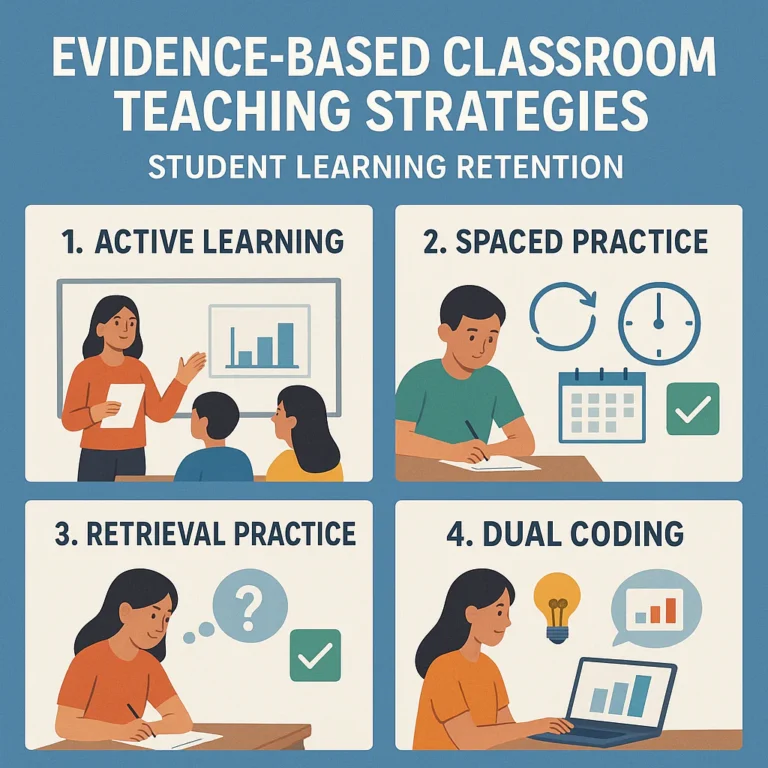
A strong classroom lesson is more than a tidy slide deck and a heroic stack of worksheets. It gives students a clear learning goal, meaningful practice, timely feedback, and a chance to show what they understand.
For a practical starting point, see our guide to lesson planning. The best plan is not the longest one; it’s the one that helps you make good decisions when students surprise you—which, as every teacher knows, they will.
Quick classroom lesson facts
| Lesson element | What it does | A useful teacher check |
|---|---|---|
| Learning objective | Identifies what students should know or be able to do | Can students explain the goal in their own words? |
| Modeling | Makes a process or strategy visible | Have I shown what successful work looks and sounds like? |
| Active practice | Gives learners a chance to use new knowledge | Are students doing the thinking, not just watching me do it? |
| Assessment | Reveals what students understand and what needs reteaching | What evidence will I collect before the lesson ends? |
| Differentiation | Adjusts access, support, or challenge | Can students reach the same essential goal through different routes? |
| Reflection | Helps students notice progress and next steps | Can learners identify one thing they can now do? |
Five quick moves that strengthen almost any lesson
- Say the learning goal plainly. Replace “We’re doing fractions” with “We’ll compare fractions using visual models.”
- Keep teacher talk purposeful. Explain, model, then hand the thinking back to students.
- Check understanding early. A quick response from every learner is more informative than a few confident volunteers.
- Build in choice without losing the goal. Students might choose a topic, tool, partner, or way to present learning.
- End with evidence. An exit ticket, a solved example, or a one-sentence explanation can guide tomorrow’s plan.
Teacher Strategies™ tip: When a lesson feels flat, check the task before blaming student attention. If learners are mostly waiting, copying, or guessing what to do, redesign the activity so they have a meaningful job.
📚 What Are Classroom Lessons? A Brief History of Teaching and Lesson Planning

A classroom lesson is a planned learning experience designed to help students make progress toward a specific objective. It usually includes some combination of explanation, modeling, discussion, practice, feedback, and assessment.
That definition leaves room for plenty of variety. A lesson could be a teacher modeling how to annotate a poem, a small group investigating local water quality, or a class using number lines to compare fractions. What makes these experiences lessons is not the furniture arrangement or whether a worksheet appears. It’s the intentional connection between what students are meant to learn and what they actually do.
From lecture-first teaching to active learning
Classrooms have always reflected their time, resources, and beliefs about learning. Direct explanation remains useful, especially when students need a clear introduction or demonstration. But modern lesson planning draws on a broader mix of strategies: collaboration, inquiry, hands-on practice, digital tools, and responsive assessment.
The National Education Association’s overview of student-centered learning describes approaches that give learners an active role in the learning process. That does not mean teachers step aside and hope for the best. It means teachers design the conditions, teach the skills, and make thinking visible.
What an effective lesson plan includes
A lesson plan can be brief or detailed, but these questions deserve a place in it:
- What should students learn?
- What do they already know?
- How will I teach or model the new learning?
- What will students do to practice it?
- How will I know who understands?
- What will I change if the evidence says they need more support or challenge?
A plan is a map, not a set of handcuffs. Keep the destination clear; adjust the route when student thinking gives you a reason to.
🎯 Why Effective Classroom Lessons Matter
Well-designed classroom lessons help students connect new ideas to what they already know, practice skills with support, and receive feedback while there’s still time to use it. For teachers, a clear lesson structure also makes it easier to spot confusion before it turns into a whole unit’s worth of confusion.
The What Works Clearinghouse reviews evidence on educational practices and programs. Its practice guides offer research-informed recommendations, though no single strategy works identically for every class. Student age, subject, prior knowledge, and classroom context all matter.
Benefits for students
- Clarity: Learners understand the purpose and what success looks like.
- Participation: Different response formats make it easier for more students to contribute.
- Practice: Students apply new learning rather than only hearing about it.
- Feedback: Errors become useful information, not mysterious evidence of failure.
- Confidence: Clear steps and achievable challenges help students build independence.
Benefits for teachers
- Better instructional decisions: Checks for understanding show when to continue, pause, or reteach.
- More purposeful preparation: Planning connects activities to outcomes instead of collecting “fun stuff” like a very enthusiastic squirrel.
- More responsive support: Teachers can identify who needs a scaffold, a fresh explanation, or an extension.
- Smother classroom routines: Students spend more time learning when they know how to begin, transition, and ask for help.
A thoughtfully planned lesson doesn’t guarantee a perfectly quiet room or instant mastery. It does give you better evidence and more options when the lesson takes an unexpected turn.
🧭 Types of Classroom Lessons and Teaching Methods
There is no single best teaching method for every objective. Choose the approach that matches the learning goal, the students’ current knowledge, and the kind of thinking you want them to practice.
| Approach | Works especially well when students need to… | Watch out for… |
|---|---|---|
| Direct instruction | Learn a clear explanation, procedure, or model | Teacher talk crowding out student practice |
| Inquiry-based learning | Ask questions, investigate, and interpret evidence | Open-ended tasks without enough structure |
| Collaborative learning | Explain ideas, solve problems, or create together | Unequal participation or unclear roles |
| Experiential learning | Apply concepts through hands-on tasks or simulations | Activity overshadowing the learning objective |
| Blended learning | Use digital and face-to-face learning purposefully | Technology adding friction instead of value |
| Play-based learning | Explore, communicate, and build foundational skills | Play lacking intentional teaching or observation |
Direct Instruction and Explicit Teaching
Direct instruction is helpful when students need a clear explanation, a worked example, or a demonstration of a skill. A useful sequence is: explain the goal, model the process, guide students through practice, then let them try independently.
For example, when teaching long division, a teacher might model one problem while narrating each step, solve a second problem with student input, then assign a short set of independent practice problems. The key is to check whether students understand the reasoning, not just whether they can imitate the layout.
Try this: After modeling, ask students to explain why a step works. “What did we do?” checks recall. “Why did we do it?” checks a deeper layer of understanding.
Project-Based and Inquiry-Based Learning
Inquiry lessons start with questions, problems, or evidence students can examine. Project-based learning gives students time to investigate and create something that demonstrates their learning.
A project needn’t be a sprawling, glitter-powered production. A short, focused investigation can work beautifully:
- Pose a compelling, answerable question.
- Help students identify what they need to find out.
- Provide resources, boundaries, and research support.
- Ask learners to use evidence to make a product or explanation.
- Close with reflection, feedback, or presentation.
For guidance on cultivating reasoning, browse our critical thinking strategies. Inquiry needs structure: students benefit from clear criteria, relevant resources, and check-ins along the way.
Collaborative, Experiential, and Play-Based Lessons
Group work is most useful when students have a shared goal and individual accountability. Assign roles—such as facilitator, recorder, materials manager, or evidence checker—and ask every student to contribute a response or reflection.
The Education Endowment Foundation’s teaching and learning toolkit summarizes evidence on collaborative learning approaches and stresses the importance of structuring group work. The practical lesson: putting students in groups is a seating arrangement, not a strategy. The task and accountability make it collaborative learning.
Hands-on and play-based activities can also make abstract ideas concrete. In a science lesson, students might build simple models to explain how shadows change. In mathematics, they might use counters or number lines before moving to symbolic notation.
Blended, Online, and Flipped Classroom Lessons
A blended lesson combines in-person teaching with digital learning. A flipped approach typically moves some initial content exposure outside class so classroom time can focus on practice, discussion, or feedback.
Digital tools are useful when they improve access, interaction, or feedback. They are less useful when students spend more time troubleshooting logins than learning.
Before choosing a platform, ask:
- Does it work with the devices and internet access students actually have?
- Is the activity accessible to students using assistive technology?
- Does it protect student information?
- What will students learn through the tool that they could not learn as well another way?
For practical digital lesson materials, PBS LearningMedia and Smithsonian Learning Lab offer searchable educational resources. Preview materials before class and check alignment with your curriculum.
📝 How to Plan a Classroom Lesson Step by Step
A lesson plan works best when you begin with learning, not with a shiny activity you hope to squeeze into the schedule. Start with the outcome. Then build a route that gives students enough explanation, practice, and feedback to get there.
Set Learning Objectives and Success Criteria
A learning objective describes what students should learn. Success criteria explain what successful work will demonstrate.
Step 1: Write an observable objective
Choose a verb that describes something students can show: compare, explain, identify, solve, justify, or create.
- Too broad: “Understand ecosystems.”
- More observable: “Describe how energy moves through a food chain using a labeled diagram.”
Step 2: Decide what evidence counts
Ask: What would I expect to see, hear, or read if students reached the objective? That answer becomes the basis for your assessment and criteria.
Step 3: Share the goal in student-friendly language
Students do not need to memorize formal standards language. They do need to understand the job in front of them.
The National Board for Professional Teaching Standards emphasizes accomplished teaching grounded in knowledge of students and thoughtful instructional practice. In everyday planning, that means matching the objective to students’ starting points, not just to a pacing calendar.
Choose Activities, Materials, and Lesson Timing
Plan backward from the evidence you want students to produce:
- Choose the objective.
- Choose a check for understanding.
- Select the teaching approach and practice task.
- Gather only the materials needed.
- Estimate time, then add a little breathing room.
- Prepare a backup if technology, materials, or timing misbehave.
A 45-minute lesson might include a short warm-up, focused modeling, guided practice, partner or individual work, and a brief exit check. Those are flexible components, not a mandatory recipe. A discussion-heavy seminar, lab investigation, or reading workshop may need a different rhythm.
Teacher-tested timing tip: Plan for transitions as real lesson events. If students need to move, collect equipment, or find partners, count that time honestly. The clock has no appreciation for our optimistic fiction.
Plan Checks for Understanding and Assessment
Assessment does not have to mean a quiz. It can be a quick explanation, a response card, a student demonstration, a draft, or a targeted question.
Use a mix of checks:
- Before learning: Find out what students already know or believe.
- During learning: Listen to explanations, review a sample, or use all-student response methods.
- At the end: Ask students to demonstrate the objective independently.
Our assessment techniques collection offers ideas for gathering usable evidence. The important word is usable: a check is valuable when it helps you decide what to do next.
Prepare Differentiation and Extension Options
Plan more than one path to participation without watering down the learning goal. Students may need different levels of vocabulary support, processing time, reading access, modeling, or challenge.
Consider preparing:
- A visual example or vocabulary preview.
- Sentence frames for explaining a claim.
- A reduced set of practice items that preserves the core skill.
- A challenge question requiring transfer or justification.
- Multiple ways to respond, such as speaking, writing, drawing, or using assistive technology.
Our differentiated instruction resources explore ways to respond to learner variability. Differentiation is not a separate lesson for every student; it is thoughtful flexibility built into a shared learning experience.
🎨 21 Engaging Classroom Lesson Ideas by Subject and Grade
The most engaging lessons are not necessarily the loudest or most elaborate. They give students something worthwhile to think about, make, explain, test, or improve.
The ideas below are adaptable. Adjust materials, reading level, and independence to match your students and curriculum.
Elementary Classroom Lesson Ideas
- Vocabulary action match: Pair target words with definitions, pictures, and gestures. Add a matching relay only after students know the words.
- Number-line human model: Students physically position themselves to compare numbers, fractions, or decimals.
- Read-aloud detective work: Pause to predict, infer, and cite details from the text.
- Shadow-clock investigation: Observe how a shadow changes and record the pattern.
- Build-a-story sequence: Arrange picture cards, then retell the story using transition words.
- Classroom measurement hunt: Find objects longer or shorter than a chosen benchmark and explain how they were measured.
- Miniature community map: Combine geography, writing, and math by designing a map with a legend and simple scale.
- Sound-and-syllable sort: Sort words by sound, syllable count, or spelling pattern, then explain the grouping rule.
Middle School Classroom Lesson Ideas
- Evidence-based mystery: Analyze short sources or clues and defend a conclusion with evidence.
- Budget challenge: Compare costs, estimate totals, and explain trade-offs using realistic constraints.
- Ecosystem role-play: Model how changing one population affects a food web.
- News-source comparison: Compare how multiple outlets frame the same event, checking claims against reliable evidence.
- Geometry design brief: Create a structure or pattern that meets specified shape and measurement criteria.
- Vocabulary in motion: Students match terms, definitions, and examples, then use the words in a short explanation.
- Debate with evidence cards: Assign positions or perspectives and require students to cite evidence, not volume.
High School Classroom Lesson Ideas
- Primary-source inquiry: Analyze a historical document and distinguish the author’s claim, audience, and context.
- Data-story challenge: Use a public data set to create a visual and explain what it does—and does not—show.
- Scientific claim review: Evaluate a claim using evidence, reasoning, and source quality.
- Microteaching: Students teach a short concept to peers, then revise based on feedback.
- Design a fair experiment: Identify variables, controls, and limitations before conducting an investigation.
- Community-problem proposal: Research a local issue and present a feasible, evidence-informed response.
Cross-Curricular and Seasonal Lesson Ideas
Cross-curricular lessons can help students see how knowledge connects, but the subject goals still need to be explicit. A “design a town” project, for example, can integrate mapping, persuasive writing, budgeting, and civics—provided you identify what students should learn in each area.
For more examples, Teacher Created Resources’ lesson catalog organizes activities across grade bands and subjects. Its listed ideas range from “Math Detectives Activity: Alien Invaders!” to “Ravishing Rings (Multiplication with a Snack).” The catalog showcases variety in format, including simulations, games, puzzles, and practical problem-solving activities. It provides titles and subject or grade tags, so teachers should check each resource for the actual instructions and fit.
For a different kind of classroom spark, HMH’s free teaching resources include lesson ideas, activities, downloadable materials, and videos. HMH describes these resources as supporting learning in online, in-person, and hybrid classrooms. Its useful reminder? Thoughtful preparation needn’t be complicated.
🔎 Finding and Adapting Classroom Lesson Plans and Teaching Resources
A search result is a starting point, not a stamp of approval. Before using a lesson, check its objective, grade-level fit, reading load, materials, accessibility, and assessment.
How to evaluate a lesson resource
| Check | Ask yourself |
|---|---|
| Learning alignment | Does it teach something my students need to learn? |
| Age and grade fit | Is the content developmentally appropriate? |
| Accuracy | Are the facts and examples reliable and current? |
| Accessibility | Can students with different language, sensory, mobility, or processing needs participate? |
| Preparation | Are the materials and timing realistic for my setting? |
| Assessment | Does the lesson show whether students met the objective? |
| Adaptability | Can I adjust the task without losing its central purpose? |
Useful places to search
- PBS LearningMedia for classroom media and lesson resources.
- Smithsonian Learning Lab for collections and learning activities.
- NASA STEM Engagement for space and STEM resources.
- Library of Congress teacher resources for primary sources and historical inquiry.
- Teacher Created Resources lessons for a broad catalog of activities.
- HMH free learning resources for free K–12 ideas and materials.
- Share My Lesson for educator-shared materials. A website’s availability can vary; if a page presents a security check rather than lesson content, try again later or use its site search.
Adapt, don’t just download
A resource may be well-made and still need a little classroom tailoring. Before teaching it:
- Confirm the objective fits your curriculum.
- Preview every video, reading, image, and link.
- Remove distractions that do not support learning.
- Add scaffolds or extensions as needed.
- Identify one clear way to check understanding.
If a resource is fun but disconnected from what you’re teaching, save it for another day. A lively activity is not automatically a useful lesson.
🧑 🏫 Classroom Lessons Created by Teachers for Teachers and Families
Teacher-created lessons often have a practical advantage: they’re built by people who know that “gather a few supplies” can mean anything from “one whiteboard marker” to “the craft cupboard has become a paper avalanche.”
Teacher-created resources also vary in scope. Some offer a complete lesson with objectives, materials, directions, and assessment. Others are activity catalogs or inspiration boards. Read the description carefully so you know what you’re getting.
Teacher-created resources worth exploring
- Teacher Created Resources: A broad catalog with activities across subjects and grade bands. Its examples range from early-grade booklets to middle-grade simulations and math problem-solving tasks.
- Share My Lesson: A resource-sharing platform for educators. If you can access a specific item, review its author notes, materials, and suggested age range before adapting it.
- HMH Shaped: Offers free teaching resources, including activities, lesson ideas, downloadable materials, and videos. HMH notes that its materials can support different instructional settings.
For parents and homeschoolers
Families can use classroom lesson ideas at home by keeping the learning goal small and the conversation open. Ask children to explain a strategy, estimate before measuring, or connect a book to something they observed outdoors.
A home activity does not need to reproduce a full school day. Short, focused practice—and time to talk about what happened—often beats a marathon worksheet session. For more ideas, explore the HMH resource hub and PBS LearningMedia.
🧩 Differentiating Lessons for Diverse Learners
Differentiation means adjusting instruction so students can access important learning and make progress. It can involve content, process, materials, pacing, grouping, or ways to demonstrate learning.
Start with the common objective. Then consider what barriers might prevent students from reaching it. Our differentiated instruction category covers practical strategies for planning those supports.
English Language Learners and Multilingual Students
Make academic language visible without reducing the intellectual challenge:
- Preview essential vocabulary with images, examples, and gestures.
- Model how to use a target word in a sentence.
- Provide discussion frames, such as “I agree with ___ because…”
- Use partner rehearsal before whole-class sharing.
- Allow students to draw, point, annotate, or use home-language resources when appropriate.
The U.S. Department of Education’s English Learner Toolkit offers guidance for supporting English learners. Be careful not to confuse language proficiency with subject knowledge: a student may understand the science concept while still developing the English vocabulary to explain it.
Students With Disabilities and Individual Learning Needs
Use students’ individualized plans and collaborate with specialists and families. Common access supports include clear directions, predictable routines, visual schedules, flexible response formats, chunked tasks, and accessible digital materials.
The Center for Applied Special Technology (CAST) provides the Universal Design for Learning Guidelines, which encourage multiple means of engagement, representation, and action and expression. In plain language: offer more than one way into the learning, more than one way to interact with ideas, and more than one suitable way to show understanding.
Gifted Learners and Students Ready for a Challenge
More work is not the same as more challenge. Instead of assigning extra repetitions, offer deeper thinking:
- Ask students to compare methods and justify which is most efficient.
- Provide an open-ended problem with multiple possible solutions.
- Invite independent research with a focused question.
- Ask learners to test the limits or exceptions of a rule.
- Create opportunities to teach, critique, or revise—not merely finish early.
The strongest extension develops the same central idea at greater depth or complexity.
📊 Classroom Assessment, Feedback, and Measuring Learning
Assessment is the information you collect to understand learning. It can be formal or informal, individual or collaborative, written, oral, visual, or practical.
Match the assessment to the objective
| If students should… | Ask them to… |
|---|---|
| Explain | Give a short explanation, oral or written |
| Compare | Sort examples and justify the categories |
| Solve | Work through a fresh problem and show reasoning |
| Create | Produce an artifact that meets clear criteria |
| Evaluate | Judge a claim, method, or source using evidence |
| Demonstrate a procedure | Perform the steps while explaining key choices |
Give feedback students can use
Helpful feedback is specific and connected to the learning goal. Instead of “Good job,” try: “Your explanation uses two pieces of evidence; now connect each one to your claim.”
Feedback should also leave room for action. If students receive comments after the work is finished and never revisit it, the learning opportunity is limited. Build in time to revise, retry, or apply the feedback.
For additional strategies, see our assessment techniques and the Institute of Education Sciences’ What Works Clearinghouse.
💻 Technology, AI, and Digital Tools for Lesson Planning
Technology can help teachers create materials, support accessibility, offer practice, and gather responses. It can also introduce privacy risks, inaccurate information, or unnecessary complexity. Choose the tool only after you know what learning need it serves.
A sensible technology check
Before using a digital tool, consider:
- Accuracy: Is the content correct and appropriate?
- Privacy: What student information does the platform collect?
- Accessibility: Can students use it with assistive technology?
- Equity: Do all students have reliable access to the needed device or connection?
- Purpose: Does the tool improve learning, feedback, or access?
The U.S. Department of Education’s Office of Educational Technology provides guidance on educational technology. For AI-generated lesson ideas, treat outputs as drafts: check accuracy, bias, age suitability, copyright concerns, and alignment with your learning objectives.
A practical rule: Use technology when it removes a barrier or improves the learning task. If a paper response card works just as well, you have permission to keep it beautifully low-tech.
🧠 Classroom Management and Smooth Lesson Transitions
Strong classroom routines make it easier for students to participate and for teachers to focus on instruction. They should be taught, practiced, and reinforced—not just announced once while everyone is already moving.
For strategies on procedures, expectations, and positive learning environments, visit our classroom management resources.
Teach transitions explicitly
A transition routine might include:
- Give a short, clear signal.
- State what students should do next.
- Name the expected voice level or movement.
- Allow enough time for the transition.
- Notice students following the routine and reteach when needed.
One classroom vocabulary lesson featured in the first YouTube video uses a countdown to help young students move to a meeting spot. The teacher reminds students of group-time expectations—“Chris-cross, hands in lap, voices off, eyes on me”—before introducing vocabulary matching and a picture relay.
The most useful detail is not the exact phrase or countdown. It’s the sequence: teach the routine, make the next step clear, and give students time to do the task accurately. During the matching activity, the teacher encourages learners to take their time and choose the correct word rather than simply race. A timely reminder that accuracy matters more than speed can improve both classroom climate and learning.
Keep routines supportive, not punitive
Predictable routines should help students know what to do, not make every child move, speak, or learn in exactly the same way. Offer accessible alternatives and explain expectations positively. If a procedure is not working, ask whether it needs to be retaught or redesigned.
🌱 Culturally Responsive, Inclusive, and Trauma-Informed Lessons
An inclusive lesson respects students’ identities, builds on their knowledge, and gives them meaningful opportunities to participate. It does not assume every learner has the same experiences, resources, family structure, language background, or comfort with public performance.
Practical ways to make lessons more inclusive
- Use examples and texts that represent varied identities and perspectives.
- Avoid treating one student as the spokesperson for an entire community.
- Offer private or small-group ways to contribute alongside whole-class discussion.
- Explain unfamiliar cultural references rather than assuming everyone knows them.
- Create predictable routines and give advance notice of major changes.
- Invite students to connect learning to their own experiences without requiring personal disclosure.
The Learning Policy Institute shares research and analysis on teaching and learning, including approaches to supportive school environments. For trauma-informed work, focus on safety, predictability, respectful relationships, and student dignity; avoid asking learners to disclose personal experiences as a condition of participating.
🏠 Classroom Lessons for Parents, Homeschoolers, and At-Home Learning
Classroom lesson ideas can work beautifully at home when you scale them to the time, materials, and attention available. A kitchen-table science investigation or a short reading conversation can be enough.
A simple at-home lesson structure
- Choose one small goal. For example, “We’ll compare two characters’ choices.”
- Connect to what the learner knows. Ask a question before explaining.
- Model one example. Show your thinking aloud.
- Practice together. Give prompts, not all the answers.
- Let the learner try independently.
- Ask what they noticed or found difficult.
Use everyday materials when possible: measuring cups, library books, household objects, a notebook, or a walk outside. Adapt the task to the learner’s age and interests, and keep sessions short enough that everyone still likes one another at the end.
For ready-made ideas, browse HMH’s free classroom resources, PBS LearningMedia, and the Library of Congress teacher resources.
🔗 Quick Links to Trusted Lesson Plan Resources
| Resource | Useful for | What to check |
|---|---|---|
| PBS LearningMedia | Multimedia and classroom learning materials | Grade fit, media access, and lesson alignment |
| Smithsonian Learning Lab | Museum collections, inquiry, and object-based learning | Source context and activity instructions |
| NASA STEM Engagement | Science, engineering, and space topics | Grade level and required materials |
| Library of Congress | Primary sources and history lessons | Source complexity and historical context |
| Teacher Created Resources | Cross-subject activity ideas | Full directions, materials, and assessment |
| HMH Shaped | Free activities, lesson ideas, and downloadable materials | Curriculum fit and student access |
| CAST UDL Guidelines | Planning for learner variability and access | Which supports students actually need |
| What Works Clearinghouse | Evidence reviews and practice guides | How closely the evidence matches your setting |
A resource library can save preparation time, but your professional judgment supplies the final ingredient: knowing your students.
🎁 Free Classroom Lessons, Printables, and Teaching Materials
Free materials can stretch a classroom budget and spark useful ideas. Still, “free” does not automatically mean accurate, accessible, or aligned. Preview everything before students see it.
Where to find free teaching materials
- HMH Shaped: HMH’s free learning resources feature K–12 lesson ideas, classroom activities, videos, and downloadable materials. HMH frames them as ways to support grade-level learning and student growth in different classroom formats.
- PBS LearningMedia: Search for learning materials by subject and grade.
- Smithsonian Learning Lab: Explore collections and build learning experiences around museum objects.
- NASA STEM Engagement: Find classroom resources linked to science and engineering.
- Library of Congress: Use historical documents, images, and teacher materials.
- Teacher Strategies™: Explore our categories for differentiated instruction, classroom management, assessment techniques, critical thinking, and collaborative learning.
HMH also highlights a free 2025–2026 classroom activities and holidays calendar. Check that a calendar or seasonal activity suits your students and curriculum; a holiday is not a learning objective by itself.
A quick quality check for free printables
✅ Does the material teach or practice a clearly identified skill?
✅ Are directions understandable without a lengthy explanation?
✅ Is the content accurate and age-appropriate?
✅ Can students with different access needs participate?
❌ Is the worksheet mostly busywork or repetitive coloring?
❌ Does the resource rely on assumptions or examples that may exclude students?
❌ Is the activity impossible to assess or connect to the current unit?
✨ Classroom Lesson Spotlight: Ideas Worth Trying This Month
The 10-minute “explain your thinking” lesson
Choose one problem, claim, or short text related to your current unit. Model a response that includes a conclusion and evidence. Then have students answer a similar prompt independently or with a partner.
Why it works: It makes student reasoning visible without requiring a major project or a printer that has chosen this precise moment to develop a paper jam.
Try it in:
- Reading: Support an inference with a passage detail.
- Science: Explain a prediction using a scientific idea.
- Mathematics: Compare two solution methods.
- Social studies: Connect a source detail to a historical claim.
The vocabulary-and-movement lesson
Borrow the structure—not necessarily the exact materials—from the featured video: introduce target words, pair them with definitions or images, add a gesture or action, and then ask students to use the words in context.
Keep the learning goal in view. A relay can add energy, but students should still have time to read carefully and choose accurately. The teacher in the video’s reminder—“Take your time please to make sure that you have the right word”—is a useful counterweight to any activity where speed threatens to become the star.
The “one question, many routes” lesson
Ask a question that can be answered through a diagram, short explanation, model, oral response. Students choose a suitable route, then use shared success criteria to check their work.
This is a simple way to build choice while keeping expectations clear. Want students to explain how a character changes? They might write a paragraph, create a before-and-after diagram, or record a short oral explanation—each one still needs evidence from the text.
🏷️ Trusted Education Brands and Classroom Resource Platforms
These organizations provide classroom materials, professional guidance, or educational resources. Their materials can be helpful, but teachers should still check alignment, accessibility, and fit for their students.
| Organization | Good starting point | Strength to explore |
|---|---|---|
| Teacher Created Resources | Lesson catalog | Broad subject and grade-band activity ideas |
| HMH | Free learning resources | Classroom activities and K–12 teaching materials |
| PBS LearningMedia | Searchable classroom resources | Educational media and subject content |
| Smithsonian Learning Lab | Collections and learning experiences | Primary objects and inquiry |
| NASA STEM Engagement | STEM classroom resources | Science and engineering connections |
| CAST | UDL Guidelines | Inclusive lesson-planning principles |
Our recommendation: Start with your learning objective, then search for a resource that serves it. Starting with an attractive activity and trying to invent a reason for it afterward is a familiar teacher trap—and a very avoidable one.