Support our educational content for free when you buy through links on our site. Learn more
11 Powerful Positive Reinforcement Strategies for the Classroom 🎉 (2025)


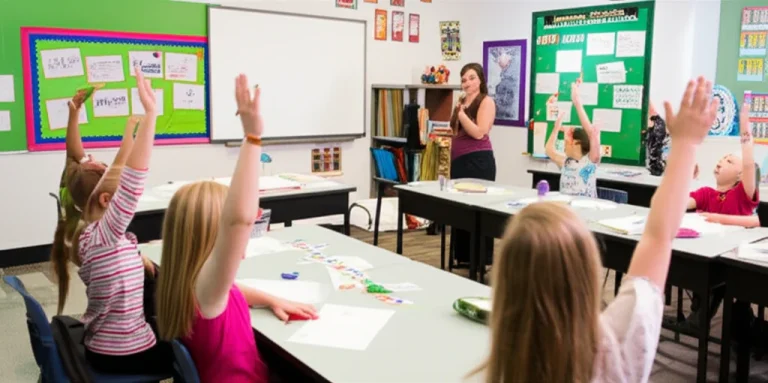
Imagine walking into your classroom and feeling the buzz of excitement—not because of a surprise test, but because your students are genuinely motivated, engaged, and eager to learn. Sounds like a dream, right? Well, it’s not just wishful thinking! Positive reinforcement in the classroom is a proven strategy that transforms behavior, boosts confidence, and creates a thriving learning environment.
Did you know that students who receive consistent positive reinforcement show up to 30% more on-task behavior? That’s a game-changer for any teacher juggling lesson plans, classroom management, and the occasional glitter explosion. In this article, we’ll reveal 11 diverse types of positive reinforcement you can start using tomorrow, share real-world examples that have worked wonders for our Teacher Strategies™ team, and help you avoid common pitfalls that can derail your efforts. Plus, we’ll guide you on how to fade external rewards to nurture lifelong intrinsic motivation. Ready to turn your classroom into a powerhouse of positivity? Let’s dive in!
Key Takeaways
- Positive reinforcement is a science-backed method to encourage desired behaviors by adding rewarding stimuli immediately after the behavior occurs.
- There are 11+ types of reinforcers, from social praise and tangible rewards to token economies and self-reinforcement, that cater to diverse student needs.
- Specific, sincere, and timely praise is far more effective than vague or inconsistent feedback.
- Avoid common pitfalls like over-relying on tangible rewards or ignoring intrinsic motivation to ensure lasting behavior change.
- Collaborate with families and colleagues to create a consistent, supportive environment for students.
- The ultimate goal is to build intrinsic motivation so students continue positive behaviors long after external rewards fade.
Ready to transform your classroom culture? Keep reading to unlock the full toolkit and expert tips from Teacher Strategies™!
Table of Contents
- ⚡️ Quick Tips and Facts: Your Reinforcement Roadmap
- 🕰️ The Roots of Reward: A Brief History of Behavioral Science in Education
- 🌈 The Spectrum of Success: 11+ Types of Positive Reinforcement for Every Learner
- Social Reinforcers: The Power of Praise and Connection
- Activity Reinforcers: Earning Fun and Engagement
- Tangible Reinforcers: Small Tokens, Big Impact
- Privilege Reinforcers: Unlocking Desired Opportunities
- Sensory Reinforcers: Engaging the Senses for Success
- Natural Reinforcers: The Joy of Learning Itself
- Group Contingencies: Fostering Teamwork and Shared Success
- Token Economies: Building a System of Earned Rewards
- Behavior-Specific Praise: The Art of Meaningful Feedback
- Non-Verbal Reinforcers: Communicating Approval Beyond Words
- Self-Reinforcement: Empowering Students to Celebrate Their Own Growth
- 💡 Real-World Wins: Practical Positive Reinforcement Examples in Action
- 🚧 Navigating the Niggles: Common Pitfalls and How to Avoid Them
- 🛠️ Your Positive Reinforcement Toolkit: Strategies for Seamless Implementation
- Setting Clear Expectations: The Foundation of Success
- Observing and Identifying Desired Behaviors: Catch Them Being Good!
- Choosing the Right Reinforcer: What Motivates Your Students?
- Delivering Reinforcement Effectively: Timing, Tone, and Authenticity
- Tracking Progress and Adjusting: Data-Driven Decisions
- Involving Students in the Process: Ownership and Empowerment
- 🤝 Partnering for Progress: Engaging Parents and Colleagues
- 🚀 Beyond the Bell: Fostering Long-Term Positive Behavior and Intrinsic Motivation
- 🎯 Conclusion: The Art and Science of Building a Thriving Classroom
- 🔗 Recommended Links: Dive Deeper into Positive Classroom Strategies
- ❓ FAQ: Your Burning Questions About Positive Reinforcement Answered
- 📚 Reference Links: Our Sources for Expert Insights
Welcome, fellow educators, to the Teacher Strategies™ blog! We’re your friendly neighborhood team of teachers and educators, and today we’re diving headfirst into a topic that’s the absolute bedrock of a happy, humming, and well-managed classroom: positive reinforcement. Forget the old-school ruler-on-the-knuckles approach; we’re here to talk about the science and art of celebrating the good stuff. We’ve all been there, knee-deep in lesson plans and glitter, wondering how to encourage that one student to stay on task or inspire a whole class to transition quietly. The secret sauce, as we’ve learned through years in the trenches, often comes down to the powerful, brain-boosting magic of positive reinforcement. It’s one of the most effective Teacher Strategies in our toolkit.
So, grab your favorite flair pen, and let’s get into it. We’re about to unpack everything you need to know to become a positive reinforcement pro, transforming your classroom into a thriving hub of motivation and learning!
⚡️ Quick Tips and Facts: Your Reinforcement Roadmap
Pressed for time? Here’s the cheat sheet to get you started on your journey to becoming a master of Classroom Management.
- 🧠 It’s Science! Positive reinforcement is a core principle of operant conditioning, a theory developed by the famous psychologist B.F. Skinner. He discovered that behaviors followed by a desirable consequence are more likely to be repeated.
- ✅ Be Specific & Sincere: Instead of a generic “Good job,” try, “Wow, Leo, I love how you shared the blue crayon with Maya without even being asked!” Specific praise shows you’re paying attention and tells students exactly what they did right.
- ⏰ Timing is Everything: For reinforcement to be effective, it needs to happen immediately after the desired behavior. The brain needs to connect the action with the reward. Waiting until the end of the day to praise a morning behavior just won’t have the same impact.
- ❌ It’s Not a Bribe: A bribe is offered before a behavior to stop a negative one (e.g., “If you stop shouting, you can have a cookie”). Reinforcement is a reward given after a desired behavior is demonstrated, encouraging its repetition.
- 📈 Boosts More Than Behavior: Consistent positive reinforcement doesn’t just improve behavior; it boosts student confidence, increases academic engagement, and fosters a safer, more supportive classroom community. In fact, one study found that when teachers used positive reinforcement, students’ focus on tasks increased by up to 30%.
- 🧑🤝🧑 Peer Power is Real: Don’t underestimate the power of social reinforcement! Public praise or having classmates give a round of applause can be incredibly motivating for many students.
🕰️ The Roots of Reward: A Brief History of Behavioral Science in Education
Before we jump into the “how,” let’s take a quick trip in the wayback machine to understand the “why.” The idea of using rewards to shape behavior isn’t new, but it was psychologist B.F. Skinner who really put it on the map in the mid-20th century. Through his work on operant conditioning, Skinner showed that actions followed by reinforcement (a reward) are strengthened and more likely to happen again.
Think of his famous experiments with rats in a “Skinner box.” When a rat pressed a lever and got a food pellet (a positive reinforcer), it quickly learned to press the lever again and again. Now, we know our students are infinitely more complex and wonderful than lab rats, but the basic principle holds true. When students experience positive outcomes for their actions, they are neurologically wired to repeat them. It’s not about manipulation; it’s about understanding human motivation.
What Exactly Is Positive Reinforcement? Unpacking the Core Concept
Let’s clear up any confusion. At its heart, positive reinforcement is simply the act of adding a desirable stimulus to increase the likelihood of a behavior happening again. It’s a fundamental part of our Instructional Strategies.
Here’s a simple breakdown:
- ✅ Positive Reinforcement IS: Giving a student extra free time for finishing their work quietly. (You added a desirable activity).
- ❌ Positive Reinforcement IS NOT: Telling a student they don’t have to do their homework because they participated well in class. (This is actually negative reinforcement—removing an undesirable task).
- ❌ Positive Reinforcement IS NOT: Giving a student a sticker to stop them from having a tantrum. (That’s a bribe, used to stop a negative behavior in the moment).
The goal is to catch students being good and rewarding that specific action, making them want to do it again, not out of fear, but because it leads to a positive outcome.
Beyond the Buzzword: Why Positive Reinforcement is a Classroom Game-Changer
So, why are we at Teacher Strategies™ so passionate about this? Because we’ve seen the transformation firsthand. Shifting from a consequence-focused mindset to a reinforcement-focused one can revolutionize your classroom culture.
Here’s why it’s so important:
- It Builds Confidence and Self-Esteem: When children are praised for their efforts and positive actions, they develop a stronger self-image and believe in their own abilities. This encourages them to take on new challenges.
- It Increases Engagement and Motivation: Students who receive positive reinforcement are more eager to participate in classroom activities. A simple “I love how you’re so focused on your reading!” can motivate a child to engage more deeply.
- It Fosters a Positive and Safe Environment: A classroom where students know their teacher is looking for the good in what they do feels safe and supportive. This strengthens the teacher-student relationship, which is the foundation of all learning.
- It Improves Teacher Well-being: Constantly being the “behavior police” is exhausting and stressful. Focusing on the positive makes the classroom a more pleasant place for you, too, reducing burnout and increasing your own motivation.
- It’s More Effective Than Punishment: Research consistently shows that positive strategies are more effective for improving overall behavior than punishment, especially for students with chronic difficulties. Punishment might stop a behavior temporarily, but reinforcement teaches what to do instead.
🌈 The Spectrum of Success: 11+ Types of Positive Reinforcement for Every Learner
The beauty of positive reinforcement is that it’s not one-size-fits-all. What works for one student might not work for another. The key is to have a diverse menu of options.
Here are over 11 types of reinforcers you can use:
1. Social Reinforcers: The Power of Praise and Connection
These are often the most powerful and easiest to implement. They involve positive feedback from you and their peers.
- Examples: A high-five, a thumbs-up, a smile, a round of applause from the class, or specific, verbal praise. One of our teachers, Ms. Albright, makes a point to say, “I see a future leader in the way you organized your group!” It’s amazing how students light up.
2. Activity Reinforcers: Earning Fun and Engagement
These involve allowing students to participate in a preferred activity.
- Examples: Earning extra time on the computer with educational games like Kodable, getting to draw or color, having free time to read a favorite book, or being the one to play music during work time.
3. Tangible Reinforcers: Small Tokens, Big Impact
These are physical, concrete rewards. While they should be used thoughtfully, they can be very effective, especially for younger students.
- Examples: Stickers, stamps, pencils, erasers, or a small prize from a prize box. Think fun items from brands like Crayola or a sheet of cool stickers from Melissa & Doug.
4. Privilege Reinforcers: Unlocking Desired Opportunities
These rewards grant students special roles or permissions that they value.
- Examples: Being the line leader for the day, getting to be the teacher’s assistant, choosing their seat, or picking the game for recess.
5. Sensory Reinforcers: Engaging the Senses for Success
For some students, especially those with sensory needs, these can be incredibly powerful.
- Examples: Getting to spend five minutes in a quiet corner with a weighted blanket, listening to calming music on headphones, or playing with kinetic sand.
6. Natural Reinforcers: The Joy of Learning Itself
These occur as a direct and natural result of the behavior.
- Examples: A student studies hard for a test and earns a good grade. A student masters a difficult math problem and feels a surge of pride and accomplishment. Our ultimate goal is to help students connect with these intrinsic rewards.
7. Group Contingencies: Fostering Teamwork and Shared Success
This is when the whole class (or a small group) earns a reward based on their collective behavior.
- Examples: The classic “marbles in a jar.” When the class fills the jar by demonstrating a target behavior (like quiet transitions), they earn a group reward like a pizza party or extra recess. This builds a sense of community and positive peer influence.
8. Token Economies: Building a System of Earned Rewards
This is a more structured system where students earn “tokens” (like points, tickets, or “class cash”) for specific behaviors. They can then exchange these tokens for larger rewards from a “menu.”
- Examples: A student earns 5 tickets for turning in all their homework for the week, which they can “spend” on 15 minutes of free computer time.
9. Behavior-Specific Praise: The Art of Meaningful Feedback
We mentioned this before, but it’s so important it deserves its own category. Vague praise is nice, but specific praise is a powerful teaching tool.
- Examples: Instead of “You were good,” try “I was so impressed with how you raised your hand and waited patiently to be called on, even when you were excited to share your answer.”
10. Non-Verbal Reinforcers: Communicating Approval Beyond Words
Sometimes, a simple gesture is all it takes.
- Examples: A smile, a nod, a thumbs-up, jazz hands, or a quiet pat on the back can reinforce behavior without interrupting the flow of the lesson.
11. Self-Reinforcement: Empowering Students to Celebrate Their Own Growth
The ultimate goal! This involves teaching students to recognize and reward their own positive behaviors.
- Examples: A student finishes a challenging chapter and allows themselves a 5-minute break to doodle. Or they complete a project and silently give themselves a mental “pat on the back” for their hard work.
💡 Real-World Wins: Practical Positive Reinforcement Examples in Action
Okay, theory is great, but what does this look like on a chaotic Tuesday afternoon? Here are some tried-and-true systems from our team’s classrooms.
Crafting a “Classroom Contribution Chart”: Beyond the Job List
Instead of a simple “job chart,” reframe it as a “Contribution Chart.” The privilege of having a special contribution is earned through positive behavior. Roles like “Librarian,” “Tech Support,” or “Door Holder” become coveted positions that students work towards.
The “Caught Being Kind” Jar: Spreading Positivity
This is a favorite in our elementary classrooms. We have a special jar, and whenever we or another student “catches” someone being kind, helpful, or inclusive, that person’s name goes on a slip of paper into the jar. At the end of the week, we draw a few names for a special privilege or a shout-out. It shifts the focus from tattling to celebrating positive social interactions.
“Brain Break” Passes: Acknowledging Focus and Effort
For students who struggle with staying on task, we use “Brain Break” passes. When we see them working diligently for a set period, we’ll quietly place a pass on their desk. This gives them permission to take a 3-minute break to stretch, get a drink, or do a quick calming activity before returning to their work. It reinforces their effort and teaches self-regulation.
“Student Spotlight” Moments: Celebrating Individual Achievements
As seen in the featured video, specific, public praise can be incredibly affirming. We dedicate a few minutes during our morning meeting to a “Student Spotlight.” We’ll highlight a student and share a specific positive behavior we noticed. For example, “Yesterday, I saw that David got his mouth and got himself back under control when he was feeling silly, and I’m really proud of him for that.” This not only reinforces David’s behavior but also models self-control for the entire class.
“Mystery Motivators”: Keeping Engagement High
This is a fantastic tool for whole-class goals. Write a reward (e.g., “Pajama Day,” “15 minutes extra recess”) on a piece of paper and seal it in an envelope. Post the envelope on the board. Each time the class meets a specific behavioral goal, they earn a letter to spell out “MYSTERY.” Once the word is spelled, they get the reward inside. The suspense is a huge motivator!
🚧 Navigating the Niggles: Common Pitfalls and How to Avoid Them
Positive reinforcement is powerful, but it’s not foolproof. We’ve all made mistakes along the way. Here are some common traps and how to sidestep them.
❌ Over-Reliance on Tangibles: The “Bribe” Trap
The Pitfall: Using stickers and prizes for everything. This can lead to students expecting a reward for every single positive action, which can diminish their natural, or intrinsic, motivation.
The Fix: ✅ Vary your reinforcers! Make social praise your go-to. Save tangible rewards for bigger achievements or for students who need that extra concrete motivation. The goal is to move students from extrinsic (external) to intrinsic (internal) motivation.
❌ Inconsistent Application: The “Sometimes It Works” Dilemma
The Pitfall: Praising a behavior one day but ignoring it the next. Inconsistency confuses students and weakens the connection between their actions and the consequences.
The Fix: ✅ Be consistent! Especially when you’re first establishing a new behavior, it’s crucial to reinforce it every time it occurs. Once the behavior is established, you can move to an intermittent schedule of reinforcement, which is actually more powerful for maintaining behavior long-term.
❌ Lack of Specificity: The Vague Praise Problem
The Pitfall: Relying on a constant stream of “Good job!” and “Nice work!” While well-intentioned, this can become meaningless background noise.
The Fix: ✅ Get specific. As we’ve said, link your praise directly to the behavior. “I love how you used three different colors in your drawing to show emotion” is far more effective than “Nice picture.”
❌ Ignoring Intrinsic Motivation: The “Why Bother?” Question
The Pitfall: Focusing so much on external rewards that you forget to nurture a student’s inner drive.
The Fix: ✅ Connect behaviors to natural consequences and feelings. Talk about how it feels good to help a friend or the pride that comes from solving a tough problem. The goal of extrinsic rewards should always be to build a bridge to intrinsic motivation.
❌ Equity and Fairness: Ensuring All Students Feel Valued
The Pitfall: Only reinforcing the students who are already well-behaved, while students who are struggling don’t get opportunities to earn rewards.
The Fix: ✅ Focus on effort and improvement. Set individual goals. For a student who can only stay on task for two minutes, reinforcing them for hitting three minutes is a huge win! This is a key part of Differentiated Instruction. Ensure every student has a fair chance to be recognized for their personal growth.
🛠️ Your Positive Reinforcement Toolkit: Strategies for Seamless Implementation
Ready to roll this out? Here’s a step-by-step guide to making it work.
Setting Clear Expectations: The Foundation of Success
You can’t reinforce a behavior if students don’t know what it is!
- Step 1: Start by defining the specific, observable behaviors you want to see. Instead of “Be respectful,” define what that looks like: “Keep your hands to yourself,” “Use a quiet voice,” “Listen when others are speaking.”
- Step 2: Model these behaviors. Show them, don’t just tell them.
- Step 3: Involve students in creating the classroom rules and expectations. This gives them ownership.
Observing and Identifying Desired Behaviors: Catch Them Being Good!
Make it your mission to actively look for the positive. It’s easy to spot the student who is off-task, but it takes a conscious effort to scan the room and find the students who are doing exactly what you asked.
Choosing the Right Reinforcer: What Motivates Your Students?
The most common mistake is assuming you know what a student finds motivating.
- Use a reinforcement survey: Ask students what they’d like to work for! You might be surprised by the answers.
- Observe: What do students choose to do during free time? That’s a huge clue.
- Offer a menu of options: Let students choose their own reward from a pre-approved list. This increases buy-in.
Delivering Reinforcement Effectively: Timing, Tone, and Authenticity
How you give the reward matters.
- Be immediate: As we’ve stressed, deliver the reinforcement as soon as possible after the behavior.
- Be genuine: Kids have an amazing radar for insincerity. Your praise and rewards should come from an authentic place.
- Be mindful of the student: Some students love public praise, while others might prefer a quiet thumbs-up or a sticky note on their desk.
Tracking Progress and Adjusting: Data-Driven Decisions
Is your system working? The only way to know is to track it. Simple tally marks on a clipboard can show you if a target behavior is increasing. This is a form of Assessment Techniques. If you don’t see progress, it might be time to change the reinforcer or re-evaluate your expectations.
Involving Students in the Process: Ownership and Empowerment
Talk to your students about positive reinforcement! Explain that you’re creating a system to help everyone do their best work and be their best selves. When they understand the “why,” they are more likely to be active, willing participants.
🤝 Partnering for Progress: Engaging Parents and Colleagues
Your classroom is not an island. Creating a positive behavioral culture is a team sport.
Communicating with Families: A United Front
Parents are your number one ally.
- Share your system: At the beginning of the year, explain your positive reinforcement approach to parents.
- Send positive notes home: Don’t just call when there’s a problem. A quick note or email saying, “Sophie was an amazing helper today!” can make a family’s day and reinforces the behavior at home. Apps like ClassDojo can be great for this.
- Ask for their input: Parents know what motivates their child best. Ask them for ideas for rewards.
Collaborating with Support Staff: A Team Approach
Ensure that paraprofessionals, aides, and specialist teachers are all on the same page with your reinforcement system. Consistency across all environments is key. A little Instructional Coaching can go a long way in aligning the team.
🚀 Beyond the Bell: Fostering Long-Term Positive Behavior and Intrinsic Motivation
Here’s the big question we always get: “Will I have to give my students stickers for the rest of their lives?” The answer is a resounding NO!
The ultimate goal of positive reinforcement is to make itself obsolete. It’s a scaffolding tool. You use it to build up a desired behavior, and then you gradually fade it away so the student’s own sense of accomplishment and pride can take over.
How to Fade Reinforcement:
- Move from Continuous to Intermittent: Once a student has mastered a behavior, you stop rewarding it every single time. You might praise them every third or fourth time they raise their hand. This unpredictability actually makes the behavior stronger.
- Shift from Tangible to Social: Gradually replace prize box trips with high-fives and specific praise.
- Focus on Natural Consequences: Continuously point out the intrinsic rewards. “Doesn’t it feel amazing to have your work finished so you can relax and read?” or “Look how happy you made Sarah when you included her in your game.”
By doing this, you’re not just managing behavior for today; you’re building character, self-efficacy, and a genuine love of learning that will last a lifetime.
🎯 Conclusion: The Art and Science of Building a Thriving Classroom
After unpacking the ins and outs of positive reinforcement, it’s clear that this strategy is much more than just handing out stickers or saying “Good job!” It’s a powerful, research-backed tool that, when used thoughtfully, can transform your classroom into a vibrant, motivated, and supportive learning community. From the roots in Skinner’s operant conditioning to the nuanced ways we tailor reinforcers for every student, positive reinforcement is both an art and a science.
We started by teasing the question: How do you keep students motivated without turning your classroom into a reward factory? The answer lies in balance, specificity, and authenticity. Use a variety of reinforcers, focus on meaningful, behavior-specific praise, and always aim to build intrinsic motivation alongside external rewards.
Remember, the goal is not to bribe or coerce but to empower students to recognize and celebrate their own growth. With consistent application, clear expectations, and collaboration with families and colleagues, positive reinforcement becomes a cornerstone of effective classroom management and instructional success.
So, whether you’re a newbie teacher or a seasoned pro, embracing positive reinforcement will help you create a classroom where students not only behave but thrive.
🔗 Recommended Links: Dive Deeper into Positive Classroom Strategies
Ready to stock your positive reinforcement toolkit? Here are some of our favorite resources and products that make implementation easier and more fun:
-
Crayola Stickers & Supplies:
Amazon | Crayola Official Website -
Melissa & Doug Stickers:
Amazon | Melissa & Doug Official Website -
ClassDojo (Parent Communication App):
ClassDojo Official Website -
Books on Positive Reinforcement and Classroom Management:
❓ FAQ: Your Burning Questions About Positive Reinforcement Answered
How can teachers balance positive reinforcement with other instructional strategies to promote academic success?
Balancing positive reinforcement with other instructional strategies means integrating it seamlessly into your teaching rather than using it as a standalone tool. For example, combine positive reinforcement with differentiated instruction by tailoring reinforcers to individual student needs and abilities. Use reinforcement to encourage participation in formative assessments or group work, linking behavior to academic goals. This synergy ensures that motivation supports learning, not just behavior.
What are the differences between positive reinforcement and other behavior management strategies?
Positive reinforcement adds a desirable stimulus to increase behavior, whereas punishment adds or removes stimuli to decrease behavior. Negative reinforcement removes an unpleasant stimulus to increase behavior but is often confused with punishment. Unlike punishment, positive reinforcement builds skills and motivation rather than suppressing behavior temporarily. It’s proactive and supportive rather than reactive and punitive.
Can positive reinforcement be used to support students with special needs?
Absolutely! Positive reinforcement is a cornerstone of Applied Behavior Analysis (ABA), widely used to support students with autism and other special needs. It helps teach new skills, reduce challenging behaviors, and promote independence. The key is to identify highly motivating reinforcers for each student, which might include sensory rewards or preferred activities, and to apply reinforcement consistently.
How does positive reinforcement impact student motivation and engagement?
Positive reinforcement boosts motivation by linking effort and behavior to rewarding outcomes, which increases the likelihood students will repeat those behaviors. It makes learning feel rewarding and fun, increasing engagement. When students feel recognized and valued, they participate more actively and take ownership of their learning.
What are some examples of positive reinforcement techniques for behavior management?
Some effective techniques include:
- Behavior-specific praise: “I love how you waited your turn patiently.”
- Token economies: Earning points or tokens for good behavior to exchange for rewards.
- Privilege reinforcement: Being line leader or classroom helper.
- Mystery motivators: Surprise rewards for meeting class goals.
- Non-verbal cues: Thumbs-up or smiles to acknowledge positive behavior.
How can teachers implement positive reinforcement strategies effectively?
Effective implementation involves:
- Setting clear, observable behavior expectations.
- Observing and catching students doing the right thing.
- Choosing reinforcers that truly motivate your students.
- Delivering reinforcement immediately and authentically.
- Tracking progress and adjusting as needed.
- Involving students and families in the process.
What are the benefits of using positive reinforcement in the classroom?
Benefits include:
- Increased desirable behaviors and reduced disruptions.
- Higher student self-esteem and confidence.
- Improved academic engagement and achievement.
- Stronger teacher-student relationships.
- A more positive, supportive classroom climate.
How does positive reinforcement impact student motivation and behavior?
By rewarding desired behaviors, positive reinforcement strengthens those behaviors neurologically and psychologically. It shifts students’ focus from avoiding punishment to seeking success, fostering a growth mindset and intrinsic motivation over time.
What is the difference between positive reinforcement and punishment in education?
Positive reinforcement encourages desired behavior by adding a pleasant consequence, while punishment aims to reduce unwanted behavior by applying an unpleasant consequence or removing a pleasant one. Reinforcement builds skills and motivation; punishment often suppresses behavior temporarily without teaching alternatives.
How can positive reinforcement improve classroom engagement and participation?
When students know their efforts will be recognized and rewarded, they are more likely to participate actively. Reinforcement increases attention, persistence, and willingness to take risks, leading to richer classroom discussions and collaboration.
What role does positive reinforcement play in building a positive classroom environment?
It creates a culture of encouragement and respect where students feel safe, valued, and motivated. This positive climate reduces anxiety and behavioral issues, allowing learning to flourish.
📚 Reference Links: Our Sources for Expert Insights
- Operant Conditioning – Simply Psychology
- Applied Behavior Analysis – Association for Behavior Analysis International
- Positive Reinforcement | Special Connections – University of Kansas
- ClassDojo Official Website
- Crayola Official Website
- Melissa & Doug Official Website
- Insights to Behavior
- MyBrightWheel Preschool Daily Sheets
We hope this comprehensive guide empowers you to harness the full potential of positive reinforcement in your classroom. Remember, it’s not just about rewards—it’s about building a thriving learning community where every student feels seen, supported, and inspired to grow. Happy teaching! 🎉