Support our educational content for free when you buy through links on our site. Learn more
12 Game-Changing Strategies for Incorporating UDL in 2026 🎯

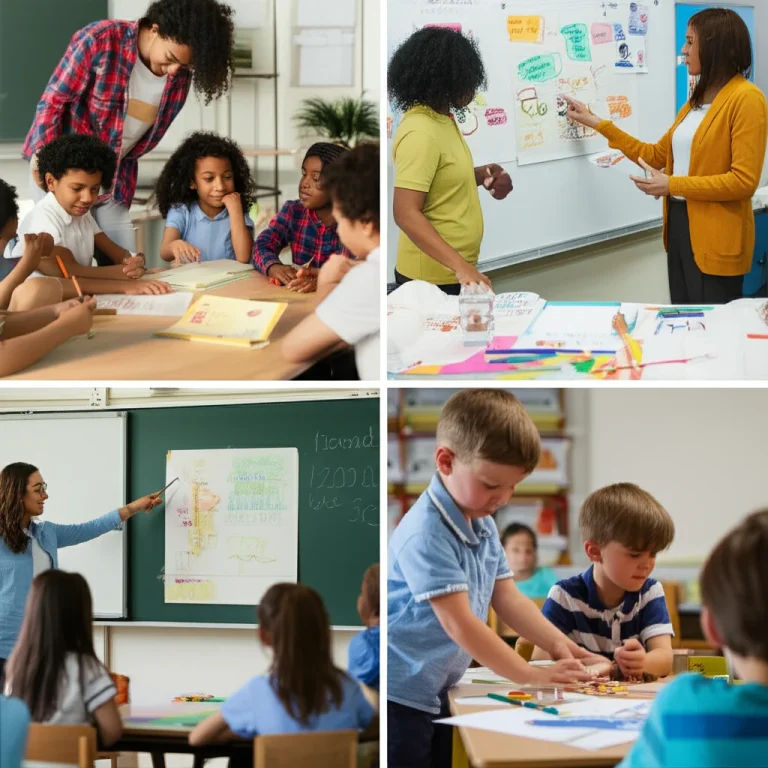
Imagine walking into a classroom where every student, regardless of their learning style or ability, feels empowered to engage, understand, and express their knowledge in ways that suit them best. Sounds like a dream, right? Well, with Universal Design for Learning (UDL), this dream is becoming a reality for educators worldwide. But how do you actually bring UDL from theory into your daily lesson plans without feeling overwhelmed?
In this article, we’ll unpack 12 practical, research-backed strategies that make incorporating UDL straightforward, effective, and even fun. From leveraging cutting-edge tech tools like Microsoft Immersive Reader and Google Read&Write to crafting flexible assessments and choice boards, we’ve got you covered. Plus, we’ll share real classroom stories and expert tips to help you avoid common pitfalls and measure your success. Ready to transform your teaching and unlock every student’s potential? Let’s dive in!
Key Takeaways
- UDL is about flexibility: Offering multiple ways to engage, represent, and express learning benefits all students.
- Start small, build gradually: Implement one or two UDL strategies at a time for sustainable change.
- Technology is your ally: Tools like Microsoft Immersive Reader and Kahoot! enhance accessibility and engagement.
- Collaboration fuels success: Involve colleagues, families, and students to create a truly inclusive environment.
- Measure and reflect: Use formative assessments and student feedback to refine your UDL practices continuously.
Ready to revolutionize your classroom? Keep reading to discover how these strategies can make learning accessible and exciting for everyone!
Table of Contents
- ⚡️ Quick Tips and Facts About Universal Design for Learning (UDL)
- 📚 Understanding the Foundations: What Is Universal Design for Learning?
- 🕰️ The Evolution of UDL: From Concept to Classroom Essential
- 🎯 Core Principles of UDL: Multiple Means to Engage, Represent, and Express
- 🔍 Introducing CAST UDL Guidelines 3.0: The Gold Standard for Inclusive Education
- 🛠️ 12 Practical Strategies for Incorporating UDL in Your Classroom
- 💡 Leveraging Technology: Top EdTech Tools That Support UDL Implementation
- 📊 Measuring Success: How to Assess the Impact of UDL on Student Learning
- 🤝 Collaborating for Inclusion: Engaging Stakeholders in UDL Practices
- 🌍 UDL Beyond K-12: Applications in Higher Education and Adult Learning
- 🧩 Overcoming Challenges: Common Pitfalls and How to Avoid Them When Implementing UDL
- 📖 Real Classroom Stories: Successes and Lessons Learned from UDL Adoption
- 🎓 Professional Development: Training and Resources for Mastering UDL Strategies
- 📝 Conclusion: Embracing Universal Design for Learning to Transform Education
- 🔗 Recommended Links for Deepening Your UDL Knowledge
- ❓ Frequently Asked Questions About Universal Design for Learning
- 📚 Reference Links and Further Reading
⚡️ Quick Tips and Facts About Universal Design for Learning (UDL)
Welcome to the world of Universal Design for Learning (UDL)! If you’re wondering how to make your classroom a thriving, inclusive space where every student can shine, you’re in the right place. Here’s a quick cheat sheet from the Teacher Strategies™ team to get you started:
- ✅ UDL is all about flexibility: It provides multiple ways for students to engage, understand, and express their learning.
- ✅ Three core principles: Multiple means of engagement, representation, and action/expression.
- ✅ It’s science-backed: Rooted in neuroscience, UDL taps into how the brain learns best.
- ✅ Not just for special ed: UDL benefits all learners, including those with diverse backgrounds, learning styles, and abilities.
- ✅ Small changes, big impact: Even adding one UDL strategy can boost student motivation and achievement.
- ✅ Tech-friendly: Tools like Microsoft Immersive Reader, Google Read&Write, and Bookshare support UDL implementation.
- ✅ Collaboration is key: Success depends on teamwork among teachers, administrators, and families.
Fun fact: The latest CAST UDL Guidelines 3.0 were released in July 2024 and are a living resource, continuously updated based on new research and educator feedback. (Check them out at CAST UDL Guidelines)
Curious how to weave these principles seamlessly into your daily lessons? Stick around—we’re diving deep!
For more on effective teaching strategies that complement UDL, visit our Instructional Strategies page.
📚 Understanding the Foundations: What Is Universal Design for Learning?
Before we get tactical, let’s unpack what UDL really means. Imagine designing a classroom that’s more like a Swiss Army knife—versatile, adaptable, and ready for any learning challenge. That’s UDL in a nutshell.
Universal Design for Learning is an educational framework developed by CAST (Center for Applied Special Technology) that aims to make learning accessible and effective for all students by proactively removing barriers. Instead of retrofitting accommodations, UDL builds flexibility into the curriculum from the start.
The Three Brain Networks UDL Targets
- Affective Network (The Why): Focuses on motivation and engagement. How do we spark interest and persistence?
- Recognition Network (The What): How learners perceive and comprehend information.
- Strategic Network (The How): How learners plan and express what they know.
By addressing these, UDL ensures that lessons are not one-size-fits-all but tailored to diverse needs.
Why Should You Care?
- It promotes equity by anticipating learner variability.
- It encourages learner agency—students become active participants, not passive recipients.
- It reduces the need for individual accommodations, saving time and resources.
If you want to dig deeper into the neuroscience behind UDL, check out CAST’s research hub: CAST Research.
🕰️ The Evolution of UDL: From Concept to Classroom Essential
UDL didn’t just pop up overnight. It’s the product of decades of research and innovation.
- 1990s: The concept emerged from Universal Design in architecture, which focuses on creating spaces usable by everyone. CAST adapted this to education, emphasizing flexible learning environments.
- Early 2000s: The first UDL Guidelines were published, providing educators with practical strategies.
- 2010s: UDL gained traction in K-12 and higher education, supported by federal policies like the Every Student Succeeds Act (ESSA).
- 2020s: The latest UDL Guidelines 3.0 emphasize addressing systemic biases and expanding learner agency.
Our team at Teacher Strategies™ has witnessed this evolution firsthand. We remember when UDL was a niche concept; now it’s a cornerstone of inclusive teaching.
Want a timeline infographic? CAST offers a great visual history here: CAST UDL Timeline.
🎯 Core Principles of UDL: Multiple Means to Engage, Represent, and Express
Let’s break down the three pillars of UDL that guide every strategy you’ll implement:
| Principle | What It Means | Classroom Examples |
|---|---|---|
| Multiple Means of Engagement | Stimulate interest and motivation | Choice boards, gamified learning, collaborative projects |
| Multiple Means of Representation | Present content in varied formats | Videos, infographics, audio books, hands-on models |
| Multiple Means of Action & Expression | Allow diverse ways to demonstrate learning | Essays, presentations, art projects, digital portfolios |
Engagement: The Spark
Engagement is the engine of learning. When students are motivated, they dive in with gusto. Strategies here include:
- Offering choices in assignments
- Creating a safe, inclusive environment
- Providing timely, actionable feedback
Representation: The Lens
Not everyone learns best by reading a textbook. UDL encourages presenting information through multiple channels:
- Visual aids
- Audio recordings
- Interactive simulations
Action & Expression: The Voice
Students should be able to show what they know in ways that fit their strengths:
- Oral presentations
- Written work
- Creative projects like videos or podcasts
For more on how to diversify your instructional methods, visit our Differentiated Instruction resources.
🔍 Introducing CAST UDL Guidelines 3.0: The Gold Standard for Inclusive Education
The CAST UDL Guidelines 3.0, released in July 2024, are the latest, most comprehensive iteration of this dynamic framework. They reflect cutting-edge research and practitioner insights, emphasizing equity, inclusion, and learner agency.
What’s New in Version 3.0?
- Addressing systemic exclusion and bias: The guidelines now explicitly focus on dismantling barriers rooted in societal inequities.
- Expanded focus on learner agency: Encouraging learners to be purposeful, resourceful, and strategic.
- Updated checkpoints and examples: More practical, actionable suggestions for educators.
- Living document: Continually updated based on feedback and new research.
How to Use the Guidelines
The guidelines are organized around the three UDL principles and include:
- Guidelines: Broad goals for inclusive learning.
- Checkpoints: Specific strategies to achieve those goals.
- Examples: Real-world applications.
For educators ready to dive in, CAST offers free webinars and professional development: CAST UDL Guidelines 3.0 Webinar Series.
Our Take at Teacher Strategies™
We’ve found that using the 3.0 Guidelines as a living toolkit encourages ongoing reflection and growth. It’s not about perfection but progress.
🛠️ 12 Practical Strategies for Incorporating UDL in Your Classroom
Ready to roll up your sleeves? Here are 12 actionable strategies to embed UDL principles into your teaching, curated from our team’s classroom-tested experience and backed by research from Drexel University and UIC.
| # | Strategy | UDL Principle | Why It Works |
|---|---|---|---|
| 1 | Use Choice Boards | Engagement | Empowers students to select tasks that interest them. |
| 2 | Provide Text-to-Speech Tools | Representation | Supports diverse reading abilities and preferences. |
| 3 | Incorporate Multimedia | Representation | Addresses different learning styles with videos, podcasts, visuals. |
| 4 | Offer Flexible Deadlines | Engagement | Reduces stress, accommodates diverse pacing. |
| 5 | Use Graphic Organizers | Representation | Helps students organize and process information visually. |
| 6 | Allow Multiple Assessment Formats | Action & Expression | Lets students demonstrate mastery in ways that suit them. |
| 7 | Create Collaborative Learning Opportunities | Engagement | Builds community and motivation. |
| 8 | Scaffold Instructions | Representation | Breaks down complex tasks into manageable steps. |
| 9 | Provide Exemplars and Rubrics | Action & Expression | Clarifies expectations and supports self-regulation. |
| 10 | Use Interactive Technology | Engagement & Representation | Engages learners actively and diversely. |
| 11 | Build in Reflection Time | Engagement | Encourages metacognition and learner agency. |
| 12 | Design Accessible Materials | All Principles | Ensures all students can access content without barriers. |
Step-by-Step Example: Implementing Choice Boards
- Identify key learning objectives for the unit.
- Design a variety of tasks aligned with those objectives, varying by format and difficulty.
- Present the choice board to students, explaining expectations.
- Allow students to select tasks that match their interests and strengths.
- Provide feedback focused on effort and mastery.
This simple strategy alone can transform student motivation and ownership.
For more detailed lesson plans and templates, explore our Instructional Strategies section.
💡 Leveraging Technology: Top EdTech Tools That Support UDL Implementation
Technology is a UDL educator’s best friend! The right tools can make your lessons more accessible, engaging, and flexible.
| Tool Name | UDL Principle Supported | Key Features | Our Experience & Notes |
|---|---|---|---|
| Microsoft Immersive Reader | Representation & Engagement | Text-to-speech, adjustable font size, background colors | Easy to use; great for struggling readers and ELL students. |
| Google Read&Write | Representation & Action | Speech-to-text, word prediction, translation | Supports writing and comprehension; integrates with Google Classroom. |
| Bookshare | Representation | Accessible ebooks for people with print disabilities | Huge library; requires membership but often free for students with qualifying disabilities. |
| Kahoot! | Engagement | Gamified quizzes and polls | Boosts motivation and participation. |
| Seesaw | Action & Expression | Digital portfolios and student reflections | Encourages creativity and self-expression. |
Tips for Tech Integration
- Start small: Introduce one tool at a time.
- Provide tutorials or demos for students.
- Ensure all tools comply with accessibility standards.
- Use tech to enhance learning, not distract.
Want a curated list of UDL-friendly tech tools? Check out CAST’s UDL Tech Toolkit.
📊 Measuring Success: How to Assess the Impact of UDL on Student Learning
You’ve implemented UDL strategies—now what? Measuring their effectiveness is crucial to refining your approach.
Key Metrics to Track
- Student Engagement: Attendance, participation rates, time on task.
- Academic Achievement: Grades, mastery of learning objectives, assessment scores.
- Student Confidence and Agency: Self-reports, reflections, surveys.
- Accessibility: Reduction in accommodation requests or barriers reported.
Tools and Methods
- Formative Assessments: Frequent, low-stakes checks for understanding.
- Student Feedback: Anonymous surveys or focus groups to gather honest input.
- Observation: Note changes in student behavior and interaction.
- CAST UDL Implementation Rubric: A structured tool to evaluate how well UDL principles are integrated. (CAST Rubric)
Anecdote from Our Team
One of our educators noticed a 30% increase in student participation after introducing choice boards and multimedia resources. Students reported feeling “more in control” of their learning, which translated to higher-quality work.
Remember, UDL is a process, not a one-time fix. Regular reflection and adjustment are your best friends.
🤝 Collaborating for Inclusion: Engaging Stakeholders in UDL Practices
UDL success isn’t a solo gig. It thrives on collaboration among educators, families, administrators, and students themselves.
Who Should Be Involved?
- Classroom teachers
- Special education staff
- Instructional coaches
- School leaders
- Parents and caregivers
- Students
Strategies for Effective Collaboration
- Shared Vision: Develop a common understanding of UDL goals.
- Regular Communication: Use meetings, newsletters, and digital platforms to keep everyone informed.
- Professional Learning Communities (PLCs): Foster peer support and idea-sharing.
- Family Engagement: Educate families about UDL and how they can support learning at home.
- Student Voice: Involve students in designing learning experiences and feedback.
Our Teacher Strategies™ team has seen schools transform when they build these partnerships. One principal shared, “UDL became our school’s language, and everyone—from custodians to counselors—felt empowered to contribute.”
For coaching tips on fostering collaboration, visit our Instructional Coaching page.
🌍 UDL Beyond K-12: Applications in Higher Education and Adult Learning
Think UDL is just for younger students? Think again! Its principles are equally powerful in colleges, universities, and adult education programs.
Why UDL Matters in Higher Ed
- Increasing diversity of learners, including non-traditional students.
- Need for flexible course design to accommodate work, family, and other commitments.
- Emphasis on learner autonomy and self-regulation.
Examples of UDL in Higher Education
- Multiple formats for course materials (videos, transcripts, readings).
- Flexible assessment options (papers, presentations, portfolios).
- Online and hybrid course designs that allow pacing adjustments.
- Accessible technology and platforms.
The University of Illinois Chicago’s teaching guide highlights that “UDL provides students flexibility in how they access and engage with course materials and demonstrate mastery” (UIC UDL Guide).
Adult Learning and Workforce Training
UDL principles support lifelong learning by accommodating diverse backgrounds, experiences, and goals. For example, corporate training programs use UDL to offer multiple learning pathways and hands-on practice.
🧩 Overcoming Challenges: Common Pitfalls and How to Avoid Them When Implementing UDL
Implementing UDL isn’t always smooth sailing. Here are some bumps you might hit—and how to navigate them like a pro:
| Challenge | Why It Happens | How to Overcome It |
|---|---|---|
| Feeling Overwhelmed | UDL seems complex and time-consuming | Start small with one or two strategies; use the “Plus One” approach. |
| Lack of Administrative Support | Leadership unaware or untrained in UDL | Advocate with data and success stories; invite leaders to training. |
| Insufficient Training | Educators unfamiliar with UDL concepts | Seek out professional development and peer coaching. |
| Technology Barriers | Lack of access or skills with tech tools | Use free or low-tech options; provide training. |
| Resistance to Change | Comfort with traditional methods | Share student success stories; model UDL benefits. |
Our team’s advice: Patience and persistence pay off. UDL is a journey, not a race.
📖 Real Classroom Stories: Successes and Lessons Learned from UDL Adoption
Nothing beats hearing from educators who’ve been in the trenches. Here are some real stories from teachers who embraced UDL:
- Ms. Ramirez, 5th Grade Teacher: “Introducing multimedia resources and choice boards transformed my classroom. Students who were previously disengaged started participating actively. One shy student told me, ‘I finally feel like I can show what I know.’”
- Mr. Chen, High School Science: “Using flexible assessments allowed students to present projects in ways that suited their strengths. The quality of work improved, and I saw more creativity.”
- Dr. Patel, University Lecturer: “Incorporating UDL in my online courses helped non-traditional students balance learning with work and family. The feedback was overwhelmingly positive.”
These stories echo findings from Drexel University’s Dornsife School of Public Health, which notes that UDL “improves student learning, increases mastery, and bolsters confidence” (Drexel UDL Insights).
🎓 Professional Development: Training and Resources for Mastering UDL Strategies
Feeling inspired but unsure where to start? Professional development is your launchpad.
Top PD Opportunities
- CAST UDL Institute: Intensive workshops and online courses. (CAST UDL Institute)
- National Center on Universal Design for Learning: Free webinars and resources. (UDL Center)
- EdTech Conferences: Sessions on UDL and accessibility tools.
- Local PLCs and Coaching: Peer learning and support.
Recommended Books
- Universal Design for Learning: Theory and Practice by Anne Meyer, David Rose, and David Gordon
- How to Reach and Teach All Children Through UDL by Tracey E. Hall, Anne Meyer, and David H. Rose
Online Resources
- CAST UDL Guidelines 3.0: CAST UDL Guidelines
- UIC Inclusive Teaching Guide: UIC UDL Guide
- Drexel UDL Blog: Drexel UDL
Our Teacher Strategies™ team recommends starting with one focused PD session and then applying what you learn incrementally. Remember the “Plus One” approach: add one new UDL element at a time.
Conclusion: Embracing Universal Design for Learning to Transform Education
So, what’s the big takeaway from our deep dive into Strategies for Incorporating Universal Design for Learning (UDL)? Simply put: UDL is a game-changer for creating classrooms where every learner feels seen, supported, and empowered. By embracing the three core principles—engagement, representation, and action/expression—you’re not just ticking boxes; you’re crafting a dynamic learning ecosystem that adapts to all students’ needs.
Our Teacher Strategies™ team has witnessed firsthand how even small UDL shifts—like offering choice boards or integrating multimedia—can spark motivation, boost confidence, and elevate academic success. The latest CAST UDL Guidelines 3.0 provide a robust, evolving roadmap that helps educators stay current and intentional in their inclusive teaching practices.
Yes, implementing UDL can feel overwhelming at first. But remember the “Plus One” approach: start with one strategy, reflect, and build from there. Collaboration with colleagues, families, and students will amplify your impact. And technology? It’s your trusty sidekick, not a hurdle.
If you’ve ever wondered how to truly reach every learner in your classroom, UDL offers the answer—flexible, research-backed, and ready for action. So why wait? Dive in, experiment, and watch your classroom transform into a vibrant learning community where everyone thrives.
Recommended Links for Deepening Your UDL Knowledge and Tools
👉 CHECK PRICE on:
- Microsoft Immersive Reader:
Amazon | Microsoft Official Website - Google Read&Write:
Amazon | Google Workspace for Education - Bookshare (Accessible eBooks):
Bookshare Official Website - Kahoot!:
Amazon | Kahoot! Official Website - Seesaw:
Amazon | Seesaw Official Website
Recommended Books on UDL:
- Universal Design for Learning: Theory and Practice by Anne Meyer, David Rose, and David Gordon
Amazon Link - How to Reach and Teach All Children Through UDL by Tracey E. Hall, Anne Meyer, and David H. Rose
Amazon Link
Frequently Asked Questions About Universal Design for Learning
What are the benefits of using UDL strategies for inclusive teaching?
UDL strategies foster equity and accessibility by proactively designing lessons that accommodate diverse learning styles, abilities, and backgrounds. This leads to increased student engagement, higher achievement, and improved confidence. By reducing barriers before they arise, UDL minimizes the need for reactive accommodations, saving educators time and resources while promoting learner autonomy.
How can Universal Design for Learning be integrated into lesson planning?
Integrating UDL into lesson planning involves embedding flexibility at every stage:
- Engagement: Provide choices and foster a supportive environment.
- Representation: Use varied materials like videos, texts, and visuals.
- Action & Expression: Allow multiple ways for students to demonstrate mastery.
Start by identifying potential barriers in your lessons and apply the “Plus One” approach—adding one UDL element at a time. Use tools like graphic organizers and rubrics to scaffold learning and clarify expectations.
What tools and resources support Universal Design for Learning in education?
Several tech tools align perfectly with UDL principles:
- Microsoft Immersive Reader: Enhances reading accessibility.
- Google Read&Write: Supports writing and comprehension.
- Bookshare: Provides accessible ebooks for learners with print disabilities.
- Kahoot!: Engages students through gamified quizzes.
- Seesaw: Facilitates digital portfolios and student reflection.
Additionally, CAST’s UDL Guidelines 3.0 and implementation rubrics offer comprehensive frameworks and self-assessment tools.
How does UDL improve student engagement and success?
By offering multiple means of engagement, UDL taps into students’ interests, backgrounds, and motivations. When learners feel their choices and voices matter, they participate more actively and persist through challenges. This heightened engagement translates into deeper understanding, skill mastery, and academic success.
What are practical examples of Universal Design for Learning strategies?
Examples include:
- Choice boards allowing students to select assignments.
- Multimedia presentations combining text, audio, and visuals.
- Flexible deadlines accommodating diverse pacing.
- Use of graphic organizers to support comprehension.
- Offering assessments in formats like essays, videos, or art projects.
How can teachers incorporate UDL to support diverse learning needs?
Teachers can start by recognizing learner variability and planning lessons that anticipate different needs. This includes providing materials in multiple formats, allowing varied ways to express learning, and creating an inclusive classroom culture. Collaboration with special educators and using professional development resources can enhance implementation.
What are effective strategies for implementing Universal Design for Learning in the classroom?
Effective strategies include:
- Starting small with one or two UDL elements.
- Using technology to support accessibility.
- Scaffolding complex tasks.
- Providing clear rubrics and exemplars.
- Encouraging student reflection and feedback.
- Building a collaborative culture among staff and families.
How can UDL improve student engagement and learning outcomes?
UDL’s flexible approach meets students where they are, reducing frustration and increasing motivation. By allowing students to engage with content in ways that resonate with them and express their understanding creatively, UDL fosters deeper learning and retention.
How do teachers create lesson plans using UDL principles?
Teachers begin by analyzing learning goals and identifying potential barriers. They then design lessons incorporating multiple means of engagement, representation, and expression. This might involve varied instructional materials, choice in activities, and diverse assessment options. Reflection and adjustment based on student feedback are key.
What tools and technologies support Universal Design for Learning?
Beyond the tools mentioned earlier, platforms like Google Classroom, Canvas LMS, and Flipgrid support UDL by enabling flexible content delivery and student interaction. Accessibility features like captions, alt-text, and screen readers are essential components.
How can UDL strategies address diverse learning needs in inclusive classrooms?
UDL anticipates learner variability by providing options that accommodate differences in culture, language, ability, and learning preferences. This proactive design reduces barriers and fosters an inclusive environment where all students can thrive.
What are the benefits of Universal Design for Learning for student success?
UDL promotes equity, engagement, and empowerment, leading to improved academic outcomes and social-emotional growth. Students develop self-regulation and confidence, preparing them for lifelong learning and success beyond the classroom.
Reference Links and Further Reading
- CAST UDL Guidelines 3.0: https://udlguidelines.cast.org/
- CAST Professional Learning: https://www.cast.org/our-work/professional-learning
- Drexel University Dornsife School of Public Health UDL Insights: https://drexel.edu/dornsife/news/deans-blog/2025/September/universal-design-for-learning/
- University of Illinois Chicago Inclusive Teaching Guide on UDL: https://teaching.uic.edu/cate-teaching-guides/inclusive-equity-minded-teaching-practices/universal-design-for-learning-udl/
- Bookshare (Accessible eBooks): https://www.bookshare.org/cms/
- Microsoft Learning Tools: https://www.microsoft.com/en-us/education/products/learning-tools
- Google Read&Write: https://edu.google.com/intl/ALL_in/resources/get-started/apps/
- Kahoot!: https://kahoot.com/
- Seesaw: https://web.seesaw.me/
Ready to transform your teaching with UDL? Dive into these resources and start your journey toward an inclusive, engaging classroom today! 🚀