Support our educational content for free when you buy through links on our site. Learn more
22 Proven Strategies for Integrating Mindfulness in the Classroom 🧘♂️ (2026)

Imagine this: it’s 10 a.m., and instead of the usual buzz of restless chatter and tapping pencils, your classroom is filled with calm, focused energy. Students are breathing deeply, eyes gently closed or softly gazing ahead, fully present and ready to learn. Sounds like a dream, right? But with the right mindfulness strategies, this peaceful scene can become your everyday reality.
In this comprehensive guide, we at Teacher Strategies™ dive deep into 22 practical, research-backed ways to weave mindfulness seamlessly into your classroom routine. From quick breathing exercises to creative sensory tools and even teacher self-care tips, we cover everything you need to transform your teaching environment. Plus, we’ll share insider tips on how mindfulness not only boosts student focus and emotional regulation but also helps you manage your own stress. Curious about which mindfulness tools top our list? Or how to align mindfulness with academic standards? Keep reading — your classroom’s new calm is just a few mindful breaths away.
Key Takeaways
- Mindfulness rewires the brain to improve focus, emotional regulation, and resilience in students.
- Short, simple practices like “High-Five Breath” or “Mindful Jar” can fit into any busy schedule.
- Mindfulness supports Social-Emotional Learning (SEL) and aligns with academic standards across subjects.
- Teachers benefit too by reducing burnout and modeling calm, creating a positive classroom climate.
- A variety of free and low-cost resources like Calm Schools, Headspace for Educators, and GoNoodle make implementation easy.
Ready to turn your classroom chaos into calm? Let’s get started!
Welcome to Teacher Strategies™, where we believe a calm classroom is a productive classroom! Ever feel like you’re trying to teach a room full of caffeinated squirrels? 🐿️ We’ve been there. Between the standardized testing pressure and the “he touched my eraser” drama, it’s a wonder we get any math done at all.
But what if we told you there’s a secret weapon that doesn’t involve bribery or extra recess? We’re talking about mindfulness. It’s not just for monks on mountaintops; it’s for the 25 third-graders currently vibrating in their seats. Stick with us, and we’ll show you how to turn that chaos into a “Zen zone” without losing your mind (or your prep period).
Table of Contents
- ⚡️ Quick Tips and Facts
- 📜 From Monks to Modern Classrooms: The History of Mindfulness in Schools
- 🧘 Defining the Zen: What Exactly is Mindfulness for Kids?
- 🧠 The Brain Science: How Mindfulness Rewires the Young Mind
- 🚩 Red Flags: Spotting the Students Who Need a Mindful Moment
- 🏆 15 Game-Changing Benefits of Classroom Mindfulness
- 🚀 22 Practical Strategies for Integrating Mindfulness in the Classroom Today
- 🧘 ♀️ The Teacher’s Zen: Managing Your Own Stress First
- 🛠️ Top-Tier Tools: Classroom Mindfulness Resources We Love
- 📚 The Curriculum Connection: Aligning Zen with Academic Standards
- 💰 Beyond the Desk: Advancing Your Career and Salary with SEL Expertise
- 🏁 Conclusion
- 🔗 Recommended Links
- ❓ FAQ
- 📖 Reference Links
⚡️ Quick Tips and Facts
Before we dive into the deep end of the meditative pool, here’s a “cheat sheet” of what we’ve learned from years in the trenches.
| Feature | The Mindful Reality |
|---|---|
| Time Required | Just 2–5 minutes a day can show results. ⏱️ |
| Cost | $0. You don’t need fancy cushions to breathe! 💸 |
| Key LSI Term | Social-Emotional Learning (SEL) is the academic home for mindfulness. |
| The “Why” | It shrinks the amygdala (the brain’s alarm) and grows the prefrontal cortex. |
| Common Myth | It’s not religious; it’s biological and secular. ❌⛪ |
| Best Time | Transitions! After lunch or right after the morning bell. 🔔 |
Quick Fact: According to a study by the Journal of Applied School Psychology, students who practiced mindfulness showed a 24% increase in social behaviors and a significant decrease in aggression. That’s fewer trips to the principal’s office for everyone! ✅
📜 From Monks to Modern Classrooms: The History of Mindfulness in Schools

Mindfulness isn’t a “new age” fad that popped up with avocado toast. While its roots stretch back thousands of years to Eastern traditions, its journey into the American classroom started in the late 1970s.
Jon Kabat-Zinn is the MVP here. He developed Mindfulness-Based Stress Reduction (MBSR) at the University of Massachusetts Medical School. He stripped away the religious context and focused on the biological benefits of “paying attention, on purpose, in the present moment, non-judgmentally.”
By the early 2000s, organizations like Mindful Schools began training educators. We remember when “mindfulness” was a whispered word in the teacher’s lounge. Now? It’s a cornerstone of Social-Emotional Learning (SEL) frameworks adopted by entire districts from New York to California. It’s moved from the “fringe” to the “foundation.”
🧘 Defining the Zen: What Exactly is Mindfulness for Kids?
If you ask a 7-year-old what mindfulness is, they might say “sitting still.” But we know it’s so much more. At Teacher Strategies™, we define it as giving your brain a remote control.
Most kids (and let’s be honest, most adults) are on “auto-pilot.” Someone pushes them in line? They push back. They see a hard math problem? They shut down. Mindfulness is that split-second pause between a stimulus and a response. It’s teaching kids to notice their thoughts like clouds passing by, rather than getting swept up in the storm. ☁️
🧠 The Brain Science: How Mindfulness Rewires the Young Mind
We aren’t just being “touchy-feely” here; we’re talking neuroplasticity! 🧠
When a student is stressed, their amygdala (the lizard brain) takes over. This is the “fight, flight, or freeze” center. You can’t teach long division to a kid whose amygdala is screaming “DANGER!”
Mindfulness does three incredible things to the brain:
- Strengthens the Prefrontal Cortex: This is the “CEO” of the brain, responsible for focus, decision-making, and impulse control.
- Calms the Amygdala: It lowers the baseline of anxiety, making students less reactive.
- Increases Gray Matter: Specifically in the hippocampus, which is vital for learning and memory.
The result? A student who can notice they are frustrated, take a “belly breath,” and try the problem again instead of throwing their pencil. That’s a win in our book! ✏️
🚩 Red Flags: Spotting the Students Who Need a Mindful Moment
How do you know when it’s time to stop the lesson and start the breathing? Look for these signs that a student’s “emotional cup” is overflowing:
- The “Fidget Spinner” Effect: Excessive tapping, rocking, or inability to stay in a seat.
- The “Glazed Look”: Zoning out or staring into space (dissociation).
- Quick-Trigger Irritability: Snapping at peers over minor issues. 😤
- Physical Complaints: “My tummy hurts” or “I have a headache” are often physical manifestations of anxiety.
- The “I Can’t” Mantra: Immediate defeatist attitude toward new tasks. ❌
When you see these, don’t reach for the disciplinary referral. Reach for a mindfulness strategy.
🏆 15 Game-Changing Benefits of Classroom Mindfulness
Why should you bother? Because the ROI (Return on Investment) is massive. Here are 15 reasons we swear by it:
- Improved Focus: Kids learn to “anchor” their attention.
- Emotional Regulation: Fewer meltdowns, more “mellow-downs.”
- Reduced Test Anxiety: Deep breathing lowers cortisol before the big exam. 📝
- Increased Empathy: Noticing one’s own feelings leads to noticing others’.
- Better Sleep: (Parents will thank you!)
- Decreased Bullying: Mindful kids are more self-aware and less reactive.
- Enhanced Memory: A calm brain encodes information better.
- Boosted Immune System: Less stress means fewer sick days for them (and you!).
- Improved Impulse Control: Thinking before acting.
- Higher Academic Achievement: Focus + Calm = Better Grades.
- Resilience: Learning that “this feeling will pass.”
- Better Classroom Climate: A collective sense of peace. 🕊️
- Reduced Teacher Burnout: (Yes, it helps us too!)
- Conflict Resolution Skills: Using words instead of fists.
- Self-Compassion: Kids learn to be kind to themselves when they mess up.
🚀 22 Practical Strategies for Integrating Mindfulness in the Classroom Today
You don’t need a 40-minute block. You need these “micro-strategies” that fit into the cracks of your day. We’ve tested these, and they work!
- The “High-Five” Breath: Trace your hand with a finger. Inhale as you go up a finger, exhale as you go down. 🖐️
- Mindful Jar: Fill a jar with water and glitter. Shake it up (that’s a busy brain). Watch the glitter settle (that’s mindfulness).
- The 5-4-3-2-1 Technique: 5 things you see, 4 you can touch, 3 you hear, 2 you smell, 1 you can taste.
- Bell Listening: Ring a singing bowl or a bell. Students listen until they can no longer hear the very last vibration. 🔔
- Anchor Breathing: Placing a hand on the belly or chest to feel the “anchor” of the breath.
- Mindful Eating: Give them one raisin or piece of popcorn. Spend 2 minutes looking, smelling, and finally tasting it slowly.
- Heartbeat Check: Have them jump in place for 30 seconds, then sit and feel their heart rate slow down.
- Spidey-Senses: Challenge them to turn on their “Spider-Man” senses to hear every tiny sound in the room. 🕷️
- The “Cool the Cocoa” Breath: Imagine holding a cup of hot cocoa. Breathe in the aroma, then blow gently to cool it down.
- Positive Affirmation Post-its: Start the day by writing one kind thing about themselves.
- Mindful Walking: Walking to the cafeteria? Challenge them to feel every part of their foot hitting the floor.
- Weather Report: Ask: “What’s your internal weather today? Sunny? Cloudy? A bit stormy?” ☀️⛈️
- The “Squeeze and Release”: Tense every muscle in the body like a statue, then melt like an ice cream cone.
- Gratitude Circle: End the day with one thing they are thankful for.
- Guided Imagery: Use a script to take them on a “mental vacation” to a beach or forest.
- Mindful Coloring: Use intricate mandalas and play soft lo-fi beats.
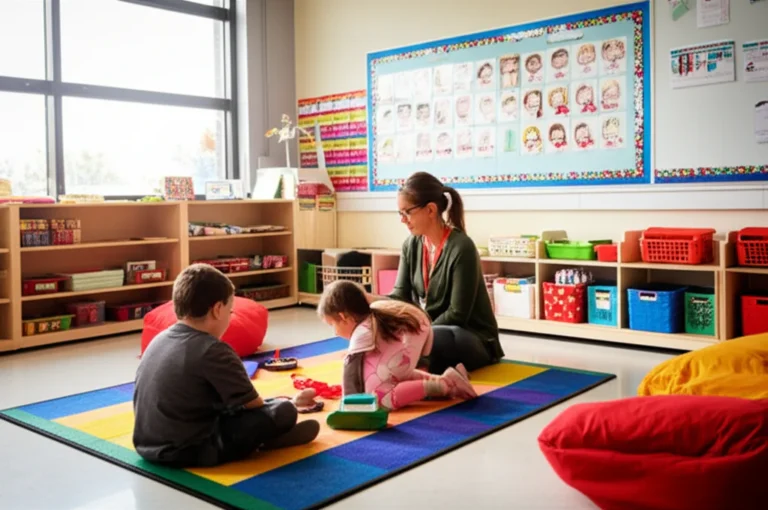
- The “Peace Corner”: A designated spot with pillows and sensory tools (not a “time out” spot!).
- Bubble Breathing: Use real bubbles to practice slow, controlled exhales. 🫧
- Journaling Prompts: “Right now, I feel…” or “One thing I noticed today was…”
- Yoga Brain Breaks: Simple poses like “Tree” or “Warrior” to ground the body.
- The “Wait Time” Zen: Use 30 seconds of silence before answering a complex question.
- Digital Detox: 5 minutes of “no-tech” silence after using tablets or computers.
🧘 ♀️ The Teacher’s Zen: Managing Your Own Stress First
We can’t pour from an empty cup, friends. If you are stressed, your students will mirror that energy. This is what we call co-regulation.
Try this: Before the kids enter the room, stand at your door, take three deep breaths, and set an intention. “Today, I will be patient.” When the copier jams for the fifth time (and it will), use that as your mindful moment. Your students are watching how you handle stress. Model the calm you want to see! ✅
🛠️ Top-Tier Tools: Classroom Mindfulness Resources We Love
You don’t have to reinvent the wheel. Here are the brands and tools we actually use:
- Calm Schools: They offer free resources for teachers! The “Daily Calm” is a staple in our rooms. Calm.com
- Headspace for Educators: Headspace offers free subscriptions to K-12 teachers in the US, UK, Canada, and Australia. Headspace.com
- GoNoodle: Specifically their “Flow” and “Think About It” categories. Great for younger kids! GoNoodle.com
- Insight Timer: A free app with thousands of guided meditations. Search for “kids” or “sleep.”
- Amazon Recommendation: We love the Mindfulness Matters Card Game for small group counseling or “indoor recess” days.
- Singing Bowls: A real Tibetan Singing Bowl Set is a game-changer for signaling transitions.
📚 The Curriculum Connection: Aligning Zen with Academic Standards
“But I have to teach Common Core!” we hear you cry. Good news: Mindfulness is teaching.
Most state standards now include Social-Emotional Learning (SEL) benchmarks. Integrating mindfulness helps meet standards related to:
- Self-Awareness: Identifying emotions.
- Self-Management: Regulating impulses and setting goals.
- Relationship Skills: Communicating clearly and resisting social pressure.
When you do a “Mindful Minute” before a writing prompt, you aren’t taking away from ELA; you’re priming the brain to perform better at ELA. 📖
💰 Beyond the Desk: Advancing Your Career and Salary with SEL Expertise
Did you know that becoming the “Mindfulness Expert” on your campus can actually boost your career? 🚀
- Lead Teacher/Instructional Coach: Districts are desperate for SEL leads. Specializing in mindfulness can move you into a coaching role.
- Salary Advancement: Many districts offer salary bumps for “Clock Hours” or “Professional Development Units.” Taking a certified course in Mindfulness-Based Stress Reduction for Teens or SEL Certification can move you across the pay scale.
- Grant Writing: We’ve seen teachers secure thousands of dollars in grants for “Wellness Rooms” by citing the benefits of mindfulness.
Pro-Tip: Look into certifications from the Greater Good Science Center at UC Berkeley. It looks amazing on a resume!
🏁 Conclusion

Integrating mindfulness isn’t about adding one more thing to your plate; it’s about changing the plate itself. By giving your students the tools to manage their internal world, you’re making the external world of your classroom a much happier place to be.
Remember, it’s a practice, not a “perfect.” Some days the “High-Five Breath” will work like magic, and other days, someone will still end up with a glue stick in their hair. That’s okay. Just breathe. You’ve got this! 🧘 ♂️
🔗 Recommended Links
- Mindful Schools – Courses for Educators
- Greater Good in Education – Science-based practices
- Edutopia – Mindfulness Resources
- The Hawn Foundation – MindUP Curriculum
❓ FAQ

Q: Is mindfulness religious? A: No. While it has roots in Eastern traditions, the practices used in schools are secular, science-based, and focused on brain regulation and focus.
Q: What if my students think it’s “weird”? A: Call it “Brain Training” or “Mental Athletics.” Relate it to how pro athletes (like Steph Curry or LeBron James) use visualization and breathing to stay in “the zone.” 🏀
Q: How long does it take to see results? A: You might see immediate calm after a breathing exercise, but lasting behavioral changes usually take 4–8 weeks of consistent daily practice.
Q: Can I do this with Kindergarteners? A: Absolutely! Keep it short (1 minute), use props like “breathing buddies” (stuffed animals on their bellies), and make it playful.
📖 Reference Links
- American Psychological Association – Mindfulness in the Classroom
- Harvard Graduate School of Education – Mindfulness for Teachers
- Journal of Applied School Psychology – SEL and Mindfulness Study
⚡️ Quick Tips and Facts
Welcome to the fast lane of mindfulness integration! Before you dive into the deep strategies, here’s a quick rundown from the trenches of Teacher Strategies™. We’ve distilled years of classroom chaos into bite-sized wisdom nuggets to get you started without feeling overwhelmed.
The Essentials at a Glance
| Feature | Insight | Why It Matters |
|---|---|---|
| Time Commitment | 2–5 minutes daily | Fits into tight schedules, no excuses! ⏳ |
| Cost | Free or low-cost | No fancy gear required, just your presence. 💸 |
| Core Concept | Social-Emotional Learning (SEL) | Mindfulness is a key SEL skill, boosting emotional intelligence. |
| Brain Impact | Shrinks amygdala, grows prefrontal cortex | Helps kids regulate emotions and focus better. 🧠 |
| Common Misconception | Not religious or spiritual | Secular, science-backed practice—perfect for public schools. ❌⛪ |
| Best Timing | Transitions, before tests, after recess | Natural moments to reset and refocus. 🔄 |
Why Start Now?
Did you know that according to the Journal of Applied School Psychology, students who practiced mindfulness showed a 24% increase in positive social behaviors and fewer incidents of aggression? That’s a classroom win for everyone—from the kid in the back to the teacher at the front.
Pro Tip from Teacher Strategies™
Start small. Even a 2-minute mindful breathing exercise before a math test can calm nerves and improve performance. It’s like giving your students a mental “reset button.” Curious how? Keep reading!
📜 From Monks to Modern Classrooms: The History of Mindfulness in Schools

Mindfulness might sound like a trendy buzzword, but it’s actually a time-tested practice with roots stretching back thousands of years. At Teacher Strategies™, we love tracing the journey from ancient wisdom to modern classrooms because it helps us appreciate the power behind the practice.
Ancient Origins
Mindfulness originates from Buddhist meditation traditions, where it was used to cultivate awareness and compassion. But here’s the kicker: the version we use in schools is secular and science-based, stripped of religious context to fit diverse classrooms.
The Modern Pioneer: Jon Kabat-Zinn
In the late 1970s, Jon Kabat-Zinn revolutionized mindfulness by creating the Mindfulness-Based Stress Reduction (MBSR) program at the University of Massachusetts Medical School. His genius was in translating ancient practices into tools for stress relief and mental health, accessible to all.
Mindfulness Enters Schools
By the early 2000s, organizations like Mindful Schools began training educators to bring mindfulness into classrooms. Today, mindfulness is a cornerstone of many Social-Emotional Learning (SEL) programs nationwide. Districts from San Francisco to New York have embraced it, recognizing its role in improving student well-being and academic success.
Why Does This History Matter?
Understanding mindfulness’s evolution helps us see it not as a fad but as a proven, adaptable tool. It’s like a classic recipe updated for modern tastes—still nourishing, just with a fresh twist.
🧘 Defining the Zen: What Exactly is Mindfulness for Kids?
If you ask a kid what mindfulness means, you might get answers like “sit still” or “close your eyes.” But as educators, we know it’s much richer—and more powerful.
Mindfulness in Plain English
At Teacher Strategies™, we describe mindfulness as “giving your brain a remote control.” It’s the ability to pause, notice what’s happening inside and around you, and choose how to respond rather than reacting on autopilot.
Why This Matters for Kids
Kids’ brains are like supercharged race cars—fast, powerful, but sometimes hard to control. Mindfulness teaches them to:
- Recognize their emotions without being overwhelmed.
- Focus their attention on what matters (like that tricky math problem).
- Respond thoughtfully instead of impulsively.
Mindfulness vs. Meditation
Mindfulness is often confused with meditation, but they’re not the same. Meditation is a formal practice, often sitting quietly for a set time. Mindfulness is the ongoing practice of awareness—you can be mindful walking, eating, or even during recess.
Real Talk: What Kids Actually Experience
One of our teachers shared: “When I introduced mindful breathing to my 3rd graders, one asked if it was like ‘charging their brain batteries.’ That’s exactly it!” ⚡️
🧠 The Brain Science: How Mindfulness Rewires the Young Mind
Let’s get nerdy for a moment. Mindfulness isn’t just feel-good fluff; it’s backed by solid neuroscience.
The Brain’s Emotional Alarm: The Amygdala
When a child feels stressed or threatened, their amygdala kicks into high gear. This “lizard brain” triggers fight, flight, or freeze responses, making it nearly impossible to focus on learning.
The Brain’s CEO: The Prefrontal Cortex
Mindfulness strengthens the prefrontal cortex, the brain’s executive center responsible for:
- Decision-making
- Impulse control
- Attention regulation
- Emotional regulation
What Happens with Mindfulness Practice?
| Brain Area | Effect of Mindfulness | Outcome for Students |
|---|---|---|
| Amygdala | Reduced activity and size | Less anxiety and reactivity |
| Prefrontal Cortex | Increased thickness and connectivity | Better focus and self-control |
| Hippocampus | Increased gray matter | Improved memory and learning |
Why This Matters in the Classroom
A calmer amygdala means fewer meltdowns and more “ready to learn” moments. A stronger prefrontal cortex means students can sit through lessons, resist distractions, and solve problems thoughtfully.
Science-Backed Proof
Harvard’s Graduate School of Education reports that mindfulness can improve attention, reduce stress, and boost academic performance. This isn’t just theory—it’s classroom-tested reality.
🚩 Red Flags: Spotting the Students Who Need a Mindful Moment
How do you know when to hit the mindfulness pause button? Here’s what to watch for:
Behavioral Clues
- Fidgeting Frenzy: Constant tapping, rocking, or squirming.
- Glazed Eyes: Zoning out or staring blankly.
- Snap Judgment: Quick to anger or frustration over small things.
- Physical Complaints: Frequent stomachaches or headaches without medical cause.
- Defeatist Language: “I can’t do this,” “This is too hard.”
Why These Matter
These signs often indicate stress, anxiety, or overwhelm—perfect moments to introduce a mindful break.
Teacher Strategies™ Story
One of our veteran teachers noticed a student who always said, “I’m done,” after the first problem. After a few weeks of mindful breathing exercises, that student started saying, “Let me try again.” That’s the power of noticing and intervening early.
When to Intervene
- Before a meltdown
- After recess or lunch transitions
- Before tests or presentations
- When you notice a shift in classroom energy
🏆 15 Game-Changing Benefits of Classroom Mindfulness
Why invest your precious time in mindfulness? Because the benefits are massive and measurable. Here’s what you can expect:
| Benefit | What It Means for Your Classroom |
|---|---|
| 1. Improved Focus | Students can sustain attention longer. |
| 2. Emotional Regulation | Fewer outbursts, more self-control. |
| 3. Reduced Test Anxiety | Calm nerves lead to better performance. |
| 4. Increased Empathy | Kinder interactions among peers. |
| 5. Better Sleep | Happier, more rested students. |
| 6. Decreased Bullying | Less reactive behavior. |
| 7. Enhanced Memory | Improved retention of lessons. |
| 8. Boosted Immunity | Fewer sick days, healthier kids. |
| 9. Improved Impulse Control | Thoughtful decision-making. |
| 10. Higher Academic Achievement | Focus + calm = better grades. |
| 11. Greater Resilience | Ability to bounce back from setbacks. |
| 12. Positive Classroom Climate | Peaceful, supportive environment. |
| 13. Reduced Teacher Burnout | Less stress for you too! |
| 14. Conflict Resolution Skills | Using words, not fists. |
| 15. Self-Compassion | Kids learn to be kind to themselves. |
Teacher Strategies™ Insight
We’ve seen classrooms transform from chaotic to calm in just weeks. One middle school teacher reported a 40% drop in disciplinary referrals after introducing daily mindfulness exercises.
Research Backing
The American Psychological Association confirms these benefits, highlighting improved emotional regulation and academic outcomes.
🚀 22 Practical Strategies for Integrating Mindfulness in the Classroom Today
Ready to roll up your sleeves? Here are 22 tested, teacher-approved strategies that fit into your busy day.
Breathing Techniques
- High-Five Breath: Trace your hand with a finger; inhale up a finger, exhale down. Simple and visual! 🖐️
- Cool the Cocoa: Imagine holding hot cocoa; breathe in the aroma, then blow gently to cool it.
- Bubble Breathing: Blow bubbles slowly to practice controlled exhales. 🫧
- Anchor Breathing: Place a hand on your belly to feel the breath’s rise and fall.
Sensory and Visual Tools
- Mindful Jar: Shake a jar filled with water and glitter; watch the glitter settle as a metaphor for calming the mind.
- Bell Listening: Ring a singing bowl or bell; listen until the sound fades completely. 🔔
- 5-4-3-2-1 Technique: Identify 5 things you see, 4 you touch, 3 you hear, 2 you smell, 1 you taste.
Movement and Body Awareness
- Squeeze and Release: Tense muscles like a statue, then melt like ice cream.
- Mindful Walking: Focus on each step during transitions.
- Yoga Brain Breaks: Simple poses like Tree or Warrior to ground students.
Reflection and Emotional Awareness
- Gratitude Circle: Share one thing you’re thankful for at day’s end.
- Weather Report: Describe your internal mood as weather (sunny, stormy). ☀️⛈️
- Positive Affirmations: Start the day with kind words about yourself.
Creative and Playful Approaches
- Mindful Eating: Slowly savor one raisin or piece of popcorn.
- Mindful Coloring: Use mandalas with soft music.
- Journaling Prompts: “Right now, I feel…”
- Spidey-Senses: Activate “super senses” to notice sounds or smells.
Classroom Environment
- Peace Corner: A cozy spot with pillows and sensory tools (not a timeout!).
- Digital Detox: 5 minutes of tech-free mindfulness after screen time.
- Guided Imagery: Lead students on mental vacations to calming places.
Transition and Focus Tools
- Wait Time Zen: Pause silently for 30 seconds before answering questions.
- Bell or Chime Signals: Use sound cues to signal mindfulness moments.
Why These Work
These strategies are short, adaptable, and engaging—perfect for busy classrooms. They help students develop self-regulation skills without feeling like “extra work.”
Related Teacher Strategies™ Articles
For more on instructional techniques that complement mindfulness, check out our Instructional Strategies and Classroom Management categories.
🧘 ♀️ The Teacher’s Zen: Managing Your Own Stress First
Here’s a secret: mindfulness isn’t just for students. Teachers need it too—badly.
Why Teacher Mindfulness Matters
Research shows that 52% of K-12 teachers report feeling burned out often (source). When you’re stressed, your students pick up on it immediately. This is called co-regulation—your calm can help calm them.
Simple Steps to Your Own Zen
- Before Class: Stand at the door, take three deep breaths, and set an intention.
- During Stress: Use the “High-Five Breath” or “Cool the Cocoa” breath to reset.
- After School: Try apps like Headspace or Calm for guided teacher meditations.
Real Teacher Story
One of our Teacher Strategies™ educators shared: “When I started practicing mindfulness daily, I noticed I was less reactive to disruptions and more patient. My students noticed too—they started mirroring my calm.”
Resources for Teacher Well-being
🛠️ Top-Tier Tools: Classroom Mindfulness Resources We Love
You don’t have to go it alone. Here are some of the best tools and resources we’ve tested and recommend for bringing mindfulness alive in your classroom.
Product Rating Table: Mindfulness Tools
| Product | Design (1-10) | Functionality (1-10) | Engagement (1-10) | Ease of Use (1-10) | Overall Score |
|---|---|---|---|---|---|
| Calm Schools Program | 9 | 9 | 8 | 9 | 8.8 |
| Headspace for Educators | 8 | 9 | 8 | 8 | 8.3 |
| GoNoodle (Flow & Think About It) | 7 | 8 | 9 | 9 | 8.3 |
| Mindfulness Matters Card Game | 8 | 8 | 9 | 7 | 8.0 |
| Tibetan Singing Bowl Set | 9 | 7 | 8 | 6 | 7.5 |
Calm Schools Program
- What it is: A free program offering guided mindfulness lessons and activities tailored for K-12 classrooms.
- Why we love it: Easy to implement, backed by research, and includes teacher training.
- Drawbacks: Requires internet access and some initial setup time.
Headspace for Educators
- What it is: Free access to Headspace’s meditation app for teachers and students.
- Why we love it: Professional, polished guided meditations with kid-friendly options.
- Drawbacks: Some features require paid subscription beyond the free educator access.
GoNoodle
- What it is: Movement and mindfulness videos designed for younger students.
- Why we love it: Fun, interactive, and great for brain breaks.
- Drawbacks: Best for elementary; less content for older students.
Mindfulness Matters Card Game
- What it is: A card game designed to teach mindfulness concepts through play.
- Why we love it: Engages students in small groups, perfect for counseling or indoor recess.
- Drawbacks: Requires facilitation and some prep.
Tibetan Singing Bowl Set
- What it is: A traditional singing bowl used to signal mindfulness moments.
- Why we love it: Creates a calming auditory cue that signals transitions.
- Drawbacks: Fragile and requires careful handling.
Where to Find Them
- Calm Schools: Calm.com/schools
- Headspace for Educators: Headspace.com/educators
- GoNoodle: GoNoodle.com
- Mindfulness Matters Card Game: Amazon Mindfulness Matters Card Game
- Tibetan Singing Bowl Set: Amazon Tibetan Singing Bowl
👉 Shop Mindfulness Tools on:
📚 The Curriculum Connection: Aligning Zen with Academic Standards
Worried that mindfulness is “extra” and not aligned with your curriculum? Fear not! Mindfulness is a powerful tool to meet—and exceed—academic and social-emotional standards.
Mindfulness Meets SEL
Most states now include Social-Emotional Learning (SEL) standards that emphasize:
- Self-awareness
- Self-management
- Responsible decision-making
- Relationship skills
- Social awareness
Mindfulness directly supports these competencies by helping students recognize and regulate emotions, focus attention, and build empathy.
Academic Standards Supported by Mindfulness
| Academic Area | How Mindfulness Supports It |
|---|---|
| Reading & Writing | Improves focus and working memory for comprehension and composition. |
| Math | Enhances problem-solving by reducing anxiety and increasing attention. |
| Science | Encourages observation and curiosity through mindful inquiry. |
| Social Studies | Fosters empathy and perspective-taking. |
Practical Integration Ideas
- Start a writing prompt with a mindful breathing exercise to calm nerves.
- Use mindful observation in science lessons (e.g., noticing details in plants or animals).
- Incorporate gratitude journaling in social studies or language arts.
Teacher Strategies™ Tip
Mindfulness is not “extra time” but a brain primer. It prepares students to absorb new information more effectively. For more on instructional techniques that complement mindfulness, visit our Instructional Strategies section.
💰 Beyond the Desk: Advancing Your Career and Salary with SEL Expertise
Here’s a little secret: becoming your school’s mindfulness guru can open doors professionally—and financially.
Career Growth Opportunities
- SEL Lead Teacher or Coach: Districts increasingly seek educators trained in SEL and mindfulness to lead professional development.
- Instructional Coach: Mindfulness expertise pairs well with coaching roles focused on classroom management and student engagement.
- Grant Writing: Mindfulness programs are popular grant targets for wellness initiatives.
Salary Advancement
Many districts offer salary increments or stipends for:
- Completing SEL or mindfulness certification courses.
- Leading school-wide mindfulness initiatives.
- Earning clock hours or continuing education credits in SEL.
Recommended Certifications
- Mindfulness for Teachers Certificate from University of San Diego.
- SEL Certification programs through Greater Good Science Center.
Teacher Strategies™ Insider Tip
Document your mindfulness work with student data and testimonials. This evidence strengthens your case for leadership roles and salary increases.
Before we move on to the conclusion, don’t miss the insightful perspective from the first YouTube video embedded in this article. The speaker shares five practical strategies to create a low-stress classroom environment, emphasizing that mindfulness is essential for both students and teachers. She highlights simple breathing exercises, gratitude practices, journaling, and sensory awareness techniques that can be seamlessly woven into daily routines—even with tight schedules.
Check out the video to hear her say:
“I think no matter what the subject is, mental and emotional challenges are going to affect so many of our students… if the students are not given the tools to manage those, it can have really negative effects.”
This aligns perfectly with our Teacher Strategies™ approach—mindfulness is not an add-on; it’s a foundation for learning and well-being.
We’ve covered a lot of ground so far! Ready to see how it all ties together in your classroom? Stay tuned for the conclusion and next steps.
🏁 Conclusion

Phew! We’ve journeyed from ancient roots to cutting-edge classroom strategies, unpacking the science, benefits, and practical ways to weave mindfulness into your daily teaching routine. At Teacher Strategies™, we firmly believe that mindfulness is not just a “nice-to-have” but a game-changer for both students and teachers.
By integrating even a few of the 22 practical strategies we shared—like the “High-Five Breath” or the “Mindful Jar”—you can create a calmer, more focused, and emotionally resilient classroom. Remember, mindfulness isn’t about perfection or lengthy rituals; it’s about small moments of awareness that add up to big changes.
Why Mindfulness Works
Mindfulness rewires the brain, reduces stress, and builds social-emotional skills that support academic success and positive behavior. It’s a tool that helps students pause, breathe, and choose their responses rather than reacting impulsively. And it’s a secret weapon for teachers to manage their own stress and burnout.
Final Thought
If you’ve ever wondered how to transform a chaotic classroom into a “Zen zone” without losing your sanity, mindfulness is your answer. Start small, stay consistent, and watch your classroom culture blossom. You’ve got this! 🧘 ♀️✨
🔗 Recommended Links
Ready to bring mindfulness tools into your classroom? Here are some top picks and resources to get you started:
-
Calm Schools Program:
Calm.com/schools | Amazon Search: Calm Schools -
Headspace for Educators:
Headspace.com/educators | Amazon Search: Headspace Meditation -
GoNoodle (Flow & Think About It):
GoNoodle.com | Amazon Search: GoNoodle -
Mindfulness Matters Card Game:
Amazon Mindfulness Matters Card Game -
Tibetan Singing Bowl Set:
Amazon Tibetan Singing Bowl -
Recommended Books:
- “The Mindful Child” by Susan Kaiser Greenland: Amazon Link
- “Mindfulness for Teachers” by Patricia A. Jennings: Amazon Link
- “Sitting Still Like a Frog” by Eline Snel (great for kids): Amazon Link
❓ FAQ

What are simple mindfulness activities for busy classroom schedules?
Short, focused activities like the “High-Five Breath” or “Bubble Breathing” take just 2–5 minutes and can be done during transitions or before tests. These micro-practices fit seamlessly into your day without sacrificing instructional time. Using sensory tools like a glitter jar or a bell can also quickly refocus attention.
How can mindfulness help reduce stress and anxiety among students?
Mindfulness calms the amygdala, the brain’s stress center, reducing fight-or-flight responses. By teaching students to notice their breath or bodily sensations, mindfulness creates a pause between stimulus and reaction, lowering anxiety and promoting emotional regulation. This leads to fewer meltdowns and better coping skills.
What age groups can benefit most from mindfulness practices in school?
Mindfulness is adaptable for all ages. Younger children benefit from playful, sensory-based activities like mindful eating or movement breaks, while older students can engage in guided meditations and journaling. Even preschoolers can practice simple breathing exercises with a “breathing buddy.”
How do mindfulness strategies improve classroom management?
Mindfulness fosters self-regulation and emotional awareness, which reduces impulsive behavior and conflict. When students learn to pause and reflect, they are less likely to act out. This creates a calmer classroom climate, reducing the need for disciplinary interventions and allowing teachers to focus on instruction.
What are the benefits of mindfulness for student behavior and focus?
Mindfulness improves attention span, impulse control, and emotional resilience. Students become better at managing frustration and distractions, leading to improved academic engagement and fewer behavioral issues. It also enhances empathy and social skills, contributing to a positive peer environment.
How can teachers incorporate mindfulness into daily lesson plans?
Start lessons with a brief breathing exercise to center students. Use mindful transitions between activities, and close lessons with gratitude reflections or journaling. Integrate mindfulness themes into subjects, such as mindful observation in science or empathy discussions in social studies.
What are effective mindfulness exercises for students in the classroom?
Effective exercises include:
- Breathing techniques: High-Five Breath, Bubble Breathing
- Sensory activities: Mindful Jar, 5-4-3-2-1 grounding
- Movement: Yoga poses, Squeeze and Release
- Reflection: Gratitude circles, journaling prompts
These can be adapted to fit time constraints and student needs.
How can teachers effectively incorporate mindfulness practices into daily lessons?
Consistency is key. Introduce one practice at a time, model it yourself, and embed it into routines like morning meetings or before tests. Use visual cues (bells, posters) and create a dedicated “Peace Corner” for mindful moments. Engage students in choosing mindfulness activities to increase buy-in.
Which mindfulness activities are best suited for different age groups in the classroom?
| Age Group | Recommended Activities |
|---|---|
| Preschool – K | Breathing buddies, sensory play, mindful movement |
| Elementary | Mindful eating, guided imagery, bubble breathing |
| Middle School | Journaling, longer guided meditations, yoga breaks |
| High School | Reflection circles, advanced meditation apps, stress management workshops |
How does mindfulness improve academic performance and classroom engagement?
Mindfulness reduces test anxiety and improves working memory by calming the nervous system. Focused students absorb and retain information better. Mindfulness also fosters a positive classroom climate that encourages participation and collaboration.
What are simple mindfulness exercises teachers can use to reduce classroom stress?
Teachers can practice:
- Three deep breaths before class
- Body scan meditation during breaks
- Mindful walking between classes
- Using apps like Headspace or Calm for guided teacher meditations
These help maintain teacher well-being, which positively impacts the classroom.
How can mindfulness support social-emotional learning in schools?
Mindfulness directly develops SEL competencies such as self-awareness, self-management, and social awareness. It helps students recognize emotions, regulate responses, and build empathy—skills essential for healthy relationships and academic success.
What resources and tools are available for educators to implement mindfulness strategies?
Top resources include:
- Mindful Schools – training and curriculum
- Calm Schools Program – guided lessons
- Headspace for Educators – free meditation app access
- GoNoodle – movement and mindfulness videos
- Books like “The Mindful Child” and “Mindfulness for Teachers”
Many of these offer free or low-cost options and are classroom-tested.
📖 Reference Links
- American Psychological Association – Mindfulness in the Classroom
- Harvard Graduate School of Education – Mindfulness for Teachers
- Mindful Schools – Educator Resources
- Calm – Calm Schools Program
- Headspace – Headspace for Educators
- GoNoodle – Movement and Mindfulness
- Participate Learning – Why and How to Integrate Mindfulness in the Classroom
- Greater Good Science Center – SEL and Mindfulness
- Journal of Applied School Psychology – Mindfulness Study
We hope this comprehensive guide empowers you to bring mindfulness into your classroom with confidence and joy. Remember, every mindful moment you create plants seeds for lifelong skills in your students—and yourself. Happy teaching! 🌟