Support our educational content for free when you buy through links on our site. Learn more
🚀 7 Ways to Master Using Project-Based Learning for Deper Understanding (2026)


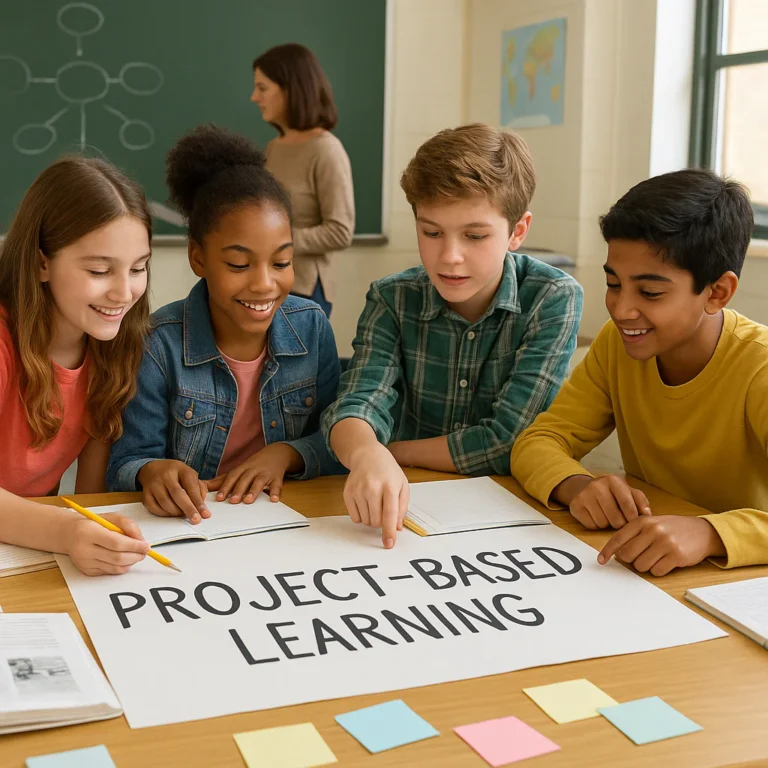
Remember the first time you watched a student’s eyes light up not because they got an “A,” but because they finally got it? That spark is the holy grail of education, and it’s often missing in traditional lecture halls. We’ve all been there: staring at a sea of glazed-over faces while explaining a concept for the third time, wondering why the information seems to evaporate the moment the bell rings. But what if the solution wasn’t more drilling, but more doing?
At Teacher Strategies™, we’ve seen classrooms transform from silent rows of desks into buzzing innovation hubs simply by shifting the paradigm. The secret isn’t just “fun projects”; it’s Using project-based learning for deeper understanding to create cognitive hooks that last a lifetime. In this guide, we’re breaking down exactly how to move beyond surface-level memorization. We’ll reveal the 7 high-impact strategies that turn passive listeners into active investigators, backed by the science of how our brains actually retain information.
By the end of this article, you’ll know how to craft driving questions that spark genuine curiosity, manage the inevitable chaos of group work, and assess learning in ways that actually matter. Ready to stop teaching to the test and start teaching for life? Let’s dive in.
Key Takeaways
- Shift from Passive to Active: Using project-based learning for deeper understanding transforms students from passive recipients of information into active investigators who retain up to 75% more of what they learn.
- Authenticity is Key: Real-world challenges and public audiences are non-negotiable for creating the emotional connections that anchor long-term memory.
- The 7-Step Blueprint: We provide a comprehensive roadmap including essential questions, student voice, and formative assessment loops to ensure rigor alongside engagement.
- Equity Through Design: Properly structured PBL levels the playing field, allowing diverse learners to shine through differentiated pathways and varied modes of expression.
- Teacher as Facilitator: Success requires a mindset shift from “sage on the stage” to guide on the side, empowering students to drive their own inquiry.
Table of Contents
- ⚡️ Quick Tips and Facts
- 📜 From Dewey to Digital: The Evolution of Project-Based Learning
- 🚀 7 High-Impact Strategies for Using Project-Based Learning for Deper Understanding
- 1. Crafting Essential Questions That Spark Curiosity
- 2. Designing Authentic, Real-World Challenges
- 3. Integrating Student Voice and Choice
- 4. Facilitating Inquiry and Research Skills
- 5. Embeding Formative Assessment Lops
- 6. Cultivating Collaboration and Soft Skills
- 7. Showcasing Work to Public Audiences
- 🧠 The Science of Retention: How PBL Boosts Cognitive Depth
- 🛠️ The Teacher’s Toolkit: Essential Resources and Tech for PBL
- 🚧 Overcoming Common Pitfalls in Project-Based Learning Implementation
- 📊 PBL vs. Traditional Instruction: A Comparative Analysis
- 🌍 Voices from the Field: Scaling Up Deper Learning and Equity
- 🏁 Conclusion
- 🔗 Recommended Links
- ❓ FAQ
- 📚 Reference Links
⚡️ Quick Tips and Facts
Before we dive into the deep end of the pedagogical pool, let’s splash around with some high-impact truths that every educator needs to know about Using project-based learning for deeper understanding.
- Retention Rates Skyrocket: Research suggests students retain up to 75% of what they learn through active practice, compared to just 10% through passive listening. 🧠
- The “Forgotten” Factor: In traditional classrooms, the “forgeting curve” is steep. In PBL, the emotional connection to the work acts as a memory anchor.
- Equity is Built-In: When done right, PBL levels the playing field, allowing students from diverse backgrounds to shine through different strengths (art, coding, speaking, organizing).
- It’s Not Just “Doing”: A common myth is that PBL is just “crafts and fun.” Real PBL requires rigorous inquiry, critical analysis, and public accountability.
- Teacher Role Shift: You aren’t the sage on the stage anymore; you are the guide on the side, the project manager, and the chief encouragement officer.
At Teacher Strategies™, we’ve seen classrooms transform from silent rows of desks into buzzing innovation hubs. But how do you actually make it work without losing your mind? That’s the million-dollar question we’ll answer by the end of this guide.
📜 From Dewey to Digital: The Evolution of Project-Based Learning
You might think Project-Based Learning (PBL) is the latest buzzword from a Silicon Valley startup, but its roots go back much further than your favorite coffee shop’s Wi-Fi password.
The Philosophical Roots
The concept traces back to John Dewey, the father of progressive education, who argued in the early 20th century that education should be life itself, not just preparation for life. He believed in “learning by doing.” Fast forward to the 190s, and the New Tech Network began formalizing these ideas into a scalable model, proving that PBL could work in diverse, large-scale school settings.
“All New Tech Network schools use project-based learning, which engages students in learning through multifaceted projects.” — Learning Policy Institute
The Digital Shift
Today, PBL has evolved from simple “show-and-tell” projects to complex, technology-driven investigations. We’ve moved from building dioramas to coding apps, designing sustainable cities, and analyzing real-time data. The tools have changed, but the core mission remains: deper understanding through authentic engagement.
Why do some schools struggle while others thrive? It often comes down to whether they treat PBL as a “fun activity” or a rigorous instructional strategy. We’ll unpack the difference in the next section.
🚀 7 High-Impact Strategies for Using Project-Based Learning for Deper Understanding
If you want to move beyond surface-level learning and foster deper understanding, you need more than just a cool idea. You need a blueprint. Here are 7 high-impact strategies that have transformed classrooms at Teacher Strategies™.
1. Crafting Essential Questions That Spark Curiosity
The heartbeat of any great project is the Driving Question. If your question is “What is the water cycle?”, you’ve already lost them. That’s a Google search away.
Instead, try: “How can we design a water filtration system for our local community park that costs under $50?”
- Open-Ended: There is no single right answer.
- Authentic: It connects to the real world.
- Challenging: It requires research, synthesis, and creativity.
Pro Tip: Use the Bloom’s Taxonomy framework to ensure your question hits the higher-order thinking skills (Analyze, Evaluate, Create).
2. Designing Authentic, Real-World Challenges
Students can smell a fake project from a mile away. If the audience is just “the teacher,” the stakes are low. If the audience is the city council, a local non-profit, or a global online community, the stakes are high.
- Partner Up: Reach out to local businesses organizations.
- Solve Real Problems: Address issues like food insecurity, traffic safety, or historical preservation.
- Use Real Tools: Don’t just simulate; use the actual software or equipment professionals use.
3. Integrating Student Voice and Choice
This is the secret sauce. When students have agency, they own the learning.
- Choice in Process: Let them decide how they research (interviews, surveys, experiments).
- Choice in Product: Allow them to present their findings as a podcast, a video, a website, or a live performance.
- Choice in Pacing: Use flexible deadlines for milestones, teaching time management.
“They quickly see how academic work can connect to real-life issues — and may even be inspired to pursue a career or engage in activism that relates to the project they developed.” — Edutopia
4. Facilitating Inquiry and Research Skills
PBL isn’t about finding answers; it’s about asking better questions. Teach students how to:
- Evaluate source credibility (no more Wikipedia as the sole source!).
- Synthesize conflicting information.
- Conduct primary research (surveys, interviews).
5. Embeding Formative Assessment Lops
Forget the “big test” at the end. In PBL, assessment is continuous.
- Checkpoints: Use “critique and revision” sessions where students give peer feedback.
- Rubrics: Co-create rubrics with students so they know exactly what “excellence” looks like.
- Reflection: Have students journal about what they learned and where they got stuck.
6. Cultivating Collaboration and Soft Skills
The real world is a team sport. PBL forces students to navigate conflict, delegate tasks, and communicate effectively.
- Team Charters: Have groups write a contract on how they will work together.
- Role Rotation: Ensure everyone gets a turn leading, researching, and presenting.
- Conflict Resolution: Teach them how to disagree respectfully.
7. Showcasing Work to Public Audiences
The final piece of the puzzle is the Public Product. This is where the “deper understanding” becomes visible.
- Exhibitions: Host a night where parents and community members view student work.
- Digital Portfolios: Use platforms like Sesaw or Google Sites to showcase work globally.
- Presentations: Have students pitch their ideas to actual experts.
🧠 The Science of Retention: How PBL Boosts Cognitive Depth
Why does PBL stick? It’s not magic; it’s neuroscience.
The Brain on PBL
When students engage in a traditional lecture, the brain is often in a passive state. But when they are solving a problem, building a prototype, or debating a solution, multiple areas of the brain light up:
- Prefrontal Cortex: Critical thinking and planning.
- Hippocampus: Memory formation (especially when emotions are involved).
- Motor Cortex: If they are building or creating something physical.
The “Failure” Advantage
In a conventional class, failure is a red mark. In PBL, failure is data. As noted in the “first YouTube video” perspective, when students build a tower that collapses, they don’t just learn “gravity exists.” They learn why it collapsed, how to fix it, and the physics behind the structure. This iterative process creates long-term neural pathways that rote memorization simply cannot match.
“In contrast, PBL activates various brain areas, teaching construction, creativity, physics, and teamwork. Students learn from initial failures, try again, and succeed. ‘They learn to learn,’ and the experience can be remembered decades later.”
Comparative Analysis: PBL vs. Traditional Instruction
| Feature | Traditional Instruction | Project-Based Learning |
|---|---|---|
| Focus | Content coverage | Deep understanding & application |
| Student Role | Passive recipient | Active investigator |
| Assessment | Sumative (End of unit) | Formative (Continuous) + Sumative |
| Motivation | External (Grades) | Internal (Curiosity & Purpose) |
| Skill Set | Memorization | Critical Thinking, Collaboration, Creativity |
| Retention | Short-term (Cram & Forget) | Long-term (Experience-based) |
🛠️ The Teacher’s Toolkit: Essential Resources and Tech for PBL
You can’t build a skyscraper with a spoon. Similarly, you can’t run a high-quality PBL classroom without the right tools. Here is our curated list of essential resources that make the magic happen.
Digital Collaboration & Project Management
- Google Workspace: The backbone of modern PBL. Use Google Docs for collaborative writing, Slides for presentations, and Drive for file management.
- Trello / Asana: Great for teaching project management. Students can create boards, assign tasks, and track progress visually.
- Padlet: A digital bulletin board for brainstorming and sharing resources.
Research & Inquiry Tools
- Khan Academy: Excellent for just-in-time learning when students get stuck on a concept.
- Newsela: Provides current events articles at different reading levels, perfect for differentiated research.
- JSTOR / Google Scholar: For high schoolers, teaching them to access academic journals is a game-changer.
Creation & Presentation Tools
- Canva: For designing professional-looking posters, infographics, and social media campaigns.
- Flip (formerly Flipgrid): For video reflections and peer feedback.
- Scratch / Tinkercad: For coding and 3D design projects.
Physical Materials
Don’t forget the analog tools! Spaghetti, tape, and marshmallows are still the gold standard for engineering challenges. For more advanced projects, consider Arduino kits or 3D printers.
👉 CHECK PRICE on:
- Arduino Starter Kits: Amazon | Adafruit
- 3D Printers (Creality Ender): Amazon | Creality Official
- Canva for Education: Canva Official
🚧 Overcoming Common Pitfalls in Project-Based Learning Implementation
We’ve all been there. You launch a project, and chaos ensues. Students are off-task, the timeline slips, and you feel like you’re drowning. Don’t worry; even the best teachers face these hurdles.
Pitfall 1: “It’s Just a Fun Activity”
The Fix: Rigor is non-negotiable. Ensure every project has clear learning goals and standards alignment. If it doesn’t teach the core content, it’s not PBL; it’s just an activity.
Pitfall 2: Group Work Becomes “Free Ride”
The Fix: Use individual accountability measures. Require individual reflections, peer evaluations, and specific roles that rotate. Make sure every student has a unique contribution to the final product.
Pitfall 3: Time Management Nightmares
The Fix: Break projects into sprints. Use a Gantt chart or a simple timeline. Teach students how to estimate time and prioritize tasks.
Pitfall 4: Lack of Student Buy-In
The Fix: Start small. Don’t launch a semester-long project on day one. Try a mini-project (1-2 weeks) to build the culture of inquiry and collaboration.
“The experiential and project-based professional learning opportunities allow New Tech Network educators to understand the technical dimensions of the New Tech learning model while shifting their mindsets about what is possible in classrooms.” — Learning Policy Institute
📊 PBL vs. Traditional Instruction: A Comparative Analysis
Let’s look at the numbers and the nuances. Why should you switch from the comfort of the lecture hall to the chaos of the workshop?
Engagement Metrics
Studies show that PBL classrooms often see a 30-50% increase in student engagement. Why? Because students are solving problems that matter to them, not just memorizing facts for a test.
Academic Performance
Randomized controlled trials have shown that PBL significantly outperformed traditional curicula in subjects like science and social studies, particularly for students from underepresented backgrounds.
Skill Development
While traditional instruction excels at teaching content recall, PBL dominates in soft skills:
- Critical Thinking: Analyzing complex problems.
- Communication: Presenting to real audiences.
- Collaboration: Working in diverse teams.
- Creativity: Innovating solutions.
The Hybrid Approach
The best teachers don’t throw out the baby with the bathwater. They use a hybrid model: direct instruction for foundational knowledge, followed by PBL for application and deepening understanding.
🌍 Voices from the Field: Scaling Up Deper Learning and Equity
How do we take PBL from a single classroom to a whole district? The New Tech Network provides a roadmap.
The Systemic Approach
Scaling PBL requires more than just training teachers. It requires:
- Cultural Shift: Changing the school culture to value inquiry over compliance.
- Structural Alignment: Adjusting schedules to allow for longer block periods.
- Equity Focus: Ensuring that PBL is accessible to all students, including English learners and students with disabilities.
Real-World Success Stories
- Case Study A: A high school in California used PBL to address local environmental issues, resulting in a student-led initiative that was adopted by the city council.
- Case Study B: A rural school in Texas used PBL to connect students with local agricultural businesses, improving both math skills and community engagement.
“All New Tech Network schools use project-based learning, which engages students in learning through multifaceted projects.” — Learning Policy Institute
The key takeaway? Equity is not an add-on; it’s the foundation. When done right, PBL gives every student a voice and a platform to shine.
🏁 Conclusion

So, we’ve journeyed from the philosophical roots of John Dewey to the digital classrooms of today. We’ve explored the 7 high-impact strategies, dissected the science of retention, and armed you with a toolkit of resources. We’ve also tackled the inevitable pitfalls and looked at how to scale this approach for equity and deeper understanding.
But here’s the real question: Are you ready to let go of the script?
Using project-based learning for deeper understanding isn’t just about changing your lesson plans; it’s about changing your mindset. It’s about trusting your students to drive the bus, even if they take a few detours. It’s about embracing the messiness of real learning.
The evidence is clear: PBL leads to higher engagement, better retention, and more meaningful skills. The only thing left to do is to start. Pick a topic, craft a driving question, and watch your classroom transform.
Ready to take the leap? Check out our recommended resources below and join the movement.
🔗 Recommended Links
Here are some essential resources to get you started on your PBL journey:
- Books:
Project-Based Teaching: How to Create Rigorous and Engaging Learning Experiences by Suzie Boss and John Larmer. Amazon
PBL for 21st Century Success by John Barell. Amazon - Tools:
Canva for Education: Canva Official
Trello: Trello Official
Khan Academy: Khan Academy Official - Organizations:
Buck Institute for Education (PBLWorks): PBLWorks
New Tech Network: New Tech Network
❓ FAQ

How does project-based learning prepare students for real-world problem solving?
PBL mirrors the real world by presenting students with open-ended, complex problems that require research, collaboration, and critical thinking. Unlike traditional tests, which often have a single correct answer, real-world problems are messy. PBL teaches students to navigate ambiguity, iterate on solutions, and work with diverse teams, directly preparing them for the modern workforce.
Read more about “🚀 10 Strategies for Promoting Interdisciplinary Teaching Approaches (2026)”
What challenges do educators face when using project-based learning and how to overcome them?
Common challenges include time management, classroom management, and assessment.
- Time: Break projects into smaller sprints and use clear timelines.
- Management: Establish clear norms and use group contracts.
- Assessment: Use rubrics and formative assessments throughout the process, not just at the end.
- Solution: Start small with mini-projects and seek professional development support.
How can project-based learning support diverse learning styles?
PBL is inherently differentiated. Students can choose how they research (visual, auditory, kinesthetic), how they collaborate (leaders, researchers, creatives), and how they present their work (video, written report, oral presentation). This flexibility allows every student to play to their strengths while developing new skills.
Read more about “🎓 What Are the 5 Teaching Approaches? (2026 Guide)”
What are the benefits of project-based learning for student engagement?
PBL boosts engagement by making learning relevant and authentic. When students see the connection between their work and the real world, they are more motivated. The element of choice and voice also increases ownership, leading to higher participation and enthusiasm.
Read more about “🧠 10 Trauma-Informed Teaching Strategies for 2026”
How can teachers assess student understanding in project-based learning?
Assessment in PBL is multifaceted. It includes:
- Formative Assessments: Checkpoints, drafts, and peer reviews.
- Sumative Assessments: Final products and presentations.
- Self and Peer Assessments: Reflections and evaluations of team members.
- Rubrics: Clear criteria for success that align with learning goals.
Read more about “🚀 15+ AR & VR Teaching Strategies for 2026”
What are effective strategies for implementing project-based learning in the classroom?
- Start with a Driving Question: Ensure it’s open-ended and relevant.
- Plan Backwards: Identify the learning goals first, then design the project.
- Scaffold: Provide support and resources as needed.
- Foster Collaboration: Teach teamwork skills explicitly.
- Invite Public Audiences: Make the work meaningful by sharing it with others.
Read more about “7 Proven Strategies for Integrating SEL in Daily Lessons (2026) 🧠”
How does project-based learning enhance critical thinking skills?
PBL requires students to analyze information, evaluate sources, synthesize ideas, and create solutions. They must constantly ask “Why?” and “How?” rather than just “What?”. This iterative process of inquiry and reflection sharpens their critical thinking abilities.
Read more about “Mastering Analysis in Lesson Plans: 12 Expert Strategies for Success (2026) 🎯”
How can project-based learning be adapted for different grade levels?
- Elementary: Focus on shorter projects, more teacher guidance, and concrete outcomes (e.g., building a model).
- Middle School: Introduce more complexity, student choice, and longer timelines.
- High School: Tackle real-world issues, require independent research, and connect to career pathways.
Read more about “What Are the 10 Essential Teaching Strategies? 🎓 (2026)”
What role does collaboration play in project-based learning success?
Collaboration is the engine of PBL. It teaches students to communicate, negotiate, delegate, and resolve conflicts. These soft skills are just as important as academic content. Effective collaboration ensures that all students contribute and learn from each other.
Read more about “The 5 Instructional Strategies That Transform Classrooms (2026) 🚀”
How does project-based learning support critical thinking skills in students?
(See answer above on “How does PBL enhance critical thinking skills?”) PBL forces students to move beyond memorization to application and analysis, which are the core of critical thinking.
Read more about “🚀 10 Innovative Learning Approaches for Students (2026)”
What challenges do educators face with project-based learning and how to overcome them?
(See answer above on “What challenges do educators face…”) The key is planning, scaffolding, and professional development.
Read more about “12 Proven Strategies for Increasing Student Engagement and Motivation (2026) 🚀”
How can teachers assess deeper understanding through project-based learning?
Teachers can assess deeper understanding by looking at the quality of the questions students ask, the depth of their research, the creativity of their solutions, and their ability to reflect on their learning process. Rubrics should focus on these higher-order skills.
Read more about “7 Proven Strategies for Implementing Project-Based Learning Effectively (2026) 🚀”
What are effective strategies for implementing project-based learning?
(See answer above on “What are effective strategies…”) Focus on authenticity, student voice, and public presentation.
Read more about “12 Innovative Teaching Strategies for Remote Learning (2026) 🚀”
How does project-based learning improve student engagement?
(See answer above on “What are the benefits…”) By making learning relevant, autonomous, and social, PBL taps into intrinsic motivation.
Read more about “🚀 15 Top Instructional Strategies for Student Engagement (2026)”
📚 Reference Links
- Learning Policy Institute: Deper Learning Networks: Taking Student-Centered Learning and Equity to Scale. Read Report
- Edutopia: Project-Based Learning (PBL) for Deper Understanding. Read Article
- Anie E. Casey Foundation: Fueling Passion Through Project-Based Learning. Read Resource
- Buck Institute for Education (PBLWorks): What is PBL? Visit Site
- New Tech Network: About Us. Visit Site
- Khan Academy: Project-Based Learning Resources. Visit Site
- Google for Education: Classroom Tools for PBL. Visit Site