Support our educational content for free when you buy through links on our site. Learn more
🎓 What Are the 5 Teaching Approaches? (2026 Guide)

Ever walked into a classroom feeling like you’re trying to teach a room full of cats while wearing a blindfold? You’re not alone. For decades, educators have debated the “one true way” to teach, often getting stuck in a single style that leaves half the class bored and the other half confused. But here’s the secret the pros know: there is no single best way. The magic lies in mastering the 5 teaching approaches and knowing exactly when to switch gears.
In this deep dive, we’re breaking down Daniel D. Pratt’s legendary framework—the Authority, Delegator, Facilitator, Demonstrator, and Personalized styles—and showing you how to blend them into a pedagogical superpower. We’ll explore why a rigid lecture might kill curiosity, how to turn your classroom into a collaborative lab, and the surprising role of culturally responsive teaching in making every student feel seen. By the end, you’ll have a roadmap to transform from a “sage on the stage” into a chameleon of learning, ready to adapt to any student, any subject, and any challenge.
Key Takeaways
- Flexibility is King: The most effective teachers don’t stick to one style; they fluidly switch between the 5 teaching approaches based on the lesson and the learner.
- Context Matters: What works for a safety briefing (Authority) fails miserably for a creative writing workshop (Facilitator); matching the method to the goal is crucial.
- Student-Centered is the Future: Integrating culturally responsive strategies and personalized learning ensures equity and boosts engagement for diverse classrooms.
- The Hybrid Advantage: Combining demonstration with delegation creates a balanced environment where students learn from the expert and then practice independently.
Table of Contents
- ⚡️ Quick Tips and Facts
- 📜 A Brief History of Pedagogy: From Socrates to the 5 Teaching Approaches
- 🎓 The 5 Core Teaching Approaches You Need to Master
- 1. The Authority or Lecture Style: When the Teacher is the Sage
- 2. The Delegator or Group Style: Empowering Student Autonomy
- 3. The Facilitator or Activity Style: Guiding the Discovery Process
- 4. The Demonstrator or Hybrid Style: Showing, Not Just Telling
- 5. The Personalized or Student-Centered Style: Tailoring to Individual Needs
- 🧩 Comparing Teaching Styles: A Deep Dive into Methodologies
- 🌍 Culturally Responsive Teaching: Bridging the Gap Between Theory and Reality
- Why Culturally Responsive Teaching Matters More Than Ever
- Culturally Responsive vs. Traditional Teaching Methods: What’s the Difference?
- Proven Culturally Responsive Teaching Strategies for Your Classroom
- 🧠 Activating Prior Knowledge and Making Learning Contextual
- How to Leverage Students’ Cultural Capital Effectively
- Reconsidering Your Classroom Setup for Maximum Engagement
- 🤝 Building Relationships: The Secret Sauce of Effective Teaching
- 🚀 Active Learning in Higher Education: Benefits and Best Practices
- 🎤 Top Higher Education Conferences to Attend in 2024
- 🛠️ Professional Development Opportunities for Modern Educators
- 🔮 Educating for the Future: Preparing Students for a Changing World
- ✅ Conclusion
- 🔗 Recommended Links
- ❓ FAQ
- 📚 Reference Links
⚡️ Quick Tips and Facts
Before we dive into the deep end of pedagogy, let’s hit the highlights. If you’re a teacher feeling like you’re juggling flaming torches while riding a unicycle, take a breath. Here are the non-negotiables of modern teaching approaches:
- One Size Does Not Fit All: Just as you wouldn’t wear a size 10 shoe on a size 6 foot, you can’t use the same teaching style for every student. The most effective educators are chameleons, adapting their approach based on the lesson and the learner.
- The “Best” Approach is a Blend: Research suggests that rigid adherence to a single style limits growth. The magic happens in the hybrid zone where you mix transmission with facilitation.
- Student Engagement is King: No matter the method, if the students aren’t engaged, the lesson is a bust. Active learning consistently outperforms passive listening in retention rates.
- Cultural Context Matters: Ignoring a student’s background is like trying to teach swimming without water. Culturally responsive teaching isn’t a “nice-to-have”; it’s a fundamental requirement for equity.
- Technology is a Tool, Not a Teacher: Whether it’s an iPad or a whiteboard, the tech is only as good as the pedagogy behind it.
Did you know? A study by the National Training Laboratories suggests that students retain only 5% of what they hear in a lecture, but up to 90% of what they do or teach others. That’s a massive gap!
For those looking to weave these concepts together, check out our deep dive on 🚀 10 Strategies for Promoting Interdisciplinary Teaching Approaches (2026), where we explore how to blend these styles seamlessly.
📜 A Brief History of Pedagogy: From Socrates to the 5 Teaching Approaches

You might think teaching is just “talking until they get it,” but the history of pedagogy is a wild ride of philosophy, revolution, and a lot of chalk dust.
Back in ancient Greece, Socrates was the original “Facilitator.” He didn’t lecture; he asked questions. He believed that truth was already inside the student, and his job was just to help them birth it. Fast forward to the Industrial Revolution, and suddenly, schools looked like factories. Enter the Authority model: rows of desks, silence, and the teacher as the sole source of truth. It was efficient for mass education, but it crushed creativity.
Then came the 20th century, and John Dewey and Maria Montessori shook things up. They argued that learning should be experiential and student-centered. This shift laid the groundwork for what we now call the 5 Teaching Approaches (often attributed to Daniel D. Pratt’s framework).
Why does this history matter? Because understanding why we teach the way we do helps us break free from the “factory model” when it doesn’t serve our students. We aren’t just teaching facts; we are shaping human beings.
🎓 The 5 Core Teaching Approaches You Need to Master
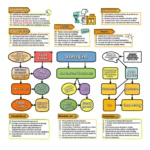
Daniel D. Pratt, in his seminal work Five Perspectives on Teaching in Adult and Higher Education, identified five distinct lenses through which teachers view their role. Think of these not as rigid boxes, but as tools in your toolbox. Sometimes you need a hammer; sometimes you need a screwdriver.
1. The Authority or Lecture Style: When the Teacher is the Sage
The Vibe: “I know, you listen.”
The Core: This is the Transmission perspective. The teacher is the expert, the content is fixed, and the goal is the efficient transfer of knowledge.
When to Use It:
- Introducing complex new concepts where a foundation is needed.
- Safety procedures or strict protocols (e.g., lab safety).
- Large lecture halls where individual interaction is limited.
The Pros: ✅ Efficient for covering large amounts of content. ✅ Clear structure and expectations.
The Cons: ❌ Can lead to passive learning. ❌ Ignores individual student needs.
Teacher Anecdote: I once tried to teach a whole semester of history using only this style. My students looked like zombies by week three. It wasn’t until I switched to a Facilitator approach for the Civil War unit that their eyes lit up.
2. The Delegator or Group Style: Empowering Student Autonomy
The Vibe: “You figure it out, I’ll watch.”
The Core: This aligns with the Apprenticeship and Social Reform perspectives. The teacher acts as a consultant or resource, while students take the wheel.
When to Use It:
- Project-Based Learning (PBL).
- Group research projects.
- Developing critical thinking and collaboration skills.
The Pros: ✅ Fosters independence and leadership. ✅ Builds strong peer-to-peer learning networks.
The Cons: ❌ Can be chaotic without clear guidelines. ❌ Some students may feel lost without direct instruction.
3. The Facilitator or Activity Style: Guiding the Discovery Process
The Vibe: “Let’s explore this together.”
The Core: Rooted in the Developmental perspective. The teacher guides students to discover answers themselves, focusing on the process of thinking rather than just the answer.
When to Use It:
- Socratic seminars.
- Inquiry-based science labs.
- Problem-solving scenarios.
The Pros: ✅ Deepens conceptual understanding. ✅ Encourages critical thinking.
The Cons: ❌ Time-consuming. ❌ Requires high levels of student motivation.
4. The Demonstrator or Hybrid Style: Showing, Not Just Telling
The Vibe: “Watch me do it, then you try.”
The Core: A blend of Authority and Facilitator. The teacher models the skill, then guides students as they practice.
When to Use It:
- Art, music, and physical education.
- Technical skills (coding, lab equipment).
- Writing workshops (think-aloud strategies).
The Pros: ✅ Provides a clear visual model. ✅ Reduces anxiety for beginners.
The Cons: ❌ Can be teacher-heavy if not balanced with student practice.
5. The Personalized or Student-Centered Style: Tailoring to Individual Needs
The Vibe: “This is your learning journey.”
The Core: Deeply rooted in the Nurturing perspective. The teacher focuses on the individual student’s emotional and cognitive needs, adapting content to their interests and readiness.
When to Use It:
- Differentiated instruction.
- One-one tutoring.
- Supporting students with diverse learning needs.
The Pros: ✅ Maximizes individual growth. ✅ Builds strong teacher-student relationships.
The Cons: ❌ Extremely difficult to manage in large classes. ❌ Requires extensive preparation.
| Approach | Primary Focus | Best For | Risk Factor |
|---|---|---|---|
| Authority | Content Delivery | Facts, Safety, Basics | Boredom |
| Delegator | Autonomy | Projects, Collaboration | Chaos |
| Facilitator | Discovery | Critical Thinking, Inquiry | Time Management |
| Demonstrator | Modeling | Skills, Procedures | Over-reliance on Teacher |
| Personalized | Individual Needs | Differentiation, Support | Scalability |
🧩 Comparing Teaching Styles: A Deep Dive into Methodologies
So, which one is the “winner”? Spoiler alert: There is no winner. It’s about situational flexibility.
Imagine you are a chef. You wouldn’t use a blender to chop a steak, nor would you use a knife to pure a soup. Similarly, a math teacher might use the Authority style to teach a new formula, then switch to the Facilitator style for a problem-solving session, and finally use the Personalized style for remediation.
The Trap of Rigidity:
Many new teachers fall in love with one style because it feels natural. If you’re an extrovert, you might lean toward Authority. If you’re a nurturer, you might default to Personalized. But if you only use one, you’re leaving half your students behind.
The “Blended” Reality:
Effective teachers are multilingual in their pedagogy. They can switch codes instantly.
- Scenario: A student is struggling with a concept.
Bad Response: “I already explained that.” (Authority)
Good Response: “Let’s try a different angle. Here’s a visual model (Demonstrator), then you try it with a partner (Delegator), and if you’re still stuck, let’s look at your specific notes (Personalized).”
For more on how to mix these styles effectively, explore our guide on Differentiated Instruction.
🌍 Culturally Responsive Teaching: Bridging the Gap Between Theory and Reality
Let’s get real for a second. You can have the best teaching style in the world, but if it doesn’t resonate with the students sitting in front of you, it’s useless. This is where Culturally Responsive Teaching (CRT) comes in.
Why Culturally Responsive Teaching Matters More Than Ever
As Cherese Childers-McKee from Northeastern University notes, “We don’t have students sitting in front of us with the same background or experience.” The classroom is a melting pot of cultures, languages, and experiences. Ignoring this is like ignoring the weather when planning a picnic.
The Stakes:
- Identity: CRT strengthens students’ sense of self.
- Equity: It levels the playing field for marginalized students.
- Engagement: When students see themselves in the curriculum, they care more.
Culturally Responsive vs. Traditional Teaching Methods: What’s the Difference?
| Feature | Traditional Teaching | Culturally Responsive Teaching |
|---|---|---|
| View of Student | “Blank Slate” | Brings rich prior knowledge and experience |
| Curiculum | Fixed, Eurocentric | Flexible, inclusive of diverse voices |
| Teacher Role | Sole Expert | Co-learner and facilitator |
| Goal | Standardization | Equity and critical consciousness |
| Assessment | One-size-fits-all | Varied and contextual |
Proven Culturally Responsive Teaching Strategies for Your Classroom
How do you actually do this? It’s not just about hanging a flag. It’s about the DNA of your instruction.
-
Activate Students’ Prior Knowledge:
Don’t assume they know nothing. Ask, “How does this relate to your life?” or “What have you heard about this topic?” This creates an anchor for new learning.
Tip: Use “KWL” charts (What I Know, What I Want to know, What I Learned) to start every unit. -
Make Learning Contextual:
Connect abstract concepts to the real world. If you’re teaching economics, don’t just talk about supply and demand; talk about the price of sneakers in their neighborhood or the cost of local groceries.
Action: Create projects where students solve problems in their own communities. -
Encourage Students to Leverage Their Cultural Capital:
Every student has “capital”—skills, knowledge, and experiences from their culture. Let them be the expert.
Caution: Don’t put a student on the spot to speak for their entire race. Instead, invite them to share their perspective. -
Reconsider Your Classroom Setup:
Audit your walls. Do your posters reflect the diversity of your students? Does your library have books by authors of color, LGBTQ+ authors, and authors from various socioeconomic backgrounds?
Resource: Check out Scholastic for diverse book lists. -
Build Relationships:
This is the bedrock. Students won’t learn from someone they don’t trust. Learn their names, their hobbies, and their stories.
Strategy: “Two Truths and a Lie” or “All About Me” projects at the start of the year.
For more on building these connections, visit our Classroom Management category.
🧠 Activating Prior Knowledge and Making Learning Contextual
Why do students tune out? Often, it’s because they can’t see the relevance.
How to Leverage Students’ Cultural Capital Effectively
“Cultural capital” sounds fancy, but it’s simple: it’s the stuff students bring with them.
- The Storyteller: The student who tells great stories at lunch? Use that skill for a narrative writing unit.
- The Gamer: The student who knows every level of Minecraft? Use game mechanics to explain complex systems.
- The Multilingual: The student who speaks two languages? Have them translate a text or compare idioms.
The “Expert” Trap:
Be careful not tokenize. You don’t want the only time a student speaks about their culture to be when you ask, “Tell us about your heritage.” Instead, weave it into the fabric of the lesson.
Reconsidering Your Classroom Setup
Your physical space sends a message.
- Seating: Are desks in rows (Authority) or circles (Facilitator)? Try flexible seating!
- Visuals: Are the faces on the wall diverse?
- Resources: Do you have materials in multiple languages?
Check out Amazon for diverse classroom decor ideas that reflect your students.
🤝 Building Relationships: The Secret Sauce of Effective Teaching
You can have the most brilliant lesson plan, but if a student feels unsafe or unseen, learning stops.
The Science of Connection:
Research shows that positive teacher-student relationships improve academic outcomes, behavior, and attendance. It’s not “soft”; it’s strategic.
Practical Tips:
- The 2×10 Strategy: Spend 2 minutes a day for 10 days talking to a challenging student about anything other than school. Watch the transformation.
- Greet at the Door: A simple “Good morning, [Name]” sets a positive tone.
- Listen to Understand: Don’t just listen to reply. Listen to understand their world.
For more on this, read our article on Collaborative Learning.
🚀 Active Learning in Higher Education: Benefits and Best Practices
Active learning isn’t just for K-12. In higher ed, the shift from passive lectures to active engagement is revolutionizing the university experience.
The Benefits:
- Higher Retention: Students remember what they do, not just what they hear.
- Critical Thinking: Active learning forces students to analyze and synthesize.
- Engagement: It breaks the monotony of the 50-minute lecture.
Best Practices:
- Think-Pair-Share: Ask a question, let students think, pair up to discuss, then share with the class.
- Case Studies: Present real-world scenarios and have students solve them.
- Peer Instruction: Have students teach each other.
🎤 Top Higher Education Conferences to Attend in 2024
Want to level up your game? Conferences are the place to be.
- HEDC (Higher Education Data Conference): Great for data-driven teaching.
- ASHE (Association for the Study of Higher Education): A hub for research and theory.
- Campus Technology: Where tech meets pedagogy.
Check Campus Technology for the latest conference schedules.
🛠️ Professional Development Opportunities for Modern Educators
You can’t stop learning. The best teachers are lifelong learners.
- EdD Programs: For those looking to lead change, a Doctor of Education is a game-changer.
- Micro-credentials: Short, focused courses on specific skills like “AI in the Classroom” or “Trauma-Informed Teaching.”
- Online Communities: Join groups on LinkedIn or Twitter/X to connect with peers.
🔮 Educating for the Future: Preparing Students for a Changing World
The world is changing faster than ever. AI, automation, and climate change are reshaping our reality. What skills do students need?
- Adaptability: The ability to unlearn and relearn.
- Critical Thinking: Questioning information, not just accepting it.
- Empathy: Understanding diverse perspectives in a globalized world.
Our job isn’t just to fill buckets; it’s to light fires. By blending the 5 teaching approaches with culturally responsive practices, we prepare students not just for a test, but for life.
✅ Conclusion

So, what are the 5 teaching approaches? They are the Authority, Delegator, Facilitator, Demonstrator, and Personalized styles. But the real answer is this: The best teacher is the one who knows when to use which.
We started this journey asking if there was a “perfect” style. The answer is a resounding no. The perfect teacher is a chameleon, shifting between these approaches to meet the needs of every student. Whether you are activating prior knowledge, leveraging cultural capital, or building relationships, the goal remains the same: to empower the learner.
Don’t be afraid to experiment. Try a new style. Fail, learn, and try again. That’s the heart of teaching.
🔗 Recommended Links
Books to Expand Your Pedagogical Toolkit:
- Five Perspectives on Teaching in Adult and Higher Education by Daniel D. Pratt: Search on Amazon
- Culturally Responsive Teaching and The Brain by Zareta Hammond: Search on Amazon
- The Art of Changing the Brain by James E. Zull: Search on Amazon
Tools for the Classroom:
- Kahoot! for interactive quizzes: Kahoot! Official Site
- Padlet for collaborative boards: Padlet Official Site
- Canva for Education for visual learning: Canva for Education
❓ FAQ

What role does technology play in enhancing teaching approaches and improving student outcomes in the classroom?
Technology acts as a force multiplier for all five teaching approaches.
- Authority: Use presentation tools like PowerPoint or Prezi to deliver content clearly.
- Delegator: Use platforms like Google Classroom or Microsoft Teams to manage group projects.
- Facilitator: Use simulation software or virtual labs (e.g., PhET Interactive Simulations) to allow students to explore concepts safely.
- Demonstrator: Use screen recording tools like Loom to model processes.
- Personalized: Use adaptive learning platforms like Khan Academy or IXL that adjust to individual student levels.
How can teachers incorporate different learning styles into their instruction to promote student success?
While the concept of “learning styles” (visual, auditory, kinesthetic) is debated, the principle of multimodal instruction is solid. Present information in multiple ways:
- Visual: Charts, diagrams, videos.
- Auditory: Lectures, discussions, podcasts.
- Kinesthetic: Hands-on activities, role-playing, movement.
By hitting all three, you ensure that every student has a pathway to understanding.
What are the 5 different curriculum approaches?
Curiculum approaches often align with teaching styles but focus on what is taught:
- Subject-Centered: Focus on the discipline (e.g., Math, History).
- Learner-Centered: Focus on student interests and needs.
- Problem-Centered: Focus on real-world problems.
- Core Curriculum: A shared set of knowledge for all.
- Integrated Curriculum: Blending subjects (e.g., STEAM).
Read more about “🚀 10 Strategies for Promoting Interdisciplinary Teaching Approaches (2026)”
What are the 5 basic approaches to values education?
Values education often mirrors the teaching perspectives:
- Transmission: Teaching specific values directly.
- Apprenticeship: Modeling values through behavior.
- Developmental: Guiding students to develop their own moral reasoning.
- Nurturing: Creating a caring environment where values are lived.
- Social Reform: Engaging students in social justice to enact change.
Read more about “What Are Teaching Learning Strategies? 15 Proven Methods for 2026 🎓”
What are the 5 major approaches of pedagogy learning?
This is essentially the same as the 5 teaching approaches (Pratt’s framework):
- Transmission (Authority)
- Apprenticeship (Delegator/Demonstrator)
- Developmental (Facilitator)
- Nurturing (Personalized)
- Social Reform (Delegator/Facilitator blend)
Read more about “7 Proven Strategies for Implementing Project-Based Learning Effectively (2026) 🚀”
What are the 5 types of teaching styles?
See the section “The 5 Core Teaching Approaches You Need to Master” above. They are:
- Authority
- Delegator
- Facilitator
- Demonstrator
- Personalized
Read more about “🚀 10 Strategies to Master Diverse Learning Styles (2026)”
What is the 5 step model of teaching?
This often refers to the 5E Instructional Model (Engage, Explore, Explain, Elaborate, Evaluate), which is a constructivist approach. It aligns closely with the Facilitator style.
- Engage: Hook the student.
- Explore: Let them investigate.
- Explain: Clarify concepts.
- Elaborate: Apply to new situations.
- Evaluate: Assess understanding.
Read more about “🎵 What Are the 10 Hits? The Ultimate 2026 Chart Breakdown”
What are the 6 approaches in teaching?
Some frameworks add a sixth approach, often Social Reform as a distinct category from the others, or Technology-Enhanced as a standalone. However, Pratt’s original framework focuses on the five perspectives listed above.
Read more about “35+ Powerful Instructional Strategies for the Classroom (2026) 🚀”
What are the basic approaches of teaching?
The basic approaches are the Teacher-Centered (Authority), Student-Centered (Personalized/Facilitator), and Hybrid (Demonstrator/Delegator) models.
Read more about “🎓 15+ Strategies for Teaching with Educational Podcasts & Videos (2026)”
What are the 5 approaches to education?
This is a broad term that can refer to:
- Traditional
- Progressive
- Constructivist
- Humanistic
- Behaviorist
These philosophical underpinnings influence the specific teaching styles used in the classroom.
Read more about “12 Proven Strategies for Increasing Student Engagement and Motivation (2026) 🚀”
How do the 5 teaching approaches improve student engagement?
By matching the approach to the task and the student. A bored student in a lecture might light up in a group project. A confused student might find clarity in a demonstration. Variety keeps engagement high.
Read more about “🚀 7 Ways Formative Assessments Transform Teaching (2026)”
Which of the 5 teaching approaches is best for diverse classrooms?
There is no single “best,” but the Personalized and Culturally Responsive blends are most effective for diversity. They allow for flexibility and acknowledge the unique backgrounds of all students.
Read more about “7 Proven Strategies for Differentiated Instruction (2026) 🚀”
What are the pros and cons of each of the 5 teaching approaches?
- Authority: Pros = Efficiency; Cons = Passivity.
- Delegator: Pros = Autonomy; Cons = Chaos.
- Facilitator: Pros = Deep Learning; Cons = Time.
- Demonstrator: Pros = Clarity; Cons = Dependency.
- Personalized: Pros = Inclusion; Cons = Scalability.
Read more about “🤝 7 Teacher Collaboration Strategies That Transform Schools (2026)”
How can teachers effectively combine the 5 teaching approaches for better results?
By practicing Situational Flexibility. Start with Authority to introduce a topic, move to Demonstrator to model it, use Facilitator for exploration, Delegator for application, and Personalized for support. It’s a dance, not a monologue.
Read more about “12 Game-Changing Strategies for Struggling Learners 🚀 (2026)”
📚 Reference Links
- Pratt, D. D. (2015). Five Perspectives on Teaching in Adult and Higher Education. Krieger Publishing Company.
- Northeastern University. (n.d.). Culturally Responsive Teaching: Overview and 5 Strategies. Graduate Northeastern Knowledge Hub.
- TeachHub. (2019). Top 5 Teaching Strategies. TeachHub.
- University of Colorado Boulder. (n.d.). Five Teaching Styles: Perspectives on Teaching (Pratt). Center for Teaching & Learning.
- National Training Laboratories. (n.d.). The Learning Pyramid. NTL Institute.
- Gardner, H. (1983). Frames of Mind: Theory of Multiple Intelligences. Basic Books.
- Dewey, J. (1938). Experience and Education. Kappa Delta Pi.
- Montessori, M. (1912). The Montessori Method. Frederick A. Stokes Company.