Support our educational content for free when you buy through links on our site. Learn more
🚀 What is 4E’s Lesson Plan? The 4-Step Guide to Instant Engagement (2026)


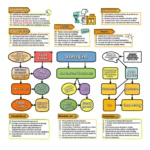
The 4E’s lesson plan is a streamlined, four-phase instructional framework (Engage, Explore, Explain, Evaluate) designed to maximize student inquiry and mastery within a single 50-minute class period. If you’ve ever asked yourself, “What is 4E’s lesson plan?” and felt overwhelmed by the jargon, the answer is simple: it’s the 5E model’s faster, punchier cousin that cuts out the fluff to get straight to the “aha!” moments.
Imagine a classroom where students aren’t passively copying notes but are actually arguing over why a balloon sticks to a wall before you’ve even defined “static electricity.” That’s the power of the Engage and Explore phases. Research from the Journal of College Science Teaching suggests that this inquiry-based approach significantly boosts retention compared to traditional lecture methods, especially when time is tight.
Many teachers struggle to fit the full 5E model into a standard block, often leaving the crucial “Elaborate” phase unfinished. The 4E model solves this by merging extension activities into the Evaluate phase, ensuring every lesson ends with a concrete proof of learning rather than a rushed exit.
Key Takeaways
- The Core Structure: The 4E model consists of Engage, Explore, Explain, and Evaluate, offering a complete learning cycle in just one class period.
- Time Efficiency: Unlike the 5E model, the 4E framework is specifically optimized for 50-minute lessons, making it ideal for tight schedules.
- Student-Led Discovery: The Explore phase shifts the focus from teacher lectures to hands-on, student-driven investigation.
- Integrated Assessment: The Evaluate phase doubles as the “Elaborate” step, forcing students to apply concepts immediately to new scenarios.
- Misconception Correction: The Explain phase is strategically placed after exploration to directly address and correct student errors.
Table of Contents
- ⚡️ Quick Tips and Facts
- 📜 The Origins: Tracing the History of the 4E Instructional Model
- 🧠 Deconstructing the Framework: What is the 4E Lesson Plan?
- 🚀 The 4E Lesson Plan Breakdown: A Step-by-Step Guide to Engage, Explore, Explain, and Evaluate
- 1. 🎣 Engage: Hooking Students Before the Learning Begins
- 2. 🔍 Explore: Hands-On Discovery and Student-Led Inquiry
- 3. 🗣️ Explain: Clarifying Concepts and Connecting the Dots
- 4. 📊 Evaluate: Assessing Understanding Beyond the Multiple Choice
- 🆚 4E vs. 5E: Is the “Elaborate” Step Missing or Just Hidden?
- 🛠️ Building Your Blueprint: How to Write a 4E Lesson Plan That Actually Works
- 🏫 Real-World Examples: 4E Lesson Plan Templates for Science, Math, and ELA
- 🚫 Common Pitfalls: Why Your 4E Lesson Plan Might Be Failing (And How to Fix It)
- 💡 Quick Tips and Facts for Mastering the 4E Model
- 📚 Recommended Links: Tools and Resources for the Modern Educator
- ❓ FAQ: Your Burning Questions About the 4E Instructional Model Answered
- 🔗 Reference Links: Sources and Further Reading
- 🏁 Conclusion: Is the 4E Lesson Plan the Secret Sauce Your Classroom Needs?
⚡️ Quick Tips and Facts
Before we dive headfirst into the deep end of lesson planning, let’s hit the pause button and grab a few life preservers. If you’re scrolling through this because you’re staring at a blank document wondering, “What on earth is a 4E’s lesson plan?”, you’re in the right place. But first, here are the non-negotiables you need to know right now:
- It’s Not Just a Buzzword: The 4E model isn’t some new fad invented last Tuesday. It’s a condensed, high-octane version of the famous 5E model, specifically engineered for shorter class periods (think 50 minutes) where the “Elaborate” phase often gets the chop or gets merged into the “Evaluate” phase.
- The Four Pillars: The acronym stands for Engage, Explore, Explain, and Evaluate. That’s it. No magic spells, just solid pedagogy.
- Student-Led, Not Teacher-Led: If you find yourself talking for 40 minutes straight, you’ve already failed the 4E test. The students must do the heavy lifting during the Explore phase.
- Flexibility is Key: Unlike rigid scripts, the 4E model is a framework, not a cage. You can adapt the timing and activities to fit your specific classroom chaos.
- The “Missing” E: You might be wondering, “Where is the ‘Elaborate’?” In many 4E adaptations, especially for one-hour blocks, the Elaborate step is either integrated into the Evaluate phase or omitted to ensure the core concepts are mastered within the time limit.
Pro Tip: If you’re looking for a different framework that focuses heavily on activation and application, you might want to check out our deep dive on What is the 4 As strategy in teaching?. It’s a great alternative if the 4E model doesn’t quite fit your curriculum needs!
📜 The Origins: Tracing the History of the 4E Instructional Model

Let’s take a quick trip down memory lane. You probably know the 5E Instructional Model (Engage, Explore, Explain, Elaborate, Evaluate) like the back of your hand. It was developed by the Biological Sciences Curriculum Study (BSCS) in the 1980s and became the gold standard for inquiry-based learning. It’s the “classic” that every education student memorizes.
But here’s the plot twist: Time is the enemy of the 5E model.
In the real world, not every school has a 3-hour block to let students slowly “Elaborate” on a concept. Enter the 4E Instructional Model. This isn’t a brand-new invention from a Silicon Valley startup; it’s a pragmatic evolution born out of necessity.
According to research published in the Journal of College Science Teaching, the 4E model was specifically designed for preservice science teachers and one-hour online science lessons. The goal? To maintain the rigor of inquiry-based learning while fitting into the tight constraints of a standard 50-minute period.
“This article proposes a 4E instructional model for a one-hour online science class… and provides suggestions for integrating the practices of science.” — Journal of College Science Teaching
The 4E model strips away the “Elaborate” phase (or merges it) to ensure that the core cycle of Engage, Explore, Explain, and Evaluate can be completed without rushing the students’ understanding. It’s the difference between a gourmet 5-course meal and a perfectly executed, high-quality bistro lunch. Both are delicious, but one fits better into a busy Tuesday.
Why the shift?
- Efficiency: It forces teachers to be laser-focused on the learning objectives.
- Adaptability: It works wonders in virtual environments where “Elaborate” activities can be logistically nightmares.
- Focus: It prevents the “activity trap” where students are busy but not actually learning the core concept.
🧠 Deconstructing the Framework: What is the 4E Lesson Plan?
So, what exactly is this beast? The 4E Lesson Plan is a structured instructional framework that guides teachers through four distinct phases of learning. It’s designed to move students from curiosity to mastery in a streamlined fashion.
Unlike traditional “lecture-then-test” methods, the 4E model flips the script. It asks students to discover the concept before the teacher even explains it.
The Core Philosophy
The underlying philosophy is that knowledge and practice must be intertwined. You can’t just tell a student what a lever is; they have to feel the leverage. The 4E model ensures that:
- Prior Knowledge is Activated: We don’t start from zero; we start from what they already know (or think they know).
- Misconceptions are Addressed: The Explore phase is where the “aha!” moments (and the “wait, that’s wrong!” moments) happen.
- Concepts are Constructed: Students build their own understanding, which makes it stickier.
- Assessment is Ongoing: Evaluate isn’t just a test at the end; it’s a continuous check for understanding.
How It Differs from the 5E Model
This is where things get tricky. Many teachers confuse the two. Here is the breakdown:
| Feature | 5E Model | 4E Model |
|---|---|---|
| Phases | Engage, Explore, Explain, Elaborate, Evaluate | Engage, Explore, Explain, Evaluate |
| Time Requirement | Typically 2–4 hours (or multiple class periods) | Optimized for 50–60 minutes |
| Elaborate Phase | Explicitly separate; focuses on extending learning to new contexts | Often merged into Evaluate or omitted for time |
| Best Use Case | Deep, multi-day inquiry projects | Single-period lessons, online classes, or review sessions |
| Focus | Deep conceptual transfer and extension | Core concept mastery and immediate application |
The Big Question: If we remove “Elaborate,” do we lose the depth of learning?
Not necessarily. In the 4E model, the Evaluate phase is often more rigorous. Instead of just “doing more,” students are asked to apply the concept immediately to a new scenario, effectively doing the work of the Elaborate phase within the assessment itself.
🚀 The 4E Lesson Plan Breakdown: A Step-by-Step Guide to Engage, Explore, Explain, and Evaluate
Ready to build your lesson? Let’s break down each of the four Es. We’ll use a classic science example (Simple Machines) and a math example (Kinetic Energy) to show you how this works in the wild.
1. 🎣 Engage: Hooking Students Before the Learning Begins
Time Allocation: ~8 minutes
Goal: Grab attention, activate prior knowledge, and surface misconceptions.
This is the “hook.” You aren’t teaching the content yet; you’re planting a seed of curiosity. If you start with “Today we are learning about levers,” you’ve lost them. Instead, try: “How can I lift this heavy textbook with just one finger?”
What happens here?
- The Phenomenon: Show a video, a weird object, or a puzzling question.
- The Question: Ask open-ended questions that have no single right answer yet.
- The Connection: Ask students to share what they think they know.
Real-World Example:
In a lesson on Static Electricity, the teacher rubs a balloon on a sweater and sticks it to the wall.
- Teacher: “How did I stick this balloon to the wall without using glue? What’s happening here?”
- Student Response: “Magic?” “Static?” “It’s sticky?”
- Teacher: “Great guesses! Let’s find out which one is right.”
Why it works: It creates a “knowledge gap.” Students feel the itch to know the answer, which drives them through the rest of the lesson.
Teacher Strategy: Don’t correct them yet! If a student says “It’s magic,” write it down. We’ll address it in the Explain phase. This is crucial for Critical Thinking development.
2. 🔍 Explore: Hands-On Discovery and Student-Led Inquiry
Time Allocation: ~20 minutes
Goal: Students investigate the concept, collect data, and test their hypotheses.
This is the heart of the 4E model. You are the facilitator, not the lecturer. The students are the scientists. They need to get their hands dirty (literally or digitally).
What happens here?
- Active Learning: Students work in groups, manipulate materials, or run simulations.
- Data Collection: They record observations, not just answers.
- Collaboration: They discuss their findings with peers.
Real-World Example:
Using the Simple Machines lesson plan from Scribd:
- Activity: Students visit stations with images or real objects (a ramp, a puley, a screw).
- Task: “Visit each station, try out the machine, and write down what type of simple machine it is and how it makes work easier.”
- Tool: In a virtual setting, students might use the PhET Interactive Simulations (like “Ballons and Static Electricity”) to move charges around and see what happens.
Common Pitfall:
If the teacher is explaining the rules while the students are waiting, you’ve wasted time. The instructions should be clear, and then let them go.
Pro Tip: Use Collaborative Learning strategies here. Assign roles like “Recorder,” “Material Manager,” and “Timekeeper” to keep groups on track.
3. 🗣️ Explain: Clarifying Concepts and Connecting the Dots
Time Allocation: ~15 minutes
Goal: Students articulate their understanding, and the teacher introduces formal vocabulary and corrects misconceptions.
Now the teacher steps in. But wait! The students go first. This is the “Art of Questioning.”
What happens here?
- Student Sharing: Groups present their findings. “We found that the ramp makes it easier to lift the box.”
- Teacher Synthesis: The teacher connects their observations to the formal concept. “Exactly! That’s an inclined plane. It reduces the force needed by increasing the distance.”
- Vocabulary Introduction: Now is the time to define Lever, Fulcrum, Puley, etc.
- Misconception Correction: “Remember when someone said it was magic? Well, it’s actually electrostatic induction.”
The “Aha!” Moment:
This is where the pieces click. The students realize their exploration wasn’t just playing; it was data collection.
Real-World Example:
In the Static Electricity lesson:
- Teacher: “You noticed the leaves of the electroscope moved apart. Why?”
- Student: “Because they have the same charge?”
- Teacher: “Bingo! Like charges repel. And remember, it’s the electrons moving, not the protons.”
Teacher Strategy: Use visual aids like diagrams of atomic structure or videos of electroscopes to reinforce the explanation. This is a perfect time to link to Differentiated Instruction by providing visual, auditory, and kinesthetic explanations.
4. 📊 Evaluate: Assessing Understanding Beyond the Multiple Choice
Time Allocation: ~7 minutes
Goal: Assess individual understanding and apply the concept to a new situation.
In the 4E model, Evaluate is often the “Elaborate” in disguise. It’s not just a bubble sheet. It’s a check for mastery.
What happens here?
- Formative Assessment: Quick quizzes, exit tickets, or “puzzle” scenarios.
- Application: Students solve a new problem using the concept they just learned.
- Reflection: Students self-assess their understanding.
Real-World Example:
- The Puzzle: “Here is a scenario: A neutral electroscope is touched by a negatively charged rod. What happens to the leaves? Draw the charge distribution.”
- The Challenge: “Design a simple machine to help a cat get out of a tree.” (This is the Elaborate element merged into Evaluate).
Why it matters:
If you skip this, you don’t know if they actually learned anything. The 4E model ensures that every lesson ends with a proof of learning.
🆚 4E vs. 5E: Is the “Elaborate” Step Missing or Just Hidden?
This is the million-dollar question. Is the 4E model “leser” because it lacks the “Elaborate” phase?
The Short Answer: No.
The Long Answer: It depends on how you define “Elaborate.”
In the 5E model, the Elaborate phase is a distinct step where students apply their knowledge to a new context, often over a longer period. In the 4E model, this is often integrated into the Evaluate phase.
| Feature | 5E Model | 4E Model |
|---|---|---|
| Elaborate Phase | Separate, extended activity (e.g., a week-long project) | Merged into Evaluate (e.g., a complex problem-solving task) |
| Time | Flexible, often multi-day | Compressed into a single period |
| Focus | Deep transfer of learning | Immediate application and mastery |
| Risk | Can drag on too long | Can feel rushed if not planned well |
Why the 4E works for short lessons:
If you only have 50 minutes, spending 15 minutes on a separate “Elaborate” activity might mean you never get to the Explain phase properly. By merging them, you ensure the core concept is solidified before the bell rings.
When to use which?
- Use 5E: For deep dives, unit projects, or when you have multiple class periods.
- Use 4E: For single-period lessons, review sessions, online classes, or when time is tight.
Insight: The 4E model is not a “dumbed down” version; it’s a streamlined version. It forces teachers to be more intentional about every minute of the lesson.
🛠️ Building Your Blueprint: How to Write a 4E Lesson Plan That Actually Works
Okay, you’re convinced. Now, how do you write one? Don’t panic. Follow this step-by-step blueprint.
Step 1: Define Your Objective
What do you want students to know and do by the end of the lesson?
- Bad Objective: “Learn about simple machines.”
- Good Objective: “Students will be able to identify and differentiate between the six types of simple machines and explain how they reduce effort.”
Step 2: Plan the Engage (The Hook)
- Activity: Choose a phenomenon, video, or question.
- Question: “What do you think is happening?”
- Time: 5-8 minutes.
Step 3: Design the Explore (The Investigation)
- Materials: What do they need? (Real objects, simulations, handouts).
- Grouping: How will they work? (Pairs, small groups).
- Task: What is the specific task? (Record data, build a model).
- Time: 15-20 minutes.
Step 4: Script the Explain (The Clarification)
- Discussion Questions: What will you ask to guide them?
- Vocabulary: What terms must be defined?
- Misconceptions: What common errors do you need to address?
- Time: 10-15 minutes.
Step 5: Create the Evaluate (The Proof)
- Assessment: Exit ticket, puzzle, or quick quiz.
- Application: A new scenario to solve.
- Time: 5-7 minutes.
Template Tip: Use a table to map out your lesson. It helps you see if the timing adds up.
| Phase | Activity | Time | Materials | Assessment |
|---|---|---|---|---|
| Engage | Baloon on wall demo | 8 min | Baloon, sweater | Observation |
| Explore | PhET Simulation | 20 min | Tablets/PC | Data sheet |
| Explain | Class discussion & vocab | 15 min | Whiteboard | Q&A |
| Evaluate | Charge distribution puzzle | 7 min | Worksheet | Completed puzzle |
🏫 Real-World Examples: 4E Lesson Plan Templates for Science, Math, and ELA
Let’s see this in action across different subjects.
Example 1: Science (Simple Machines)
- Engage: Show a video of a can opener. Ask: “How does this tiny tool cut through metal?”
- Explore: Station rotation. Students test levers, puleys, and inclined planes. Record how much force is needed.
- Explain: Define Lever, Fulcrum, Mechanical Advantage. Correct the idea that “machines create energy” (they just change force/distance).
- Evaluate: Design a “Rube Goldberg” machine sketch that uses at least two simple machines to open a door.
Example 2: Math (Kinetic and Potential Energy)
- Engage: Drop a water bottle from different heights. Ask: “Why does it hurt more when dropped from higher up?”
- Explore: Students use a simulation (like PhET Energy Skate Park) to change mass and height and record the energy values.
- Explain: Introduce formulas $PE = mgh$ and $KE = 1/2 mv^2$. Explain the relationship between height and speed.
- Evaluate: Solve a word problem: “If a 2kg ball is dropped from 10m, what is its speed just before hitting the ground?”
Example 3: ELA (Persuasive Writing)
- Engage: Show two ads for the same product. Ask: “Which one makes you want to buy it? Why?”
- Explore: Students analyze a set of ads, identifying emotional appeals, logos, and ethical arguments.
- Explain: Define Ethos, Pathos, Logos. Discuss how they work together.
- Evaluate: Write a 3-sentence persuasive pitch for a school lunch using one of each appeal.
🚫 Common Pitfalls: Why Your 4E Lesson Plan Might Be Failing (And How to Fix It)
Even the best plans can go sideways. Here are the most common mistakes we see at Teacher Strategies™ and how to fix them.
❌ Pitfall 1: The “Engage” is too long
Problem: You spend 20 minutes on the hook, and now you have no time for the rest.
Fix: Keep the Engage phase under 8 minutes. It’s a teaser, not the main course.
❌ Pitfall 2: The “Explore” is just busy work
Problem: Students are moving things around but not thinking.
Fix: Ensure the Explore activity has a clear data collection goal. Ask: “What are you looking for?” before they start.
❌ Pitfall 3: The “Explain” is a lecture
Problem: You talk for 15 minutes and students zone out.
Fix: Use the 50/50 rule. Students talk 50% of the time, you talk 50%. Ask questions, don’t just give answers.
❌ Pitfall 4: The “Evaluate” is just a quiz
Problem: Students memorize for the test and forget it tomorrow.
Fix: Make the Evaluate phase an application task. “Use what you learned to solve this new problem.”
❌ Pitfall 5: Ignoring Misconceptions
Problem: You move on without correcting the wrong ideas from the Engage phase.
Fix: Explicitly address the misconceptions in the Explain phase. “Remember when we thought X? Here’s why that’s actually Y.”
Teacher Strategy: If you’re struggling with classroom management during the Explore phase, check out our guide on Classroom Management for tips on keeping groups focused.
💡 Quick Tips and Facts for Mastering the 4E Model
Let’s wrap up the main content with some final nugets of wisdom.
- Time is Tight: The 4E model is designed for 50-minute blocks. If you have 90 minutes, consider adding an Elaborate phase to make it a 5E lesson.
- Simulations are Gold: For virtual or resource-limited classrooms, tools like PhET are essential for the Explore phase.
- Flexibility: Don’t be a slave to the minutes. If the Explore phase is going well, let it run a bit longer and shorten the Explain phase.
- Student Voice: The more students talk, the better the learning. If you’re talking more than 50% of the time, you’re doing it wrong.
- Real-World Connection: Always tie the lesson back to real life. “How does this help you in your daily life?”
Final Thought: The 4E model is a powerful tool, but it’s not a magic wand. It requires planning, practice, and a willingness to let go of control. But when it works? It’s pure magic.
🏁 Conclusion: Is the 4E Lesson Plan the Secret Sauce Your Classroom Needs?

So, we’ve traveled from the origins of the model to the nitty-gritty of building a lesson plan. We’ve seen how the 4E model (Engage, Explore, Explain, Evaluate) offers a streamlined, high-impact alternative to the traditional 5E model, especially for those tight 50-minute class periods.
The Verdict:
- ✅ Pros: Highly efficient, student-centered, excellent for addressing misconceptions, and perfect for single-period lessons.
- ❌ Cons: Can feel rushed if not planned carefully; the “Elaborate” phase is often merged, which might limit deep extension for some learners.
Our Recommendation:
If you are a teacher looking to inject more inquiry and active learning into your daily routine without spending hours planning, the 4E Lesson Plan is your best friend. It forces you to be intentional, keeps students engaged, and ensures that learning actually happens.
But here’s the catch: The 4E model isn’t a one-size-fits-all solution. If you have the time and resources for a deep dive, the 5E model might better. But for the everyday hustle of a 50-minute class? The 4E is the champion.
The Unresolved Question:
We asked earlier: “Is the ‘Elaborate’ step missing or just hidden?” The answer is hidden. It’s woven into the Evaluate phase, where students apply their knowledge to new scenarios. This integration ensures that the lesson doesn’t just end with a test, but with mastery.
Ready to try it out? Grab your lesson plan template, pick a topic, and let the Engage begin!
📚 Recommended Links: Tools and Resources for the Modern Educator
To help you implement the 4E model, here are some essential tools and resources.
Digital Simulations & Tools
- PhET Interactive Simulations: The go-to for science simulations (Static Electricity, Energy Skate Park, etc.).
👉 Shop PhET Simulations on: Amazon | PhET Official Website - Google Classroom: Perfect for distributing handouts and collecting digital worksheets.
Google Classroom Official Website: Google Classroom
Books & Guides
- “The 5E Instructional Model: A Guide for Teachers” by Bybee et al. (Great for understanding the roots of the 4E model).
Check Price on: Amazon | Barnes & Noble - “Inquiry-Based Science Teaching” by various authors.
Check Price on: Amazon
Classroom Supplies
- Simple Machine Kits: Great for the Explore phase.
👉 Shop Simple Machine Kits on: Amazon | Walmart - Electroscopes: For physics lessons.
👉 Shop Electroscopes on: Amazon | Science Kit & Boreal Labs
❓ FAQ: Your Burning Questions About the 4E Instructional Model Answered
How can educators assess the effectiveness of the 4E’s lesson plan in achieving learning objectives and make data-driven decisions to improve instruction?
To assess effectiveness, educators should use formative assessments during the Evaluate phase, such as exit tickets, quick quizzes, or performance tasks. By analyzing the data from these assessments, teachers can identify which students struggled with specific concepts and adjust future instruction accordingly. For example, if 50% of the class fails to apply the concept in the Evaluate phase, the teacher might need to revisit the Explain phase in the next lesson.
What are some strategies for incorporating the 4E’s model into existing curriculum and teaching practices to enhance student learning outcomes?
Start small. Pick one unit or lesson to convert to the 4E model. Focus on the Engage and Explore phases first, as these are the most impactful. Use existing resources like PhET simulations or hands-on kits to facilitate the Explore phase. Gradually integrate the Explain and Evaluate phases as you become more comfortable with the flow.
How can teachers use the 4E’s lesson plan to promote student engagement and motivation in the classroom?
The Engage phase is key. Use real-world phenomena, puzzles, or controversial questions to spark curiosity. During the Explore phase, give students autonomy to investigate and discover. When students feel like they are discovering the answer rather than being told, their motivation skyrockets.
What are the key components of the 4E’s instructional model and how can they be applied to create an effective lesson plan?
The key components are Engage, Explore, Explain, and Evaluate.
- Engage: Hook students and activate prior knowledge.
- Explore: Let students investigate and collect data.
- Explain: Clarify concepts and correct misconceptions.
- Evaluate: Assess understanding and apply knowledge.
Apply them by planning each phase with specific activities and time limits, ensuring a smooth flow from curiosity to mastery.
What are the 4 E’s in education?
The 4 E’s in education refer to the Engage, Explore, Explain, and Evaluate phases of the 4E Instructional Model. This model is a streamlined version of the 5E model, designed for shorter class periods.
Read more about “7 Proven Strategies for Integrating Global Education & Exchange 🌍”
What is the 5 E’s lesson plan model?
The 5 E’s lesson plan model includes Engage, Explore, Explain, Elaborate, and Evaluate. It is a more comprehensive model that allows for a separate Elaborate phase, where students apply their knowledge to new contexts over a longer period.
Read more about “12 Strategies for Teaching Financial Decision-Making & Entrepreneurship (2026) 🚀”
What is a 4A’s lesson plan?
The 4A’s lesson plan is a different framework that stands for Activity, Analysis, Abstraction, and Application. It focuses on activating prior knowledge through activities, analyzing the results, abstracting the concept, and applying it to new situations. It’s similar to the 4E model but uses different terminology and structure.
Read more about “What Is Abstraction in a Lesson Plan? Meaning and Examples”
What are the 4es of learning?
The 4es of learning are Engage, Explore, Explain, and Evaluate. These are the four phases that guide the learning process in the 4E Instructional Model.
Read more about “7 Proven Strategies for Integrating SEL in Daily Lessons (2026) 🧠”
What is the 4E model of teaching?
The 4E model of teaching is a pedagogical framework that structures lessons into four phases: Engage, Explore, Explain, and Evaluate. It is designed to promote inquiry-based learning and is particularly effective for single-period lessons.
Read more about “🧠 What Are Five Learning Strategies? The Science-Backed List for 2026”
What are the 6 E’s of a lesson plan?
The 6 E’s of a lesson plan extend the 5E model by adding Elicit and Extend phases. The 6 E’s are Elicit, Engage, Explore, Explain, Elaborate, and Evaluate. This model provides even more structure for complex learning tasks.
Read more about “🚀 4 Ways the Four As Strategy Transforms Education (2026)”
What are the 3 E’s lesson plan?
The 3 E’s lesson plan is a simplified version that focuses on Engage, Explore, and Explain. It omits the Evaluate phase, which is generally not recommended assessment is crucial for learning.
Read more about “Maker Spaces and Hands-On Learning: 7 Classroom Strategies”
🔗 Reference Links: Sources and Further Reading
- Biological Sciences Curriculum Study (BSCS): The 5E Instructional Model
- National Science Teaching Association (NSTA): Preservice Science Teachers and the 4E Model
- PhET Interactive Simulations: University of Colorado Boulder
- Scribd: 4Es Detailed Lesson Plan: Energy Concepts
- Scribd: Simple Machines 4E’s Lesson Plan
- Teacher Strategies™: Differentiated Instruction
- Teacher Strategies™: Classroom Management
- Teacher Strategies™: Assessment Techniques
- Teacher Strategies™: Critical Thinking
- Teacher Strategies™: Collaborative Learning
- Teacher Strategies™: What is the 4 As strategy in teaching?