Support our educational content for free when you buy through links on our site. Learn more
How Can Lesson Plans Help Manage Classroom Behavior? 🎯

How can lesson plans help in managing classroom behavior? By making learning clear, engaging, and predictable, a thoughtfully planned lesson can prevent avoidable confusion and give students practical ways to participate. It won’t eliminate every disruption, but it helps teachers anticipate tricky moments and respond calmly.
One of our teachers once told students, “Just get started,” then watched the class interpret that instruction in several creative ways—including one very serious pencil-sharpening expedition. The fix was a simple three-step warm-up on the board. Clear directions did more than a louder reminder ever could.
Key Takeaways
- Plan for behavior as well as learning: Include routines, transitions, participation, and support in your lesson plan.
- Make the next step obvious: Clear directions, models, and ready materials reduce uncertainty and waiting.
- Use engaging, appropriately challenging activities: Give students meaningful ways to think, respond, and practice.
- Teach expectations and routines: Explain, model, and rehearse what successful participation looks like.
- Prepare flexible responses: Use calm redirection, check for barriers, and adjust the lesson when students need support.
- Reflect and refine: Notice where students struggled or engaged, then use those observations to improve the next lesson.
Table of Contents
- ⚡ Quick Tips and Facts: Lesson Plans for Classroom Behavior
- 🌟 The Big Takeaways: Why Lesson Planning Shapes Classroom Behavior
- 📚 Background: How Lesson Planning and Behavior Management Work Together
- 🔍 What Does It Mean to Manage Classroom Behavior Through Lesson Planning?
- 🎯 Why Lesson Plans Help Prevent and Address Classroom Behavior Challenges
- Benefits for Students, Teachers, and Learning Time
- How Predictable Routines Support Student Self-Regulation
- 🧩 Essential Lesson Plan Components for Positive Classroom Behavior
- Clear Learning Goals, Directions, and Transitions
- Engaging Activities and Appropriate Pacing
- Differentiation, Choice, and Student Support
- Behavior Expectations, Routines, and Reinforcement
- 📋 Classroom Rules, Expectations, and Fair Consequences
- Teach Expectations Before Problems Arise
- Use Logical, Consistent, and Respectful Responses
- 🛠️ How to Build a Lesson Plan That Supports Positive Behavior
- Identify Likely Behavior Triggers and Busy Moments
- Plan Routines, Transitions, and Materials in Advance
- Add Engagement, Movement, and Brain Breaks
- Prepare Responses for Disruptions and Off-Task Behavior
- Reflect on What Worked After the Lesson
- ✅ Positive Classroom Management Strategies to Include in Lesson Plans
- Build Relationships and Create a Welcoming Climate
- Use Active Supervision and Clear, Calm Directions
- Offer Meaningful Choices and Student Voice
- Reinforce Helpful Behaviors Without Overusing Rewards
- 🧠 Behavior Management Techniques and Reinforcement Strategies
- Specific Praise, Feedback, and Positive Narration
- Precorection, Redirection, and Restorative Responses
- When to Use Individual Behavior Supports
- 📝 Classroom Behavior Lesson Plan Examples
- General Classroom Management Lesson Plan Example
- Elementary School Lesson Plan Example
- Middle School Lesson Plan Example
- High School Lesson Plan Example
- 🎒 Adapting Classroom Behavior Strategies by Grade Level
- Elementary Classroom Routines and Behavior Supports
- Middle School Motivation, Belonging, and Independence
- High School Respect, Autonomy, and Accountability
- ♿ Inclusive Lesson Planning for Diverse Learners
- Supporting Students with ADHD, Autism, and Learning Differences
- Trauma-Informed and Culturally Responsive Classroom Practices
- English Learners and Accessible Directions
- 📄 Classroom Behavior Lesson Plan Template and Planning Checklist
- What to Include in a Behavior-Supportive Lesson Plan
- Quick-Start Classroom Management Checklist
- ⚠️ Common Lesson Planning Mistakes That Can Fuel Behavior Problems
- 🔄 How to Adapt and Improve Your Classroom Behavior Plan
- Use Observation and Behavior Data to Guide Adjustments
- Partner with Families, Coleagues, and Support Staff
- 🔗 Classroom Management Resources and Professional Learning
- Evidence-Based Guides and Teacher Tools
- Classroom Management Courses and Continuing Education
- ❓ Frequently Asked Questions About Lesson Plans and Classroom Behavior
- Can lesson plans prevent disruptive behavior?
- How much time should behavior planning take?
- What should teachers do when a planned strategy does not work?
- How can lesson plans support students with challenging behavior?
- 🏁 Conclusion
- 📖 Recommended Links
- 🔎 Reference Links
⚡ Quick Tips and Facts: Lesson Plans for Classroom Behavior
A well-planned lesson is more than a sequence of activities. It’s also a behavior-support tool: it helps students know what to do, makes learning easier to enter, and reduces the idle moments where confusion or disruption can grow. For a broader planning foundation, see our lesson planning guide.
| Quick fact | What it means in practice |
|---|---|
| Routines answer “What do I do now?” | Teach and rehearse how students enter, start work, ask for help, move between activities, and finish. |
| Engagement is preventive, not magical. | Interesting, appropriately challenging work can reduce avoidable off-task behavior—but no lesson can prevent every need or disruption. |
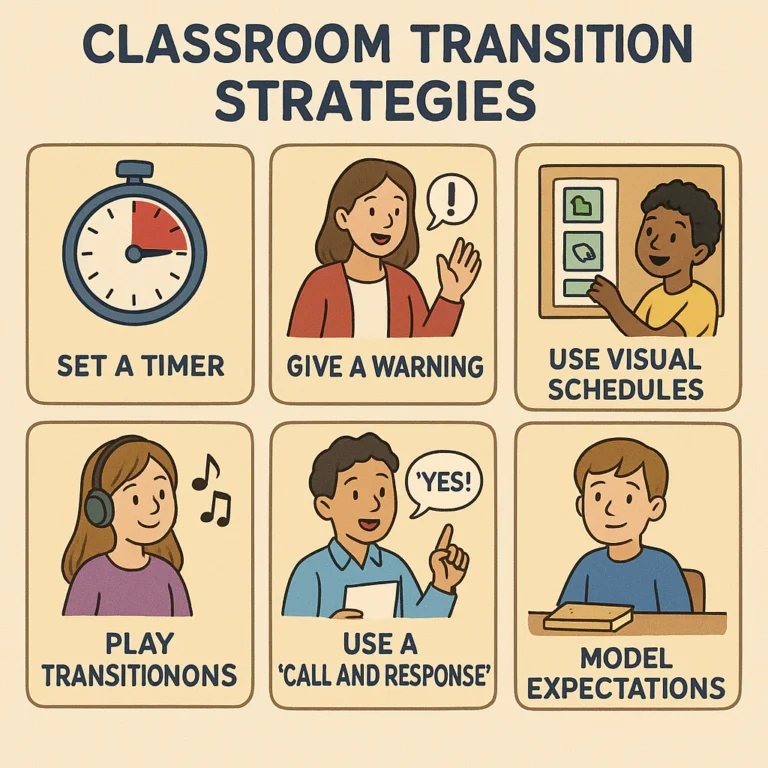
| Transitions deserve planning. | Prepare the signal, directions, materials, and next task before students move. |
| Behavior communicates information. | A student may be seeking connection, avoiding a difficult task, or responding to a barrier. Look for patterns before choosing a response. |
| Consistency means predictable and fair. | Apply shared expectations steadily, while honoring individual accommodations and context. |
| Plans should be flexible. | Keep a backup activity and adjust pacing when students need more practice, movement, or support. |
The University of San Diego’s classroom-management guide calls engaging instruction one of the most effective management tools, while the IRIS Center at Vanderbilt University emphasizes planning for likely behavior challenges before they happen. Those ideas work best together: engaging lessons invite participation; predictable routines make participation easier.
🌟 The Big Takeaways: Why Lesson Planning Shapes Classroom Behavior
At Teacher Strategies™, we see lesson planning as a way to prevent avoidable friction—not as a guarantee that every student will be perfectly focused. A strong plan answers two questions at once:
- What will students learn?
- What will students be doing, and how will they know what to do next?
When the second question is left unanswered, students may wait, wander, call out, or start an activity incorrectly. A warm-up with clear directions, a visible timer, and materials ready to go can turn the first few minutes from a traffic jam into a smooth on-ramp.
A useful distinction: rules versus routines
A classroom rule names an expectation: “Respect others.”
A routine explains what that expectation looks like: “When someone is speaking, pause your conversation, face the speaker, and listen.”
As the University of San Diego guide puts it, “Rules tell students how to behave, but routines tell them what to do.” That distinction matters. Students cannot reliably follow a procedure they have not been taught or practiced.
The core principle
Plan for participation, not just coverage. A lesson that races through content but leaves students unsure, passive, or overwhelmed may create more management work than it saves. Build in short checks for understanding, options for engagement, and a response plan for common sticking points.
For practical ideas that connect lesson design with routines and expectations, browse our classroom management resources.
📚 Background: How Lesson Planning and Behavior Management Work Together

Classroom behavior management is sometimes treated as a separate activity: teach the lesson, then respond when behavior goes off track. In practice, instruction and management are intertwined. The task, directions, pace, room setup, relationships, and response to student behavior all affect how a lesson unfolds.
The IRIS Center’s guidance on key classroom behavior-management principles recommends anticipating situations that may lead to disruption and planning supportive responses. One example is preparing a starter activity for students who tend to arrive energized. Instead of waiting for the room to settle on its own, the teacher gives students a clear first task.
That preparation does not mean predicting every possible event. It means noticing repeated pressure points:
- Students lose focus during long stretches of listening.
- Materials take too long to distribute.
- Several students struggle to begin independent work.
- Group tasks become noisy because roles are unclear.
- A transition ends before some students understand the next step.
Why preparation helps teachers, too
Planning ahead can reduce the number of decisions teachers must make in the busiest moments. A teacher who has already chosen a quiet redirection, a check-in question, and a backup activity can respond calmly rather than improvising while twenty-five students wait.
A lesson plan is not a script you must follow word for word. Think of it as a map with alternate routes. The destination is the learning goal; the route can change when students need a clearer example, a movement break, or more time to practice.
🔍 What Does It Mean to Manage Classroom Behavior Through Lesson Planning?
It means designing instruction so students can participate successfully—and planning how you will support them when they cannot yet do so independently.
That includes:
- Making the learning goal visible: students know what they are working toward.
- Breaking directions into manageable steps: fewer mysteries, fewer repeated explanations.
- Choosing appropriate challenge: the work is neither needlessly frustrating nor so easy that students disengage.
- Teaching procedures: students know how to get materials, ask for help, and transition.
- Planning active participation: students have something meaningful to think, say, write, build, or practice.
- Preparing supportive responses: you know how to redirect, reteach, check in, or offer an accommodation.
- Reviewing what happened: you use observation and student work to improve the next lesson.
This approach fits within broader classroom management practices and connects closely to differentiated instruction. The goal is not to control every movement; it is to create conditions in which learning and appropriate behavior are easier.
🎯 Why Lesson Plans Help Prevent and Address Classroom Behavior Challenges
Benefits for students, teachers, and learning time
A thoughtful plan can reduce confusion, improve lesson flow, and make it easier to notice who needs help. It can also protect instructional time by limiting long waits and repeated directions.
| Planning choice | Possible behavior benefit | Watch for |
|---|---|---|
| Post a short warm-up before class begins | Students have an immediate task | Make sure directions and materials are easy to find |
| Use brief directions with a visual example | Students can start with less uncertainty | Check that students actually understand the directions |
| Break a long lesson into varied segments | More opportunities to respond and reset attention | Avoid switching activities so frequently that students feel rushed |
| Assign group roles | Students know how to contribute | Rotate roles so responsibilities remain fair |
| Prepare an extension task | Early finishers have a purposeful next step | Ensure the task is meaningful, not simply extra busywork |
| Plan a private redirection | Protects student dignity and keeps the lesson moving | Follow up if the behavior signals a deeper need |
Research and guidance should be interpreted carefully: a planned lesson cannot guarantee a particular behavior outcome. Student needs, classroom conditions, relationships, and events outside the classroom all matter. Planning improves the odds of a smooth lesson; it does not make teachers responsible for controlling every circumstance.
How predictable routines support student self-regulation
Predictability helps students anticipate what comes next. When procedures are explicitly taught, students can spend less energy guessing and more energy learning. This is especially helpful during moments that often invite uncertainty: arrival, changing groups, collecting materials, independent work, and dismissal.
Try a simple routine cycle:
- Explain the procedure and its purpose.
- Model it clearly.
- Practice it with students.
- Notice and reinforce successful attempts.
- Reteach when the routine breaks down.
One teacher on our team once found that “just get started” was not, in fact, a direction students interpreted uniformly. Some opened the assignment, some asked a neighbor what to do, and one student sharpened a pencil with the focus of a professional woodworker. The fix was not a stern speech: it was a three-step visual checklist on the board. Clarity beat volume.
🧩 Essential Lesson Plan Components for Positive Classroom Behavior
Clear learning goals, directions, and transitions
A clear goal helps students understand why they are doing the activity. Keep it specific enough to guide the lesson, then connect each task to it.
Instead of “Today we’ll do fractions,” try: “By the end of class, you’ll be able to compare two fractions using a visual model.”
For each activity, plan:
- The directions students need before they begin
- What finished work should look like
- How students can ask for help
- What to do when they finish early
- How the class will move to the next activity
Engaging activities and appropriate pacing
Engagement does not require a parade of novelty. It means students have an active, worthwhile role in learning. Mix teacher explanation with practice, discussion, written thinking, demonstrations, movement, or collaboration as appropriate to the goal.
The University of San Diego guide highlights the relationship between engaging instruction and student attention. A separate Planbook article on lesson planning and classroom management also recommends varied activities and active teacher monitoring. These are useful perspectives, but they do not mean “more activities” is always better. Choose variety that supports the learning goal; avoid activity changes that create unnecessary transitions.
Differentiation, choice, and student support
Students may need different ways to access the same learning goal. Plan options such as:
- A worked example or visual model
- Sentence starters or vocabulary supports
- Shorter task chunks with check-ins
- A choice of writing, speaking, or drawing to demonstrate understanding
- An extension prompt for students ready to go further
- A movement or sensory support when appropriate
See our differentiated instruction resources for approaches that support access without lowering expectations.
Behavior expectations, routines, and reinforcement
Include the behaviors students need for the lesson, stated positively and concretely. For a partner discussion, for instance, “Take turns” is more actionable when paired with a cue: “Partner A speaks for one minute; Partner B listens and then responds.”
Plan how you will notice success. Specific feedback—“You started the warm-up as soon as you arrived”—tells students exactly which behavior is helping the class.
📋 Classroom Rules, Expectations, and Fair Consequences
Teach expectations before problems arise
Do not assume students already know what “work quietly,” “use materials safely,” or “participate respectfully” means in this particular room. Model the expected behavior, let students practice, and revisit the expectation when the task changes.
A helpful expectation is:
- Observable: someone can see or hear it.
- Brief: students can remember it.
- Teachable: you can model and practice it.
- Relevant: it fits the activity and learners.
For example, “Be responsible” is broad. “Return shared supplies to the labeled tray before moving to your group” is teachable and observable.
Use logical, consistent, and respectful responses
Consistency does not mean responding identically to every student regardless of context. It means expectations are understandable and responses are predictable, proportionate, safe, and respectful, while taking individual needs and school policy into account.
A calm response sequence might be:
- Use a nonverbal cue or proximity when appropriate.
- Give a brief, neutral reminder.
- Offer a clear next step or choice.
- Follow up privately if the behavior continues.
- Teach or practice the expected alternative.
- Use a reasonable, school-aligned consequence when needed.
The IRIS Center stresses planning clear, timely responses and considering students’ backgrounds. That matters because the same behavior can have different causes, and assumptions can lead to unfair discipline. Fairness is not “one response fits everyone”; it is consistent principles applied with informed judgment.
🛠️ How to Build a Lesson Plan That Supports Positive Behavior
Identify likely behavior triggers and busy moments
Before teaching, scan the lesson for moments that could create confusion or frustration:
- Is the first task ready as students arrive?
- Does the lesson include a long period of listening?
- Are there enough materials for the group?
- Is a challenging task broken into reachable steps?
- Will students know where to go and what to bring?
- Are there students who may need a planned accommodation or check-in?
This is not about labeling students as “problems.” Plan around the task and the environment, not a fixed judgment about a child.
Plan routines, transitions, and materials in advance
For each transition, identify four things:
- Signal: How will students know the transition is starting?
- Action: What exactly should they do?
- Materials: What should they bring or put away?
- Destination: Where should they be when finished?
Example: “When the chime sounds, finish your sentence, place your notebook in the center of the table, and move to your assigned reading station.”
Use the same concise routine consistently before adding extra reminders. If students routinely take too long, practice the procedure rather than simply repeating “Hurry up.”
Add engagement, movement, and brain breaks
Plan movement when it supports attention or learning: a gallery walk, sorting task, brief stretch, stand-and-share, or movement between stations. The point is not to keep every student constantly occupied. It is to match the activity to the goal and the learners’ needs.
For a lesson with extended listening, consider a quick response every few minutes:
- Turn and explain one idea to a partner.
- Write a one-sentence prediction.
- Hold up a response card.
- Sketch a concept.
- Use a short retrieval question.
Prepare responses for disruptions and off-task behavior
Choose low-interuption responses in advance. For example:
| Situation | Planned first response |
|---|---|
| A student has not started | Quietly check: “Which step are you on?” |
| Several students are confused | Pause and clarify the directions for everyone |
| A group becomes too loud | Re-teach the expected volume and assign a speaker |
| A student calls out | Acknowledge the idea, then cue the agreed hand-raising routine |
| A student avoids difficult work | Check task access, reduce the first step, or offer support |
| The activity ends early | Use a prepared extension tied to the objective |
If a behavior is persistent or significantly affects learning or safety, consult your school’s support team and follow applicable plans and policies. A lesson plan is not a substitute for individualized assessment or professional support.
Reflect on what worked after the lesson
After class, take two minutes to record:
- When did students seem most engaged?
- Which directions needed repeating?
- Did the timing match the class’s actual pace?
- Which transition took the most effort?
- Who needed a different entry point or support?
- What should stay, change, or be retaught?
This short reflection connects planning to assessment techniques: student work and participation offer clues about both learning and lesson design.
✅ Positive Classroom Management Strategies to Include in Lesson Plans
Build relationships and create a welcoming climate
Relationships do not replace routines; they make routines easier to teach and repair. Greet students, use names respectfully, listen to concerns, and create predictable opportunities for students to contribute.
A positive climate is not a promise that everyone will agree all the time. It is an environment where students can make mistakes, receive correction without humiliation, and try again.
Use active supervision and clear, calm directions
During independent or group work, move through the room, check progress, and offer brief support. Proximity can help redirect behavior without stopping the whole lesson. Keep directions short, then ask a student to restate the first step if needed.
When giving directions:
- Get attention using an agreed signal.
- Give one or two steps at a time.
- Show a model or example.
- Pause for questions.
- Check understanding before releasing students.
Offer meaningful choices and student voice
Choice can build ownership when it is bounded by the learning goal. Students might choose which problem to solve first, whether to present a response orally or in writing, or which role to take in a group.
Student voice also helps teachers identify what supports engagement. Ask questions such as:
- “Which part of this task helped you understand?”
- “What made it hard to get started?”
- “What would make the transition clearer next time?”
For group tasks and discussion structures, explore collaborative learning strategies.
Reinforce helpful behaviors without overusing rewards
Use specific, genuine feedback to show students what is working. Praise should describe behavior rather than label a student: “You waited for your partner to finish and then added evidence.”
External rewards, points, and privileges may be useful in some settings, but they are not the only tools—and they can distract from learning if used as a constant bargain. Combine recognition with clear feedback, meaningful tasks, belonging, and opportunities to practice responsibility.
🧠 Behavior Management Techniques and Reinforcement Strategies
Specific praise, feedback, and positive narration
Specific praise names an observable behavior and why it helps:
- “You opened your notebook and began the first problem without waiting.”
- “Your group used the discussion roles, so everyone had a turn.”
- “You put the materials away safely and left the table ready for the next class.”
The IRIS Center’s behavior-management resource discusses positive interactions, praise, and routines as preventive supports. Its suggested positive-to-negative interaction ratio is best treated as a helpful reminder to notice positive behavior, not as a universal quota or a substitute for authentic teacher judgment.
Precorection, redirection, and restorative responses
Precorection means reminding students of an expectation just before a predictable challenge. Before a group activity, for example: “In a moment, you’ll move to your groups. Carry only your notebook, use walking feet, and begin with the question on the board.”
Redirection gives a student a brief path back to learning: “Start with question one. I’ll check in after two minutes.”
A restorative follow-up may help when a student’s actions affected others. Focus on what happened, who was affected, and how the student can repair harm—without turning the conversation into a public lecture.
When to use individual behavior supports
If a student repeatedly struggles despite clear instruction and consistent routines, consider whether the lesson needs additional support. Work with relevant school staff and follow any individualized education, behavior, or accommodation plans.
Potential supports may include:
- A visual schedule or checklist
- Shorter task chunks
- A planned check-in
- Additional response time
- A quieter work area when appropriate
- A specific way to request help or a break
- A replacement behavior taught and practiced explicitly
Avoid assuming intent from behavior alone. A student who refuses a task may not be choosing defiance; the task could feel inaccessible, unclear, socially risky, or overwhelming. Observe patterns, ask careful questions, and coordinate with the people who know the student.
📝 Classroom Behavior Lesson Plan Examples
These examples are adaptable starting points, not one-size-fits-all scripts. Adjust them for your learning goals, class needs, school expectations, and available time.
General classroom management lesson plan example
| Lesson phase | Teacher plan | Student action | Behavior support |
|---|---|---|---|
| Arrival | Post a warm-up and gather materials | Enter, read the board, begin | Immediate task and visible directions |
| Goal | State the learning target | Listen and identify the goal | Students know what success means |
| Model | Demonstrate one example | Observe and answer a check question | Prevents confusion before practice |
| Practice | Assign a short task with a partner | Discuss and solve | Roles and voice-level expectation |
| Independent work | Provide a checklist and circulate | Work through steps | Teacher checks for access and progress |
| Closure | Use an exit question | Submit a response | Quick evidence for the next lesson |
Elementary school lesson plan example
Goal: Students will sort shapes by one shared property.
- Arrival: A picture-based sorting prompt is ready on desks.
- Mini-lesson: Model one example with shapes students can handle.
- Practice: Students sort objects in pairs and explain their rule.
- Transition: Use a consistent signal; students return objects to a labeled bin.
- Check-in: Ask students to show one sorted pair and explain why it belongs together.
- Extension: Invite early finishers to sort the same shapes using a different property.
Elementary learners often benefit from brief directions, visuals, repeated practice, and frequent opportunities to respond. Keep the lesson lively, but avoid adding so many activities that transitions eat the learning time.
Middle school lesson plan example
Goal: Students will support a claim with evidence from a short text.
- Warm-up: Write a quick response to a visible prompt.
- Model: Identify one claim and highlight supporting evidence.
- Partner work: Students take turns finding evidence and explaining their reasoning.
- Choice: Students may annotate on paper or in a digital document, if available.
- Independent check: Write a claim-evidence sentence.
- Backup: If technology fails, use printed copies and a prepared annotation guide.
Middle school students often respond well to purposeful variety, autonomy, movement, and meaningful peer interaction. The University of San Diego guide recommends backup plans as well as engaging lessons—sensible advice for any grade. Plan A is your lesson; Plan B is a change in format; Plan Z is not panic, it’s a prepared reset.
High school lesson plan example
Goal: Students will compare two arguments and explain which uses stronger evidence.
- Entry task: Read two brief claims and choose the more convincing one.
- Discussion: Use a structured pair or small-group protocol.
- Independent analysis: Annotate the evidence in each text.
- Choice: Students select a written oral format for the final explanation, where appropriate.
- Closure: Submit one claim with evidence and reasoning.
For older students, provide reliable structure without over-managing every step. Explain the purpose of routines, invite feedback, and treat students’ time and independence with respect.
🎒 Adapting Classroom Behavior Strategies by Grade Level
| Grade band | Planning emphasis | Useful supports | Common trap |
|---|---|---|---|
| Elementary | Teach procedures explicitly | Visual cues, short segments, practice, movement | Assuming students know routines after one explanation |
| Middle school | Active learning and belonging | Choices, partner roles, clear transitions, relevance | Confusing high energy with intentional disruption |
| High school | Autonomy and accountability | Predictable structure, meaningful choices, respectful feedback | Using procedures that feel arbitrary or overly controlling |
Elementary classroom routines and behavior supports
Use concrete models and consistent language. If students are expected to transition from the rug to desks, show what “ready” looks and sounds like. Reinforce effort and teach the routine again when needed.
Middle school motivation, belonging, and independence
Students may be navigating social pressures while learning more complex content. Build in chances to contribute without forcing every student into public performance. Make partner roles clear and vary the way students respond.
High school respect, autonomy, and accountability
Older students still benefit from routines, but explain their purpose. A posted agenda, clear deadlines, and predictable feedback can support independence. Invite student input when classroom procedures affect how they learn.
♿ Inclusive Lesson Planning for Diverse Learners
Supporting students with ADHD, autism, and learning differences
No diagnosis determines exactly what a student needs. Use known accommodations and collaborate with the student’s support team. Helpful planning practices may include:
- Short, explicit instructions
- A visual sequence or checklist
- Predictable transitions with advance notice
- Options for demonstrating understanding
- Frequent opportunities to respond
- Carefully planned movement or sensory supports
- Clear routines for asking for help
These supports can help many students, not only those with identified needs. Learn more in our differentiated instruction category.
Trauma-informed and culturally responsive classroom practices
Behavior should be interpreted with care. A quick assumption that a student is “being difficult” can miss an unmet need, an unfamiliar expectation, or a context the teacher does not yet understand.
The IRIS Center notes the importance of understanding students’ backgrounds and avoiding hasty assumptions. It also highlights disparities in discipline. For that reason, review whether expectations are taught clearly, whether responses are applied consistently, and whether students have equitable access to support.
English learners and accessible directions
Make language demands visible. Pair oral directions with visuals, examples, gestures, written steps, and opportunities to clarify. Check understanding without putting a student on the spot: invite students to point to the first step, show a model, or rehearse a direction with a partner.
📄 Classroom Behavior Lesson Plan Template and Planning Checklist
What to include in a behavior-supportive lesson plan
Use this compact planning template:
| Planning prompt | Your notes |
|---|---|
| Learning goal | What should students know or be able to do? |
| Success criteria | What will successful work look or sound like? |
| Opening task | What will students do as soon as they arrive? |
| Directions and models | What should I explain, show, or post? |
| Participation | How will each student think, respond, or practice? |
| Likely pressure points | Where might confusion, waiting, or frustration occur? |
| Routines and transitions | What signal and steps will students follow? |
| Supports and choices | What scaffolds, accommodations, or options are needed? |
| Reinforcement | Which helpful behaviors will I notice and name? |
| Response plan | How will I redirect, reteach, or check in? |
| Backup activity | What is my alternate route if timing or materials change? |
| Reflection | What evidence will guide tomorrow’s plan? |
Quick-start classroom management checklist
Before class, check:
- ✅ The learning goal is visible and understandable.
- ✅ Materials are ready or students know how to get them.
- ✅ The opening task is clear.
- ✅ Directions are short, sequenced, and supported by a model if needed.
- ✅ Transitions have a signal and a destination.
- ✅ Students have a meaningful way to participate.
- ✅ Likely barriers and supports have been considered.
- ✅ You have a calm first response to common off-task behavior.
- ✅ Early finishers have a purposeful next step.
- ✅ You know what evidence you will use to adjust the next lesson.
⚠️ Common Lesson Planning Mistakes That Can Fuel Behavior Problems
Watch for these planning traps:
- Too much teacher talk: Add structured opportunities to respond, practice, or discuss.
- Vague instructions: Show the first step and what the finished task should look like.
- Transitions treated as “free time”: Teach them as routines, not gaps.
- Work that is too easy or too difficult: Check whether students can enter the task with appropriate support and challenge.
- No plan for early finishers: Prepare an extension connected to the learning goal.
- Public correction for a private problem: Use a quiet cue or follow-up when possible.
- Inconsistent expectations: Revisit and teach procedures so students are not left guessing.
- Overloading the lesson with novelty: Activities should serve the learning objective, not compete for attention.
- Reading behavior as intentional defiance too quickly: Look for patterns and consider access, stress, communication, and task design.
The Planbook article offers a useful counterpoint: preparation and confidence can support smoother classroom delivery, but planning alone is not enough. Its contributors also emphasize engaging instruction and active management. Trust both ideas: prepare thoroughly, then remain responsive to the students in front of you.
🔄 How to Adapt and Improve Your Classroom Behavior Plan
Use observation and behavior data to guide adjustments
Keep the data simple and useful. You might record how long a transition takes, how many students begin the task, which directions prompt questions, or which part of the lesson generates the most participation.
Look for patterns rather than drawing conclusions from one difficult day:
- Does the same issue happen at the same time?
- Does it occur with a particular task or group arrangement?
- Do students know how to request help?
- Does the task match their current skills?
- What changes when you add a model, shorter step, or choice?
The goal is not to turn a classroom into a spreadsheet. It is to make small, evidence-informed adjustments. Our assessment techniques resources offer ways to check learning and use evidence to guide instruction.
Partner with families, colleagues, and support staff
When a behavior concern persists, coordinate respectfully with the people who support the student. Share observable information rather than labels: “The student has not begun the written task in three of the last four lessons” is more useful than “The student is lazy.”
Families and support staff may know which prompts, routines, or accommodations help. Follow school procedures for privacy and communication, and make sure everyone understands relevant plans.
Give students a fresh start
A difficult lesson does not need to become a permanent identity. Start the next class with a clear invitation to participate, reteach what needs reteaching, and recognize improvement. Students need opportunities to practice a better choice—not just reminders of yesterday’s mistake.
🔗 Classroom Management Resources and Professional Learning
Evidence-based guides and teacher tools
- IRIS Center: Key Principles of Classroom Behavior Management — practical guidance on prevention, routines, responses, student needs, and data.
- University of San Diego: Classroom Management Plan Guide — strategies for expectations, routines, engagement, and grade-level planning.
- Planbook: Lesson Planning and Classroom Management — teacher perspectives on preparation, activities, monitoring, and feedback.
- Teacher Strategies™: Classroom Management, Differentiated Instruction, and Collaborative Learning.
At a relevant moment in your planning, the video “Classroom Management: Disruptive Students and How To Handle Them” by Adriana Cantisani may be helpful. Its short, 3-minute-50-second overview focuses on responding to disruptive behavior while maintaining composure. Watch the video.
Classroom management courses and continuing education
Professional learning can help teachers deepen their understanding of behavior, instructional design, and inclusive practice. Look for courses that include practical classroom scenarios, opportunities to reflect on your own routines, and evidence-based approaches—not just a long list of consequences.
When choosing a course, consider:
- Whether it addresses prevention as well as response
- How it handles equity and student diversity
- Whether it includes usable planning tools
- Whether the strategies align with your school’s policies
- Whether you can apply the learning to your grade level and subject
❓ Frequently Asked Questions About Lesson Plans and Classroom Behavior
How can lesson planning prevent disruptive behavior in the classroom?
Planning can prevent some avoidable disruptions by making activities, directions, routines, and transitions clear. A ready-to-start task reduces idle time; an example can prevent confusion; and appropriate scaffolding can help students begin challenging work. The IRIS Center recommends anticipating situations that may contribute to behavior challenges and planning in advance.
It cannot prevent every disruption. Students have different needs, and unexpected events happen. Use the lesson plan to prepare supportive responses, not to expect perfect behavior.
What classroom management strategies can teachers include in lesson plans?
Include explicit routines, concise directions, structured participation, active teacher monitoring, specific positive feedback, and a calm redirection plan. You can also plan options for students who need more support or finish early.
Start with a few strategies you can apply consistently. A well-taught entry routine and clear transition cue usually do more than a page of rules students have never practiced.
How can engaging lesson plans improve student behavior?
Engaging lessons give students a meaningful reason to participate. When learners are thinking, practicing, discussing, or applying ideas, there may be fewer unstructured moments for off-task behavior. The University of San Diego guide emphasizes the value of engaging instruction.
Engagement should be paired with appropriate challenge, clear directions, and support. A lively activity can still become confusing if students do not know the goal or their role.
How can teachers plan transitions to reduce classroom disruptions?
Teach each transition as a routine. Decide on a signal, explain the actions students should take, prepare materials, and identify where students should go. Give students a brief warning if that helps them finish a task, then use the same cue consistently.
If transitions remain difficult, observe which step is causing the delay. Students may need a clearer destination, fewer materials to carry, or a model of the expected process.
How can lesson plans support positive behavior in diverse classrooms?
Plan multiple ways to access the lesson and demonstrate learning. Use clear language, visuals, models, structured choices, and relevant accommodations. Consider how cultural expectations, prior experiences, language access, disability-related needs, or stress may affect participation.
The IRIS Center cautions teachers to understand students’ backgrounds and avoid hasty assumptions. An inclusive plan is not a lower bar; it is a clearer, more accessible route to the learning goal.
What should teachers include in lesson plans to keep students focused?
Include a visible objective, brief activity segments, meaningful opportunities to respond, clear directions, and a prepared next step for students who finish early. Plan checks for understanding so you can catch confusion before it spreads.
Focus does not mean every student sits still and silent. It means students can engage with the learning in an appropriate way.
How can teachers adjust lesson plans to address challenging classroom behavior?
Look for patterns and consider what the task, timing, setting, and support demands may be asking of the student. You might shorten the first step, add a model, offer a check-in, clarify the routine, or change the group structure. Teach an appropriate alternative behavior where needed, and coordinate with support staff if concerns persist.
Avoid treating one incident as proof of a student’s motivation. Observe first, adjust thoughtfully, and follow school policies and individualized plans.
Is an engaging lesson plan enough to manage classroom behavior?
No. Engaging instruction is a powerful preventive support, but it works alongside relationships, routines, clear expectations, accessible teaching, and consistent responses. The Planbook article makes a related point: strong preparation needs to be matched with effective delivery and classroom management.
The most dependable approach is a system: teach the routine, design meaningful learning, observe what happens, and adjust.
What should teachers do when a planned activity does not work?
Pause and diagnose before pushing ahead. Are directions unclear? Is the task too difficult, too easy, or too long? Do students lack materials or a model? Would a short reset, demonstration, or partner check help?
Use your backup activity if the original plan is no longer serving the learning goal. After class, record what happened and make one practical adjustment for next time.