Support our educational content for free when you buy through links on our site. Learn more
🎯 How to Align Lesson Plans with Curriculum Standards (2026)


Ever felt like you’re running a marathon in the wrong direction? You’ve spent hours crafting a brilliant lesson, only to realize your students are mastering the wrong skill entirely. It’s a common trap: the “Activity Trap,” where fun replaces focus, and alignment goes out the window. But what if you could turn that chaos into clarity, ensuring every minute you spend in the classroom directly hits the mark of your district’s curriculum standards?
In this guide, we’re ditching the generic advice for a battle-tested roadmap used by top educators at Teacher Strategies™. We’ll walk you through the 5-step Backward Design process, expose the hidden “Verb Mismatch” that ruins 90% of lesson plans, and show you how to use tools like MagicSchool AI and Research Quest to build bulletproof units. By the end, you won’t just be “covering” content; you’ll be engineering mastery. Ready to stop guessing and start teaching with purpose? Let’s dive in.
Key Takeaways
- Start with the End: Successful alignment relies on Backward Design, where you define the assessment and learning objectives before planning any activities.
- Unpack the Verbs: The action verb in a standard (e.g., “analyze” vs. “list”) dictates the cognitive demand; mismatching these is the #1 cause of misalignment.
- Use the Right Tools: Leverage AI tools like MagicSchool AI for drafting and curated resources like Research Quest for pre-aligned, high-quality investigations.
- Iterate and Reflect: Alignment is a cycle, not a one-time task; use formative assessment data to continuously refine your lessons for better student outcomes.
Table of Contents
- ⚡️ Quick Tips and Facts
- 📜 From Chaos to Clarity: A Brief History of Curriculum Alignment
- 🧩 The Big Picture: Understanding the Relationship Between Standards, Benchmarks, and Objectives
- 🛠️ The Alignment Toolkit: Essential Strategies for Mapping Your Lessons
- 📝 Step-by-Step Guide: How to Align Lesson Plans with Curriculum Standards
-
- Deconstruct the Standard: Unpacking the Verbs and Nouns
-
- Define Measurable Learning Objectives
-
- Design Assessments That Actually Measure the Standard
-
- Select Instructional Activities That Drive the Goal
-
- Choose Resources That Support, Not Distract
-
- 🎯 Backward Design Mastery: Starting with the End in Mind
- 📊 Common Pitfalls: Why Your Lesson Plans Might Be Misaligned (And How to Fix Them)
- 🌐 Digital Helpers: Top Tools and Apps for Curriculum Mapping
- 🏫 Subject-Specific Alignment: Tailoring Strategies for Math, ELA, Science, and PE
- 📈 Assessing Student Learning: Ensuring Your Evidence Matches the Standard
- 🔄 The Reflection Loop: Iterating and Improving Your Aligned Lessons
- 💡 Real-World Anecdotes: When Alignment Went Wrong (and Right!)
- 🚀 Conclusion
- 🔗 Recommended Links
- ❓ FAQ
- 📚 Reference Links
⚡️ Quick Tips and Facts
Before we dive into the deep end of curriculum alignment, let’s grab a life preserver. If you’re feeling like you’re drowning in a sea of acronyms and vague objectives, take a breath. Here are the non-negotiables of alignment that we’ve learned from years of grading, planning, and occasionally crying over a whiteboard:
- Alignment is not a “one-and-done” task. It’s a living, breathing process. You will tweak, adjust, and re-align. That’s not failure; that’s teaching!
- The Verb is King. If your standard says “analyze” and your activity is “list,” you are not aligned. We’ll break this down later, but remember: the action word in the standard dictates the action in your lesson.
- Start with the End. This is the golden rule of Backward Design. If you don’t know where you’re going, any path will do—and that’s a recipe for chaos.
- District Maps are Your Best Friend. Don’t reinvent the wheel. Most districts have curriculum maps that already do the heavy lifting. Check your district’s website first!
- Assessment must match the Standard. If the standard requires a written explanation, a multiple-choice quiz won’t cut it. The evidence must match the claim.
For a deeper dive into the anatomy of a perfect plan, check out our comprehensive guide on how to write a lesson plan.
📜 From Chaos to Clarity: A Brief History of Curriculum Alignment

Let’s take a quick trip down memory lane. Remember the “Good Old Days” (or maybe just the 1990s) when teachers were given a textbook and told, “Cover chapters 1 through 10 by May”? 📚
That era of textbook-driven instruction often led to a disconnect. Teachers raced through content, students memorized facts for a test, and then… poof! The knowledge vanished. The curriculum was a mile wide and an inch deep.
Enter the Standards-Based Movement.
Driven by the need for accountability and equity, states and organizations like SHAPE America and the National Council of Teachers of Mathematics (NCTM) began defining exactly what students should know and be able to do. The goal shifted from “covering the book” to “ensuring mastery.”
“The shift wasn’t just about changing the paperwork; it was about changing the mindset. We moved from ‘I taught it’ to ‘They learned it.'” — A veteran teacher at Teacher Strategies™
However, as the Research Quest team from the Natural History Museum of Utah noted, simply having standards isn’t enough. You need alignment. As they put it regarding their science investigations: “At its heart, NGSS puts focus on learning science by doing science.” This philosophy applies to every subject. If the standard says “do,” your lesson must let them “do.”
The history of alignment is essentially the history of teachers trying to bridge the gap between what is required and what is actually happening in the classroom. It’s a journey from chaos to clarity, and you are the navigator.
🧩 The Big Picture: Understanding the Relationship Between Standards, Benchmarks, and Objectives
Confused by the jargon? You’re not alone. Let’s untangle the knot. Many teachers treat “standards” and “objectives” as synonyms, but they are distinct layers of the same onion. 🧅
The Hierarchy of Learning
- Standards (The Destination): These are the broad, long-term goals set by your state or district. They describe what a student should know or be able to do by the end of a grade level or course.
- Example: “Students will be able to analyze the impact of historical events.”
- Benchmarks (The Milestones): These break the standards down into smaller, manageable chunks, often by grade level or unit.
- Example: “By the end of 5th grade, students will analyze the causes of the American Revolution.”
- Learning Objectives (The Daily Steps): These are specific, measurable goals for a single lesson or activity. They must be directly derived from the benchmark.
- Example: “Students will identify three causes of the American Revolution and explain their significance in a short paragraph.”
Why the Distinction Matters
If you skip straight from Standards to Activities, you risk creating “fun but fluffy” lessons. You might have a great game, but if it doesn’t hit the specific Learning Objective derived from the Standard, it’s just recess with a worksheet.
Conversely, if you focus only on Objectives without the Standard, you might miss the bigger picture. You’re teaching the student to pass the test, not to master the skill.
Pro Tip: Always ask, “Which standard does this objective serve?” If you can’t answer that immediately, you need to go back to the drawing board.
For more on how to tailor these objectives for diverse learners, explore our resources on Differentiated Instruction.
🛠️ The Alignment Toolkit: Essential Strategies for Mapping Your Lessons
You wouldn’t build a house without a blueprint, so why build a lesson without an alignment map? Here are the tools in our Teacher Strategies™ toolkit that have saved us from countless misaligned disasters.
1. The “Unpacking” Method
This is the secret sauce. Don’t just read the standard; dissect it.
- Identify the Noun: What is the content? (e.g., Photosynthesis)
- Identify the Verb: What is the cognitive demand? (e.g., Explain, Compare, Create)
- Identify the Context: Under what conditions? (e.g., Using a diagram, in a group)
2. The Backward Design Framework
Popularized by Grant Wiggins and Jay McTighe, this is the gold standard.
- Identify Desired Results (Standards).
- Determine Acceptable Evidence (Assessments).
- Plan Learning Experiences (Lessons).
3. The “Verbs vs. Activities” Matrix
Create a simple table to ensure your activities match the cognitive level of the standard.
| Standard Verb | Cognitive Level (Bloom’s) | ❌ Misaligned Activity | ✅ Aligned Activity |
|---|---|---|---|
| Identify | Remember | Write an essay about the concept. | List the parts of the cell. |
| Analyze | Analyze | Watch a video and answer “yes/no” questions. | Compare and contrast two historical events in a Venn diagram. |
| Create | Create | Fill in a worksheet with provided answers. | Design a new experiment to test a hypothesis. |
4. Digital Helpers
Sometimes, we need a little tech support. Tools like MagicSchool AI have revolutionized how we approach this. Their Lesson Plan Generator allows you to input a specific standard, and it builds a plan that explicitly aligns with that standard’s learning objectives.
“It ensures that your lesson plans are coherent with the prescribed curriculum, leaving no room for gaps or redundancies.” — MagicSchool AI
While AI is a powerful assistant, remember: You are the pilot. Always review the generated plan to ensure it fits your specific classroom context.
📝 Step-by-Step Guide: How to Align Lesson Plans with Curriculum Standards
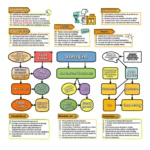
Ready to roll up your sleeves? Here is your 5-step roadmap to alignment perfection. Follow this, and you’ll never have an administrator ask, “Where is the standard in this lesson?” again.
1. Deconstruct the Standard: Unpacking the Verbs and Nouns
Start with the official document (e.g., Common Core, State Standards, SHAPE America GLOs).
- Action: Highlight the action verb. Is it “define”? “Evaluate”? “Construct”?
- Why: The verb dictates the Depth of Knowledge (DOK). If the standard asks for “evaluation,” a simple recall quiz is a mismatch.
- Insight: As Terri Drain, a leader in Standards-Based Instruction, notes, “Since alignment is all about the verb, I often look at the definition of the verb to make sure I’m on the right track.”
2. Define Measurable Learning Objectives
Translate the standard into a student-friendly “I can” statement.
- Formula: “I can [Verb] + [Content] + [Context/Condition].”
- Example: Instead of “Students will learn about fractions,” try “I can add two fractions with unlike denominators using visual models.”
- Check: Is it measurable? Can you see it, hear it, or read it?
3. Design Assessments That Actually Measure the Standard
Before you plan a single activity, decide how you will know they learned it.
- Formative: Quick checks (thumbs up/down, exit tickets) during the lesson.
- Summative: The final product or test.
- Crucial Step: Ensure the assessment format matches the verb. If the standard is “debate,” the assessment cannot be a multiple-choice quiz.
- Resource: For more on this, check out our Assessment Techniques category.
4. Select Instructional Activities That Drive the Goal
Now, and only now, do you plan the fun stuff!
- Filter: Ask, “Does this activity directly help students achieve the objective?”
- Avoid: “Filler” activities that are fun but irrelevant.
- Integration: Look for ways to integrate Collaborative Learning strategies that reinforce the standard.
5. Choose Resources That Support, Not Distract
Select textbooks, videos, or manipulatives that align with the cognitive level.
- Tip: If the standard requires critical thinking, don’t use a resource that just gives the answers.
- Tech Check: Ensure any digital tools (like Research Quest for science) explicitly state their alignment with the standards you are targeting.
🎯 Backward Design Mastery: Starting with the End in Mind
We mentioned this earlier, but it deserves its own spotlight because it’s the single most effective strategy for alignment.
Backward Design flips the traditional script. Instead of thinking, “What cool activity can I do today?”, you think, “What do I need them to know by Friday, and what is the best path to get there?”
The Three Stages in Action
-
Stage 1: Desired Results
- What is the Standard?
- What are the Big Ideas?
- What are the Essential Questions?
-
Stage 2: Evidence
- How will I know they got it?
- What does “mastery” look like?
- Self-Correction: If you can’t define the evidence, you can’t plan the lesson.
-
Stage 3: Learning Plan
- What activities will get them there?
- What resources do I need?
- How will I differentiate for Early Childhood Education or advanced learners?
Real Talk: It feels backward because it is! But once you try it, you’ll wonder how you ever taught any other way. It saves time in the long run because you stop planning activities that don’t matter.
📊 Common Pitfalls: Why Your Lesson Plans Might Be Misaligned (And How to Fix Them)
Even the best teachers stumble. Here are the most common traps we see, and how to spring out of them.
Pitfall #1: The “Activity Trap”
Symptom: You have a fantastic game, but it doesn’t actually teach the standard.
The Fix: Run the activity through the “Verb Test.” Does the game require the student to perform the verb in the standard? If the standard is “analyze” and the game is just “match,” you need to add an analysis component.
Pitfall #2: The “Assessment Mismatch”
Symptom: You taught a complex skill but tested it with a simple recall quiz.
The Fix: Revisit your Assessment Techniques. If the standard is high-level, your assessment must be too. Use rubrics that specifically measure the standard’s criteria.
Pitfall #3: Ignoring the “Context”
Symptom: You teach the skill, but not in the context required by the standard.
The Fix: Standards often specify conditions (e.g., “using a calculator,” “in a group,” “with a partner”). Ensure your lesson plan includes these constraints.
Pitfall #4: Overloading the Standard
Symptom: Trying to hit five different standards in one 45-minute lesson.
The Fix: Focus on Power Standards. As the Gopher Sport team suggests, identify the most significant skills and focus your energy there. It’s better to master one standard than to skim five.
🌐 Digital Helpers: Top Tools and Apps for Curriculum Mapping
Technology can be a double-edged sword, but when used right, it’s a laser beam for alignment. Here are the tools we trust.
MagicSchool AI
- Best For: Generating initial lesson drafts that are pre-aligned.
- Why We Love It: It explicitly asks for the standard and builds the plan around it.
- Limitation: It needs human review to ensure it fits your specific classroom dynamics.
Research Quest (Natural History Museum of Utah)
- Best For: Science and ELA integration.
- Why We Love It: Every investigation is pre-mapped to NGSS and Common Core ELA. It takes the guesswork out of cross-curricular alignment.
- Feature: They provide DOK levels for each investigation, helping you match the cognitive demand.
PE Digital Library (PEDL)
- Best For: Physical Education teachers.
- Why We Love It: Created by Rich Wiles and Judy Schmid, this is a complete K-5 resource searchable by standard.
- Feature: It links directly to SHAPE America standards and Grade Level Outcomes.
Google Classroom & LMS Tools
- Best For: Managing and tagging assignments.
- Tip: Use the “Standards” or “Learning Objectives” tagging feature in your LMS to track which standards are being assessed in each assignment.
👉 Shop for educational resources and tools on:
- Amazon: Educational Planning Tools
- Etsy: Teacher Planning Printables
- Official Sites: MagicSchool AI, Research Quest, SHAPE America
🏫 Subject-Specific Alignment: Tailoring Strategies for Math, ELA, Science, and PE
One size does not fit all. Alignment looks different depending on the subject.
Mathematics: The Logic of Alignment
- Focus: Procedural fluency vs. conceptual understanding.
- Strategy: If the standard says “understand,” don’t just drill algorithms. Use manipulatives and visual models.
- Common Mistake: Testing “understanding” with only calculation problems.
- Alignment Check: Does the student explain why the algorithm works?
English Language Arts (ELA): The Art of Evidence
- Focus: Reading comprehension, writing, and speaking.
- Strategy: Align the text complexity and the writing prompt to the standard.
- Common Mistake: Assigning a creative writing piece when the standard requires an evidence-based argument.
- Alignment Check: Does the student cite specific text evidence?
Science: The Inquiry Imperative
- Focus: Science and Engineering Practices (SEPs).
- Strategy: As Research Quest highlights, students must “do science.”
- Common Mistake: Lecturing on the scientific method instead of having students perform an investigation.
- Alignment Check: Is the student collecting data and analyzing it, or just reading about it?
Physical Education: The Movement Connection
- Focus: Physical Literacy and Skill Acquisition.
- Strategy: Use SHAPE America’s Grade Level Outcomes (GLOs).
- Common Mistake: Playing games without a specific skill focus.
- Alignment Check: Does the game require the specific skill (e.g., dribbling) mentioned in the GLO?
- Resource: Check out the PE Digital Library for pre-aligned units.
For more on managing the chaos of active learning, see our Classroom Management strategies.
📈 Assessing Student Learning: Ensuring Your Evidence Matches the Standard
You’ve planned the lesson. Now, how do you know it worked? Assessment is the bridge between teaching and learning.
Formative vs. Summative: The Dynamic Duo
- Formative Assessment: The “check-up” during the lesson.
- Examples: Exit tickets, think-pair-share, observation checklists.
- Goal: Adjust instruction in real-time.
- Summative Assessment: The “final exam” or project.
- Examples: Unit tests, portfolios, performance tasks.
- Goal: Measure mastery of the standard.
The “Evidence of Learning” Checklist
Before you grade, ask:
- Does this assessment measure the verb? (If the standard is “create,” is the student creating?)
- Is the criteria clear? (Do students know what “mastery” looks like?)
- Is it fair? (Does it measure the skill, or just the student’s ability to take a test?)
Insight: As the Gopher Sport article suggests, “Assessments do not need to be complex; many can be based on observation of student performance.” Sometimes, a simple checklist is the most powerful tool you have.
🔄 The Reflection Loop: Iterating and Improving Your Aligned Lessons
Alignment is not a destination; it’s a journey. The best teachers are the ones who reflect and refine.
The Reflection Cycle
- Teach: Deliver the aligned lesson.
- Observe: Did students hit the objective? Where did they struggle?
- Analyze: Was the misalignment in the activity, the assessment, or the instruction?
- Adjust: Tweak the lesson for next time.
Real-World Anecdote: The “Bin Ball” Disaster
- The Scenario: A PE teacher planned a “Bin Ball” game to teach “spatial awareness” (a standard verb).
- The Reality: The game was so chaotic that students were just running into each other. No spatial awareness was actually practiced.
- The Fix: The teacher added a “freeze” command and specific zones, forcing students to think about their positioning.
- The Result: The game became a true alignment of activity and standard.
“Remember, learning is messy and within that beautiful chaos comes some meaningful ah-ha moments.” — Gopher Sport
Don’t be afraid to scrap a lesson if it’s not working. That’s not failure; that’s data.
💡 Real-World Anecdotes: When Alignment Went Wrong (and Right!)
Let’s get real. We’ve all been there.
The “Fun but Fluffy” Trap
I once spent three hours planning a “Great Gatsby” scavenger hunt. It was hilarious. Students loved it. But when the test came, they couldn’t identify the main themes. Why? Because the activity was about finding hidden notes, not analyzing the text. The verb didn’t match. I had to scrap the hunt and redesign it to focus on textual evidence.
The “Backward Design” Win
On the flip side, a colleague of mine was struggling with a science unit on ecosystems. She stopped planning activities and started with the assessment: “Students will design a sustainable ecosystem.” She worked backward, selecting only the readings and labs that directly helped them design. The result? Students were engaged because they had a clear goal, and the assessment was a perfect match for the standard.
The “District Map” Lifesaver
A new teacher I mentored was overwhelmed. She was trying to align everything from scratch. I told her to stop and look at the district’s curriculum map. She found a pre-made unit that was already aligned. She adapted it to her class, saving hours of work and ensuring she was on track.
Key Takeaway: You don’t have to do it alone. Use your resources, reflect on your practice, and keep moving forward.
For more on how to adapt lessons for different needs, visit our Differentiated Instruction page.
Stay tuned for the Conclusion, Recommended Links, and FAQ in the next section!
🚀 Conclusion

So, we’ve traveled from the chaotic days of “cover the book” to the structured, purposeful world of Standards-Based Instruction. We’ve unpacked verbs, designed backward, and even survived the occasional “Bin Ball” disaster. But here is the ultimate truth we promised to resolve: Alignment is not about restriction; it’s about liberation.
When your lessons are tightly aligned with curriculum standards, you stop guessing if you’re “doing enough.” You stop worrying if your students are actually learning or just being entertained. You gain the confidence to say, “Yes, this activity matters because it directly builds the skill required by the standard.”
We asked earlier: How do you align lesson plans with curriculum standards? The answer isn’t a magic wand or a single app. It’s a mindset. It’s the willingness to deconstruct the standard, design with the end in mind, and reflect on the evidence. It’s the difference between teaching a lesson and teaching a student.
Whether you are a veteran teacher looking to refine your craft or a new educator navigating the maze of NGSS, Common Core, or SHAPE America standards, remember this: You have the power. The standards are your map, but you are the driver. Don’t be afraid to take the scenic route, as long as you arrive at the destination.
“The power is in your hands.” — Gopher Sport
Now, go forth and align with purpose! 🌟
🔗 Recommended Links
Ready to take your alignment game to the next level? Here are the essential resources, books, and tools we trust to keep your curriculum on track.
📚 Essential Books for Curriculum Alignment
- Understanding by Design (UbD) by Grant Wiggins and Jay McTighe
- The Art and Science of Teaching by Robert J. Marzano
- Why: Bridges the gap between research-based strategies and daily practice.
- 👉 Shop on: Amazon | Marzano Research
- Standards-Based Instruction in Physical Education by Terri Drain
- Why: A deep dive into aligning PE lessons with GLOs.
- 👉 Shop on: Amazon | SHAPE America
🛠️ Digital Tools & Platforms
- MagicSchool AI – Lesson Plan Generator
- Why: Generates aligned lesson plans instantly based on your specific standards.
- Try it on: MagicSchool AI Lesson Plan Generator
- Research Quest
- Why: Free, interactive science investigations pre-aligned with NGSS and ELA standards.
- Explore on: Research Quest
- PE Digital Library (PEDL)
- Why: Comprehensive K-5 PE resources searchable by standard.
- Access on: PE Digital Library (Note: Check for current access requirements)
- Support Real Teachers
- Why: A massive repository of standards-based units and grading resources.
- Visit on: Support Real Teachers
🏫 Professional Organizations
- SHAPE America (Society of Health and Physical Educators)
- Visit: SHAPE America
- National Council of Teachers of Mathematics (NCTM)
- Visit: NCTM
- National Science Teaching Association (NSTA)
- Visit: NSTA
❓ FAQ

What are common challenges in aligning lesson plans with curriculum standards and how to overcome them?
One of the biggest hurdles is the “Verb Mismatch,” where the cognitive demand of the activity doesn’t match the standard (e.g., asking students to “list” when the standard requires “analyze”).
- Solution: Use the Unpacking Method. Highlight the verb in the standard, look up its definition, and ensure your assessment and activity require that exact action.
- Another Challenge: Time constraints. Teachers often feel they don’t have time to redesign everything.
- Solution: Start small. Pick one unit or one standard to align perfectly before moving to the next. Use tools like MagicSchool AI to speed up the drafting process.
What role do curriculum standards play in effective classroom management?
Standards act as a focus filter. When every activity is explicitly tied to a learning goal, “busy work” disappears. Students understand why they are doing an activity, which reduces off-task behavior.
- H4: The Connection to Behavior: When students see the relevance of the task to the standard, engagement rises, and behavioral issues often drop. It transforms the classroom from a place of “doing things” to a place of “achieving goals.”
How do I adjust lesson plans to fit diverse learning needs while staying aligned?
Alignment does not mean “one size fits all.” It means everyone reaches the same standard, but through different paths.
- H4: Differentiation Strategies:
- Scaffolding: Provide sentence stems for students who struggle with the writing component of a standard.
- Extension: Offer more complex texts or higher-level DOK questions for advanced learners.
- Modality: Allow students to demonstrate understanding via video, audio, or drawing if the standard allows for “communication” rather than just “writing.”
- Key: The Learning Objective remains the same; the path to get there changes.
What tools can help in mapping lesson plans to curriculum standards?
- H4: AI and Digital Assistants:
- MagicSchool AI: Excellent for generating initial drafts that are pre-tagged with standards.
- Google Classroom/LMS: Use the “Standards” tagging feature to track alignment across the semester.
- Curriculum Mapping Software: Tools like Atlas Rubicon or Chalk allow for district-wide alignment visualization.
- H4: Physical Resources:
- Unpacking Charts: Simple printable tables to break down standards.
- Bloom’s Taxonomy Wheels: Visual aids to check cognitive levels.
How can I ensure my lesson plans meet Common Core requirements?
The Common Core State Standards (CCSS) are rigorous and specific.
- H4: The Checklist Approach:
- Verify the Standard Code (e.g., CCSS.ELA-LITERACY.RL.5.1).
- Ensure the text complexity matches the grade band.
- Confirm the evidence required (e.g., “cite textual evidence”) is present in the assessment.
- Check for cross-curricular connections (e.g., reading informational text in science).
What are the best strategies for aligning lesson plans with state standards?
State standards often have unique nuances compared to national ones.
- H4: Localize the Process:
- Download the official State Curriculum Framework.
- Attend state-specific professional development webinars.
- Collaborate with district curriculum specialists who know the local interpretation of the standards.
- Use Power Standards to prioritize the most critical state outcomes.
What role do assessment criteria play in aligning lesson plans with curriculum standards?
Assessment criteria are the bridge. They define what “mastery” looks like.
- H4: The Feedback Loop: If your criteria don’t match the standard, your data is useless. For example, if the standard is “construct an argument,” but your rubric only grades grammar, you are not assessing the standard.
- Action: Create rubrics where the criteria columns are direct translations of the standard’s verbs and nouns.
How can aligning lesson plans with standards improve student outcomes?
- H4: Clarity and Equity:
- Clarity: Students know exactly what is expected, reducing anxiety.
- Equity: Every student, regardless of background, is taught the same rigorous content.
- Data-Driven: Alignment allows for precise data collection, helping teachers intervene exactly where needed.
- Result: Higher retention rates, better test scores, and deeper conceptual understanding.
What are common challenges when aligning lesson plans with standards and how to overcome them?
(Note: This overlaps with the first question but focuses on implementation)
- H4: The “Coverage” Anxiety: Teachers often feel they must “cover” every single standard.
- Solution: Focus on Depth over Breadth. It is better to deeply understand 3 standards than superficially touch 10.
- H4: Resource Gaps: Sometimes, no textbook aligns perfectly.
- Solution: Curate your own resources using Research Quest or Open Educational Resources (OER) that are tagged with standards.
How do I integrate curriculum standards into daily classroom activities?
- H4: The “Hook” Method: Start every lesson by stating the standard in student-friendly language (“Today we are learning to…”).
- H4: Exit Tickets: End every lesson with a quick check that asks a question directly related to the standard’s verb.
- H4: Visual Cues: Post the standard and the learning objective on the board or digital slide for the whole class to see.
What tools can help align lesson plans with learning standards effectively?
- H4: Specialized Platforms:
- Edmentum/Study Island: Offers practice aligned to state standards.
- Khan Academy: Many courses are mapped to CCSS and state standards.
- CommonLit: Free reading passages with explicit standard alignment.
How can I ensure my lesson plans meet state education requirements?
- H4: The Audit Process:
- Conduct a quarterly audit of your units against the state framework.
- Use peer review: Have a colleague check your plans for alignment.
- Consult your district’s scope and sequence to ensure you are on the right timeline.
What are the best methods for matching lesson objectives to curriculum standards?
- H4: The “If-Then” Test:
- If the standard says “Analyze,” then my objective must say “Analyze.”
- If the standard says “Create,” then my objective must say “Create.”
- H4: Bloom’s Taxonomy Alignment: Ensure the cognitive level of the objective matches the standard. Use a Bloom’s Taxonomy Wheel to verify.
- H4: Student-Friendly Translation: Rewrite the standard into an “I Can” statement. If you can’t translate it simply, you might not understand it well enough to teach it.
📚 Reference Links
- SHAPE America: Grade Level Outcomes for K-12 Physical Education
- Natural History Museum of Utah: Research Quest
- MagicSchool AI: Lesson Plan Generator Tool
- Wiggins, G., & McTighe, J.: Understanding by Design Framework
- Drain, T.: Standards-Based Instruction Resources
- Support Real Teachers: Standards Based Units
- Common Core State Standards Initiative: Official Standards Documents
- Next Generation Science Standards (NGSS): NGSS Lead States