Support our educational content for free when you buy through links on our site. Learn more
12 Ways to Integrate SEL Into Core Subjects 🌱

Intentional SEL integration in core subjects works best when students practice a clearly taught social-emotional skill while doing meaningful academic work. Pair a content goal—like comparing math strategies or analyzing a character—with one skill students need to succeed, such as listening, managing frustration, or considering another perspective.
We’ve seen how a group task can change when “work together” becomes a real routine: take turns explaining, ask a clarifying question, and use evidence to respond. Suddenly, collaboration isn’t a poster on the wall; it’s part of the learning.
The research is encouraging, too. A major meta-analysis of 213 school-based SEL programs found academic performance improved by an amount equivalent to 11 percentile points compared with control groups. That’s not a promise that every SEL activity boosts grades—but it’s a compelling reason to make social and emotional skills part of thoughtful instruction.
Key Takeaways
- Connect SEL to real academic work. Choose a core learning goal first, then identify the SEL skill that supports it.
- Teach skills explicitly. Model what listening, persistence, perspective-taking, and responsible decision-making look and sound like.
- Integrate practice across subjects. Reading, writing, math, science, social studies, and the arts all offer authentic opportunities for SEL.
- Protect student choice and privacy. Reflection should never require personal disclosure or grade students’ feelings.
- Assess observable actions—not personality. Look for evidence such asking clarifying questions, revising a strategy, or supporting an idea with evidence.
- Keep academic rigor in the picture. SEL should strengthen content learning, not crowd it out.
Table of Contents
- ⚡️ Quick Tips and Facts
- 🌱 What Intentional SEL Integration in Core Subjects Means
- Social-Emotional Learning: A Clear, Classroom-Ready Definition
- Intentional Integration vs. Standalone SEL Lessons
- The Five CASEL Competencies at a Glance
- 📚 Why SEL Belongs in Academic Instruction
- What Research Says About SEL and Student Outcomes
- How SEL Supports Belonging, Engagement, and Academic Learning
- What SEL Integration Can—and Cannot—Do
- 🧭 Principles for Meaningful, Culturally Responsive SEL Integration
- Start With Learning Goals, Not a Decorative SEL Add-On
- Use Student Strengths, Identity, and Community Knowledge
- Protect Student Choice, Privacy, and Emotional Safety
- Make SEL Accessible for Multilingual Learners and Students With Disabilities
- 🛠️ How to Plan an Intentional SEL-Integrated Lesson
- Choose an Academic Standard and a SEL Competency
- Write Connected Learning Targets
- Select a Teaching Routine and Student Practice
- Plan Reflection, Feedback, and Assessment
- A Reusable SEL Integration Planning Template
- 🔢 12 Practical Ways to Integrate SEL Across Core Subjects
- 1. Build Self-Awareness Into Reading and Writing
- 2. Teach Perspective-Taking Through Literature
- 3. Practice Responsible Decision-Making in Writing
- 4. Use Math Talk to Strengthen Collaboration
- 5. Normalize Productive Struggle in Mathematics
- 6. Explore Fairness and Data Literacy in Math
- 7. Connect Scientific Inquiry With Self-Management
- 8. Teach Collaboration Through Lab Work
- 9. Explore Ethics and Empathy in Science
- 10. Examine Multiple Perspectives in Social Studies
- 11. Practice Civic Discussion and Responsible Action
- 12. Use Visual and Performing Arts to Support Emotional Expression
- 🧩 SEL Integration Examples by Grade Band
- Elementary School: Concrete Routines and Guided Practice
- Middle School: Identity, Belonging, and Peer Collaboration
- High School: Agency, Complex Reasoning, and Civic Connection
- 🗓️ A Sample Week of SEL-Integrated Core Instruction
- 🗣️ Discussion Prompts and Classroom Language That Help
- Questions That Encourage Reflection Without Forcing Disclosure
- Teacher Phrases for Feedback, Conflict, and Productive Struggle
- 📊 Assessing SEL Skills Without Grading Students’ Feelings
- Formative Checks, Observation, and Student Reflection
- Rubrics for Observable Skills and Academic Learning
- How to Use Student and Family Feedback
- 🤝 Schoolwide and Family Partnerships for Sustainable SEL
- Align Classroom Practice With Schoolwide SEL
- Partner With Families and Community Organizations
- Plan Collaborative Professional Learning
- 🚧 Common SEL Integration Mistakes—and Better Moves
- Avoiding Forced Disclosure and “Feelings Grading”
- Keeping SEL From Becoming a One-Off Activity
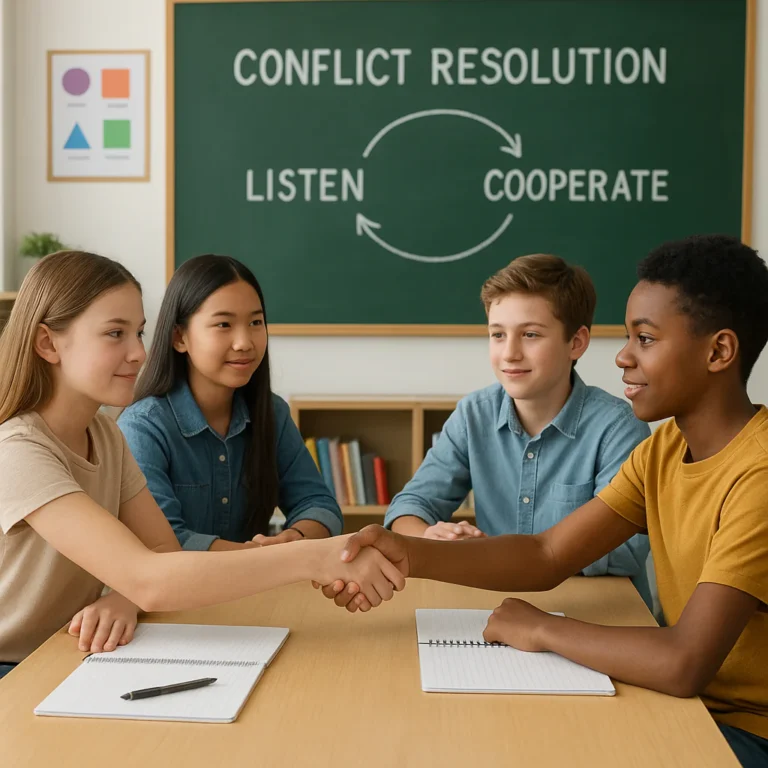
- Responding Thoughtfully to Conflict and Strong Emotions
- 🔍 How to Choose SEL Curriculum, Books, and Classroom Resources
- Questions to Ask About Evidence, Equity, and Fit
- Free and Trusted SEL Planning Resources
- ✅ Conclusion
- 🔗 Recommended Links
- ❓ FAQ
- What does intentional SEL integration in core subjects mean?
- How can teachers integrate SEL without reducing academic instruction?
- Which SEL competencies work best in literacy, math, science, and social studies?
- How do you assess SEL skills fairly?
- Can SEL integration work in classrooms with limited time or resources?
- How can teachers make SEL culturally responsive and inclusive?
- 📖 Reference Links
⚡️ Quick Tips and Facts
Intentional social-emotional learning (SEL) integration is not a feelings worksheet wedged between fractions and recess. It is deliberately teaching and practicing social-emotional skills while students do meaningful academic work: interpreting a character’s choices, explaining a math strategy, revising a claim, or sharing responsibility in a lab.
As we plan lessons with teachers, one useful question keeps the work grounded: What academic thinking will students do, and what SEL skill will help them do it well? Start with that pairing, and SEL becomes part of instruction rather than an extra task.
| Quick fact | What it means in a classroom |
|---|---|
| SEL can be integrated across subjects | Students practice skills such as collaboration, self-management, and perspective-taking during authentic academic work. CASEL describes SEL as part of classroom, school, family, and community settings. |
| Academic learning and SEL can reinforce each other | Strong lessons make the academic target explicit while giving students supported opportunities to practice a social-emotional skill. |
| SEL is teachable, not assumed | If students are expected to collaborate, plan, persist, or disagree constructively, teach and model those actions. |
| A brief routine can be enough | A 30-second goal check, partner explanation, or exit reflection can add purposeful practice without turning the lesson into a separate unit. |
| Student safety and choice matter | Reflection should not require students to reveal private experiences or perform a particular emotion. |
| Assessment should focus on observable learning behaviors | Notice actions such as citing evidence, listening and responding, revising a plan, or asking for help—not whether a student appears happy or calm. |
A practical starting point: Link one content standard to one relevant SEL competency, teach the skill explicitly, and give students a chance to practice it during the academic task. For a step-by-step planning foundation, see our lesson plan guide.
Teacher Strategies™ classroom note: In group work, “Be collaborative” is too fogy to teach. “Take turns explaining a strategy, ask one clarifying question, and build on a teammate’s idea” gives students something they can actually do.
🌱 What Intentional SEL Integration in Core Subjects Means
Social-Emotional Learning: A Clear, Classroom-Ready Definition
The CASEL framework defines SEL as the process through which young people and adults acquire and apply knowledge, skills, and attitudes to develop healthy identities, manage emotions, achieve goals, show empathy, maintain supportive relationships, and make responsible decisions.
For classroom planning, we can make that definition concrete:
- Self-awareness: Recognizing what you know, what you are working on, and what strategies help you learn.
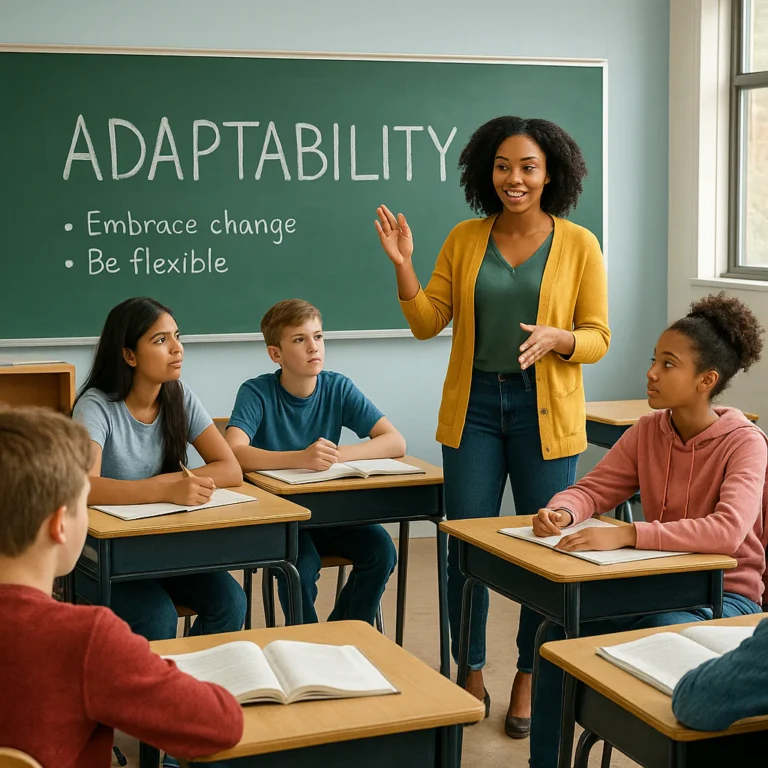
- Self-management: Planning, persisting, regulating attention, and adapting when a task changes.
- Social awareness: Considering perspectives, contexts, and experiences beyond your own.
- Relationship skills: Communicating, listening, cooperating, and repairing misunderstandings.
- Responsible decision-making: Evaluating choices and consequences using evidence, ethics, and care for others.
These are not personality labels. A student who needs a quiet moment is not “bad at self-management,” and a student who disagrees is not automatically “uncoperative.” SEL skills are teachable practices that develop with modeling, opportunity, feedback, and time.
Intentional Integration vs. Standalone SEL Lessons
Standalone SEL lessons can directly teach a skill. Integration gives students a chance to apply that skill in the academic contexts where they need it.
| Approach | Example | Best use |
|---|---|---|
| Standalone SEL lesson | Explicitly teaching how to name a conflict, use an “I” statement, or set a goal | Introduce a skill, build shared language, or respond to a clear need |
| SEL-integrated core lesson | Students compare how two historical sources represent the same event and discuss why their interpretations differ | Transfer and practice skills during content learning |
| Schoolwide SEL practice | Shared routines for welcoming students, classroom voice, and repairing harm | Make expectations consistent across settings |
The approaches are complements, not competitors. A student may need a direct lesson on listening before a structured discussion can work. And a one-time lesson on listening is unlikely to stick unless students use it again in science, reading, and everyday collaboration.
A video perspective referenced in this article makes the same broad case: SEL should be part of school life, not an isolated activity. It highlights academic mindset, aligned SEL and academic goals, and interactive teaching, with student voice and relationships at the center. View the featured video. Its memorable reminder—“Learning is a social enterprise”—is useful, provided we pair it with a clear academic target and thoughtful facilitation.
The Five CASEL Competencies at a Glance
| CASEL competency | Student-facing skill | Core-subject example |
|---|---|---|
| Self-awareness | Identify a strength, challenge, or learning strategy | A reader notices that rereading helps clarify a confusing passage |
| Self-management | Set a goal and adjust effort or strategy | A student breaks a multistep investigation into manageable steps |
| Social awareness | Consider perspectives and context | Students compare how a character’s circumstances shape a decision |
| Relationship skills | Listen, communicate, and contribute to shared work | Partners explain and compare different approaches to a math problem |
| Responsible decision-making | Use evidence and consider consequences | Students evaluate possible solutions to a local environmental issue |
The competencies overlap. A science group that plans a fair test uses self-management, collaboration, and responsible decision-making all at once. Choose one primary skill for planning; recognize the supporting skills when they emerge. For more classroom approaches to group work, explore Collaborative Learning.
📚 Why SEL Belongs in Academic Instruction
What Research Says About SEL and Student Outcomes
A widely cited meta-analysis by Durlak and colleagues examined 213 school-based, universal SEL programs involving more than 270,000 students. It reported improvements in social-emotional skills, attitudes, behavior, and academic performance; the academic gains were equivalent to an 11-percentile-point achievement advantage compared with control groups.
That result is encouraging, not a guarantee that any activity labeled “SEL” will raise achievement. The evidence concerns structured programs and implementation—not a magic effect from adding a reflection prompt to every worksheet. A later meta-analysis of follow-up studies also found that positive effects could persist over time, while outcomes varied by program and context. See Taylor et al. (2017).
What we take from the research: SEL is worth integrating when instruction is purposeful, developmentally appropriate, and supported by relationships and consistent practice. It is not a substitute for excellent subject teaching, strong curriculum, or needed mental-health services.
How SEL Supports Belonging, Engagement, and Academic Learning
Academic work asks students to do socially and emotionally demanding things: make a guess before knowing the answer, accept feedback, revise an idea, explain reasoning, or listen to someone who sees a problem differently. SEL integration makes those demands visible and teachable.
| Academic moment | SEL skill that helps | Instructional move |
|---|---|---|
| A student gets stuck | Self-management | Model how to pause, name the obstacle, and choose a next strategy |
| A group has competing answers | Relationship skills | Give students a turn-taking and evidence-sharing routine |
| A text includes a difficult decision | Social awareness | Ask what the character knows, wants, and may not understand |
| A student revises a claim | Self-awareness | Ask what changed in the student’s thinking and what evidence prompted it |
| A class considers a real-world problem | Responsible decision-making | Compare possible actions, affected groups, evidence, and consequences |
The video’s emphasis on bringing students’ lives into learning can be powerful: culturally and personally relevant contexts may help students see why content matters. But relevance is not a license to ask children to disclose personal hardship. Invite connections; do not demand autobiography.
What SEL Integration Can—and Cannot—Do
It can:
- Give students shared language for collaboration, persistence, reflection, and respectful disagreement.
- Help teachers make academic routines more inclusive and predictable.
- Create structured practice for skills that complex learning requires.
- Support a classroom culture where students can take appropriate intellectual risks.
It cannot:
- Replace counseling, special education, trauma-informed support, or clinical care.
- Fix inequitable policies or a harmful classroom climate through individual “calm-down” strategies.
- Require every student to share personal feelings publicly.
- Guarantee improved grades or behavior from a single activity.
Good SEL integration asks not only “What skill should students practice?” but also “What is the environment asking of them, and is that environment fair and supportive?” Learn more about building supportive routines through Classroom Management.
🧭 Principles for Meaningful, Culturally Responsive SEL Integration
Start With Learning Goals, Not a Decorative SEL Add-On
A colorful feelings chart cannot rescue a lesson where the SEL objective has no real connection to the academic work. Begin with the content, then identify the social-emotional skill that students genuinely need to engage with it.
Example: In a lesson on comparing fractions, students explain two strategies and decide whether a classmate’s reasoning is valid. The academic goal is comparing fractions; the SEL practice is listening, asking clarifying questions, and responding to evidence.
That is more purposeful than pausing midway to ask everyone to “share an emotion.” The CASEL integration guidance encourages educators to connect SEL and academic instruction through intentional planning and supportive learning environments.
Use Student Strengths, Identity, and Community Knowledge
SEL should recognize that students bring different languages, family practices, cultural knowledge, and ways of communicating. A classroom routine that treats one style of eye contact, speech, or emotional expression as the universal standard can mistake difference for deficiency.
Try these moves:
- Use examples, texts, and problems that reflect varied communities and experiences.
- Offer multiple ways to contribute: speaking, writing, drawing, using assistive technology, or sharing with a partner first.
- Ask students what helps them participate and learn.
- Avoid positioning one student as a spokesperson for an identity group.
- Let students connect content to lived experience by choice, not obligation.
In a qualitative study of 10 elementary visual-art educators, teachers described using students’ experiences and needs to design SEL-integrated art lessons and intentionally creating safe classroom environments. The study is focused on visual-art educators, so it cannot prove that the same methods work identically across every subject. Still, its themes offer valuable planning questions for any content area. Read the Walden University dissertation.
Protect Student Choice, Privacy, and Emotional Safety
A prompt about a character’s fear is not the same asking a student to explain a personal fear to the class. Keep the focus on the learning task and offer alternatives:
- “You may write about the character, a fictional person, or a general situation.”
- “You can share with a partner, write privately, or pass.”
- “You do not need to explain why you chose that option.”
When a lesson touches identity, conflict, grief, discrimination, or other sensitive issues, plan how to respond to student comments and where to seek support. The National Child Traumatic Stress Network’s trauma-informed school resources can help educators think about safety and support without treating every student as though they have the same experiences.
Make SEL Accessible for Multilingual Learners and Students With Disabilities
SEL practice should not depend on students already being fluent in the language of the lesson or comfortable with one communication style.
- Preteach key words such as evidence, perspective, revise, and compromise.
- Provide sentence frames and visual supports, then fade them as students gain independence.
- Allow home-language discussion and multimodal responses where appropriate.
- Make routines predictable and provide directions in manageable steps.
- Offer quiet reflection, movement, assistive technology, or additional processing time.
- Treat accommodations as access—not as a reduction in the value of a student’s contribution.
For classroom strategies that adapt instruction while preserving meaningful goals, visit Differentiated Instruction. For accessible planning principles, the CAST Universal Design for Learning Guidelines offer a useful framework for multiple means of engagement, representation, and action or expression.
🛠️ How to Plan an Intentional SEL-Integrated Lesson
Choose an Academic Standard and a SEL Competency
Start with the required content, not a generic social-emotional theme.
- Name the academic learning: What should students know or be able to do?
- Identify the learning demand: Will they need to persist, collaborate, evaluate perspectives, or make a reasoned choice?
- Select one primary SEL competency: Choose the skill that most directly supports the academic work.
- Check relevance: If you removed the SEL element, would a meaningful learning opportunity disappear? If not, it may be a decorative add-on.
| Subject | Academic goal | Useful SEL focus |
|---|---|---|
| Reading | Compare a character’s choices using evidence | Perspective-taking |
| Writing | Develop and revise an argument | Openness to feedback and responsible decision-making |
| Mathematics | Explain and compare strategies | Listening and collaborative reasoning |
| Science | Design a fair investigation | Self-management and shared responsibility |
| Social studies | Evaluate primary sources | Perspective-taking and evidence-based discussion |
Write Connected Learning Targets
Write two connected targets, one academic and one skill-focused. Students should know what success looks like in both.
- Academic target: “I can compare two strategies for finding equivalent fractions and explain why they work.”
- SEL practice target: “I can listen to a partner’s explanation, ask a clarifying question, and respond using mathematical evidence.”
Avoid vague targets such as “I will be nice” or “I will have a growth mindset.” They are hard to teach and unfair to assess because they describe broad traits rather than observable actions.
Select a Teaching Routine and Student Practice
A simple sequence works across subjects:
- Model the skill. Think aloud: “I disagree with the result, so I’ll ask how my partner got that answer before I decide.”
- Give students language or a tool. Provide a question stem, checklist, visual reminder, or role card.
- Practice during real content work. Students use the routine while analyzing a text, solving a problem, or planning an experiment.
- Notice and name effective actions. Be specific: “You asked for evidence before challenging the claim.”
- Reflect briefly. Ask what helped the group learn and what it might try next time.
For more structures that make peer learning purposeful, see Collaborative Learning.
Plan Reflection, Feedback, and Assessment
Reflection should help students notice learning strategies, not reveal private feelings. Useful prompts include:
- “Which strategy helped you make progress?”
- “What did your group do when you disagreed?”
- “What evidence changed or strengthened your thinking?”
- “What is one next step you can try?”
Give feedback on actions students can control. “You returned to the text and found evidence” is more useful than “You are a naturally empathetic reader.” For more on evidence-informed classroom checks, explore Assessment Techniques.
A Reusable SEL Integration Planning Template
| Planning question | Your notes |
|---|---|
| What academic standard or content target will students learn? | |
| Which SEL competency supports the work? | |
| What observable student behavior will demonstrate practice? | |
| How will I model and teach that behavior? | |
| What routine, materials, or supports will students need? | |
| How can students participate in more than one way? | |
| How will I check academic understanding and SEL practice separately? | |
| What reflection question will help students transfer the skill? |
Teacher tip: Keep the SEL target modest. One well-taught routine practiced repeatedly is stronger than five competencies listed on a lesson plan and forgotten by lunchtime.
🔢 12 Practical Ways to Integrate SEL Across Core Subjects
1. Build Self-Awareness Into Reading and Writing
Invite students to track how they understand a text or draft a piece of writing.
- Before reading: “What do you already know about this topic?”
- During reading: “Where did you pause, reread, or change your interpretation?”
- During writing: “Which feedback helped you decide what to revise?”
Students can respond privately in a notebook, with a check box, or through a brief conference. The goal is awareness of learning strategies—not a public ranking of confidence.
2. Teach Perspective-Taking Through Literature
Ask students to distinguish what a character knows, believes, wants, and does. Then compare interpretations using specific details from the text.
| Prompt | Academic payoff | SEL practice |
|---|---|---|
| What might each character believe is happening? | Inference and textual evidence | Considering a perspective |
| Which details support that interpretation? | Close reading | Listening to and testing ideas |
| What might the character not know? | Character analysis | Recognizing limits in a viewpoint |
Clarify that understanding a character’s perspective does not mean endorsing every choice the character makes.
3. Practice Responsible Decision-Making in Writing
Argument writing naturally invites students to weigh claims, evidence, consequences, and counterarguments.
- Identify the decision or claim.
- List the evidence for different options.
- Consider who may be affected.
- Draft a claim and support it.
- Revise after considering a counterargument.
Choose age-appropriate, carefully framed topics. Students should not be required to debate another student’s dignity, identity, or right to belong.
4. Use Math Talk to Strengthen Collaboration
Math discourse makes student thinking audible. Use prompts that focus on reasoning:
- “Can you explain how you started?”
- “What is another way to represent that?”
- “Where do you agree, and where do you see it differently?”
- “Can you show the evidence in the model?”
In a classroom, one student may solve mentally while another needs a diagram. We want groups to learn that different strategies are resources, not proof that one student is “the math person” and another is not. Explore more ways to structure peer discussion in Collaborative Learning.
5. Normalize Productive Struggle in Mathematics
When a student gets stuck, avoid swoping in with the answer. Teach a repeatable next-step routine:
- Restate the problem.
- Identify what is known and what is unclear.
- Choose a tool: draw, estimate, use manipulatives, or try a smaller case.
- Ask a partner a specific question.
- Check whether the new strategy moved the work forward.
This is self-management in service of mathematical reasoning, not a demand to persist endlessly. If a task is inaccessible or a student needs support, adjust the task or provide help.
6. Explore Fairness and Data Literacy in Math
Fractions, ratios, statistics, and graphs can help students examine how choices distribute resources or represent communities.
For example, students might analyze how a limited set of classroom supplies could be shared under different rules, then compare the results mathematically. Ask:
- What does the data show?
- Whose perspective might be missing?
- What assumptions shape the result?
- Does “equal” always mean “fair” in this scenario?
The video’s example of connecting fractions to fair distribution illustrates how a content concept can connect to social reasoning. Keep the math rigorous: students still need to calculate, represent, and justify, not just discuss fairness.
7. Connect Scientific Inquiry With Self-Management
Scientific investigations require planning, patience, and revision. Give students a visible process:
- State the question.
- Identify materials and steps.
- Predict what could go wrong.
- Record observations consistently.
- Adjust the plan when evidence calls for it.
A “what we changed and why” lab note makes self-management observable while supporting scientific explanation.
8. Teach Collaboration Through Lab Work
Group science can become a race touch the equipment. Prevent that with roles that rotate:
| Role | Responsibility |
|---|---|
| Materials manager | Collects, checks, and returns equipment |
| Procedure reader | Reads and clarifies the steps |
| Data recorder | Records observations accurately |
| Evidence reporter | Summarizes findings and identifies uncertainty |
Roles should not become permanent labels. Rotate them so every student practices multiple skills, and make sure roles support—not replace—shared intellectual work.
9. Explore Ethics and Empathy in Science
Science lessons can include discussion of how research, technology, or environmental decisions affect different people and living systems. Use evidence-based questions:
- What benefits might this solution offer?
- What risks or unintended effects should be considered?
- Who should be included in decision-making?
- What evidence would help us make a responsible choice?
Avoid presenting complex controversies as if there is always one obvious answer. Teach students to distinguish evidence, values, uncertainty, and trade-offs.
10. Examine Multiple Perspectives in Social Studies
Use primary and secondary sources to explore how accounts differ. Ask students to identify:
- Who created the source, and when?
- What perspective or purpose might shape it?
- Which voices are present or absent?
- What claims can be supported by other evidence?
Perspective-taking here is rigorous historical analysis, not a guessing game about how people “must have felt.” For deeper inquiry routines, see Critical Thinking.
11. Practice Civic Discussion and Responsible Action
Students can learn to discuss a community question by listening, examining evidence, and weighing possible actions. Establish discussion agreements before a contentious topic arises:
- Critique ideas, not classmates.
- Support claims with evidence.
- Ask questions before assuming intent.
- Make room for more than one view.
- Do not ask a student to represent an entire community.
When appropriate, connect learning to a meaningful action: a school proposal, community information resource, or student-led presentation. Participation should be age-appropriate and voluntary when personal disclosure is involved.
12. Use Visual and Performing Arts to Support Emotional Expression
Art offers many ways to explore ideas and communicate meaning without requiring every student to speak in front of the class. Students might create a visual response to a poem, use movement to represent a scientific process, or compare how music communicates mood and structure.
A Walden dissertation based on interviews with 10 elementary visual-art educators found themes including attention to student needs, intentional safe environments, varied resources, and differences in how educators understood and approached SEL. Because it is a small qualitative study in visual-art education, treat it as a source of practitioner insight—not proof of universal outcomes. Read the study.
For arts-specific guidance, consult Vermont’s Visual and Performing Arts Considerations and Recommendations resource compendium. We cannot verify its detailed recommendations here, so review the document directly before relying on a specific claim from it.
🧩 SEL Integration Examples by Grade Band
Elementary School: Concrete Routines and Guided Practice
Younger students benefit from explicit modeling, repetition, visuals, and short practice cycles.
Example: Read-aloud and character choices
- Academic target: Identify a character’s challenge and use story details to explain a response.
- SEL target: Consider what the character may know or need.
- Routine: Think, draw or write, share with a partner, then cite a story detail.
- Reflection: “What clue helped you understand the character’s choice?”
Example: Math partner work
- Academic target: Represent a problem with objects or a drawing.
- SEL target: Take turns explaining and asking a question.
- Support: Use picture cards with “My strategy is…” and “Can you show me…?”
Middle School: Identity, Belonging, and Peer Collaboration
Middle school students are developing independence and navigating peer relationships. Offer meaningful choice and clear boundaries around personal sharing.
Example: Science design challenge
- Academic target: Build and test a model against stated criteria.
- SEL target: Share responsibility and use feedback to revise.
- Routine: Each group member identifies one strength of the design and one evidence-based next step.
- Reflection: “What changed after testing, and who contributed to that decision?”
Example: Historical source comparison
- Academic target: Compare two sources’ claims and context.
- SEL target: Listen to interpretations without treating disagreement as personal rejection.
- Support: Sentence stems, individual thinking time, and a pass option.
High School: Agency, Complex Reasoning, and Civic Connection
Older students can handle greater ambiguity, longer-term projects, and more complex trade-offs. Keep the academic reasoning visible and avoid turning a civic issue into a forced personal debate.
Example: Community-connected research project
- Academic target: Evaluate sources and present an evidence-based recommendation.
- SEL target: Coordinate responsibilities, respond to feedback, and consider who is affected.
- Routine: Students create a project plan, check progress, and revise their recommendation after peer review.
KnowledgeWorks’ account of personalized, competency-based learning describes schools connecting learner goals, collaboration, problem-solving, and community learning. It includes examples from particular districts; use them as illustrations of practice, not as comparative proof that one model fits every school.
🗓️ A Sample Week of SEL-Integrated Core Instruction
This sample is a planning sketch—not a mandate to add a daily SEL worksheet.
| Day | Core lesson | SEL practice | Quick reflection |
|---|---|---|---|
| Monday | Reading: infer a character’s motivation | Consider a perspective using textual evidence | “Which clue shaped your interpretation?” |
| Tuesday | Math: compare two solution strategies | Listen, clarify, and respond with evidence | “What did your partner’s strategy help you notice?” |
| Wednesday | Science: plan an investigation | Break work into steps and share roles | “What is our next step, and who owns it?” |
| Thursday | Social studies: compare source accounts | Notice context and missing viewpoints | “Which source question do we still need to investigate?” |
| Friday | Writing: revise a claim after peer feedback | Receive feedback and make a reasoned choice | “What did you revise, and why?” |
A five-minute wrap-up can help students connect the week’s experiences: “Which learning routine helped you contribute? Where might you use it again?” If time is tight, fold that prompt into an existing exit ticket rather than adding another activity.
🗣️ Discussion Prompts and Classroom Language That Help
Questions That Encourage Reflection Without Forcing Disclosure
Use prompts centered on learning, choices, and strategies:
- “What did you notice yourself doing when the task became challenging?”
- “Which part of the evidence changed your thinking?”
- “What helped your group move forward?”
- “What is one question you still have?”
- “Which strategy would you try next time?”
- “What might a person in this text or scenario know that someone else does not?”
Offer students ways to answer privately, anonymously, through drawing, or not at all when a prompt risks personal disclosure. That choice is not a loophole; it is part of a respectful learning environment.
Teacher Phrases for Feedback, Conflict, and Productive Struggle
| Instead of… | Try… |
|---|---|
| “Calm down.” | “Let’s pause. Would you like a minute, a quiet space, or help naming the next step?” |
| “Be respectful.” | “Respond to the idea with evidence, and leave out comments about the person.” |
| “You’re so smart.” | “You tested a second strategy when the first one did not work.” |
| “Just work it out.” | “What do you agree on so far, and what evidence could help with the difference?” |
| “You need to participate.” | “You can contribute by speaking, writing, drawing, or sharing with a partner first.” |
Specific language teaches what the skill looks like. For routines that support positive behavior and predictable expectations, visit Classroom Management.
📊 Assessing SEL Skills Without Grading Students’ Feelings
Formative Checks, Observation, and Student Reflection
Assess observable practice, not inner emotional states or personality.
Possible evidence includes:
- A student identifies a relevant next step after getting stuck.
- A partner asks a clarifying question before responding.
- A group divides responsibilities and adjusts its plan.
- A writer uses feedback to make a deliberate revision.
- A student supports an interpretation with evidence.
Use brief observation notes, student self-reflection, conference questions, or peer feedback. Separate academic mastery from SEL practice: a student can understand the science concept while needing support with group communication, and vice versa.
Rubrics for Observable Skills and Academic Learning
A short rubric might describe actions instead of traits:
| Skill | Practicing | Developing | Applying |
|---|---|---|---|
| Uses evidence in discussion | Shares an idea without connecting it to evidence yet | Uses some relevant evidence with prompting | Explains how evidence supports an idea |
| Collaborates on shared work | Needs support to identify a role or next step | Completes an agreed role with reminders | Contributes, checks progress, and helps adjust the plan |
| Reflects on strategy | Names a difficulty | Identifies a strategy used | Explains whether the strategy helped and what to try next |
Do not grade a student’s empathy, attitude, calmness, or “respectfulness” as a global trait. Such labels can reflect adult expectations and communication norms more than a student’s learning. For practical tools on gathering evidence, see Assessment Techniques.
How to Use Student and Family Feedback
Ask students whether routines help them participate, what barriers they experience, and which ways of contributing feel accessible. Invite family insight without asking families to endorse a preset program.
Useful questions include:
- “Which classroom routine helps your child contribute?”
- “Are there communication or sensory supports that would help?”
- “What should we know about how your child prefers to show learning?”
Use feedback to revise instruction, not to label individual students. Protect confidentiality and follow school procedures when concerns need additional support.
🤝 Schoolwide and Family Partnerships for Sustainable SEL
Align Classroom Practice With Schoolwide SEL
Students benefit when expectations are consistent but flexible. A school might agree on shared language for asking for help, giving feedback, and repairing harm while allowing teachers to choose routines suited to their subjects and students.
CASEL’s schoolwide framework emphasizes coordinated practices across classrooms, schools, families, and communities. Alignment does not mean every class must use identical posters or scripts. It means students encounter coherent expectations and supportive relationships.
Partner With Families and Community Organizations
Share the academic purpose behind SEL routines. “Students are practicing how to explain a strategy and respond to evidence” is more informative than “We are working on being nicer.”
- Communicate skills and examples in accessible language.
- Invite families to share what supports their child’s learning.
- Respect differences in cultural norms and family preferences.
- Partner with qualified community providers when needs extend beyond classroom instruction.
Plan Collaborative Professional Learning
Teachers do not need to redesign every unit at once. Pick a shared academic routine—such as peer feedback or group problem-solving—and study it together.
- Choose one core lesson or unit.
- Identify a skill students need to participate successfully.
- Plan explicit modeling and accessible supports.
- Observe what students do, not just what the plan says.
- Reflect together and revise the next lesson.
KnowledgeWorks describes how educator ownership can support engagement in personalized, competency-based learning initiatives. Its examples come from specific schools and districts; the broader planning lesson is to give teachers a voice in implementation and provide time to learn together. Read the KnowledgeWorks resource.
🚧 Common SEL Integration Mistakes—and Better Moves
Avoiding Forced Disclosure and “Feelings Grading”
Mistep: Asking every student to share a personal experience because the lesson is about empathy.
Better move: Let students analyze a fictional character, a historical source, or a general scenario. Provide a private response option.
Mistep: Grading a student on whether they appear calm, confident, kind, or enthusiastic.
Better move: Assess clear behaviors tied to the lesson, such as listening, citing evidence, or revising a plan.
Keeping SEL From Becoming a One-Off Activity
Mistep: Running a single teamwork game and assuming students now know how to collaborate.
Better move: Teach a routine, practice it across subjects, reflect on it, and gradually release responsibility. Repetition is not boring when students are applying the skill to new and meaningful work.
Responding Thoughtfully to Conflict and Strong Emotions
Mistep: Treating every disagreement as a behavior problem—or insisting students resolve serious harm through a quick apology.
Better move: Pause, ensure safety, listen without rushing to assign intent, and follow school policy. Teach disagreement skills for ordinary academic conflict, but seek appropriate support for bullying, discrimination, threats, or distress that exceeds classroom instruction.
A classroom routine is a teaching tool, not a substitute for safeguarding procedures or specialist help. When in doubt, consult school leadership and relevant student-support professionals.
🔍 How to Choose SEL Curriculum, Books, and Classroom Resources
Questions to Ask About Evidence, Equity, and Fit
Before adopting a curriculum, book set, card deck, or online resource, ask:
- Does it describe specific, teachable skills rather than labeling students?
- Is there credible evidence for the program’s stated outcomes?
- Does it represent varied identities and family structures thoughtfully?
- Can students participate without disclosing private experiences?
- Does it connect to academic goals and existing classroom routines?
- Are materials accessible to multilingual learners and students with disabilities?
- Does it identify limits and explain when additional support is needed?
- Can teachers adapt examples without losing the core learning objective?
A branded product is not automatically evidence-based, and a free resource is not automatically high-quality. Evaluate the instructional design, accessibility, cultural fit, privacy practices, and evidence—not just the packaging.
Free and Trusted SEL Planning Resources
- CASEL: What Is SEL? — framework and competency definitions.
- CASEL: SEL Integration Approach — guidance for aligning SEL and academic instruction.
- RAND: Social and Emotional Learning — research and educator perspectives.
- CAST Universal Design for Learning Guidelines — options for accessible participation and expression.
- KnowledgeWorks: SEL and Personalized Learning — school and district examples.
- Vermont Agency of Education arts resource compendium — visual and performing arts considerations; consult the original document for its full guidance.
- Teacher Strategies™: Critical Thinking — classroom approaches to evidence, reasoning, and discussion.
- Teacher Strategies™: Differentiated Instruction — ways to make instruction responsive to learner needs.