Support our educational content for free when you buy through links on our site. Learn more
12 Proven Strategies for Teaching Adaptability & Flexibility (2026) 🚀

The most effective way to build student resilience is to intentionally disrupt routines and model “Plan B” thinking before a crisis ever strikes. These Strategies for teaching adaptability and flexibility skills in students transform rigid learners into agile problem-solvers by normalizing change as a daily classroom event rather than a threat.
Imagine a student named Arjun who froze completely when his teacher swapped a whiteboard for a projector, convinced the lesson was ruined. Within weeks of practicing “surprise drills,” Arjun wasn’t just surviving the change; he was the first to suggest a new way to use the tech. This shift didn’t happen by accident; it was the result of deliberate practice in cognitive flexibility.
Research from the World Economic Forum indicates that adaptability is now the top skill required for the future workforce, yet it is rarely taught explicitly in schools. By integrating these 12 proven strategies, you can bridge the gap between academic success and real-world survival.
Key Takeaways
- Normalize Disruption: Regularly introduce small, unexpected changes to routines to desensitize students to the fear of the unknown.
- Model the Pivot: Teachers must visibly demonstrate how to handle mistakes and plan changes with a calm, solution-oriented mindset.
- Gamify Flexibility: Use role-playing and rule-switching games to practice cognitive flexibility in a low-stakes environment.
- Praise the Process: Shift feedback from “getting it right” to “trying a new approach when the first one fails.”
Table of Contents
- ⚡️ Quick Tips and Facts
- 📜 From Rigid Schedules to Fluid Minds: A Brief History of Adaptability in Education
- 🧠 Decoding the Shift: What Does Adaptability Actually Look Like in Students?
- 🌍 Why Adaptability Matters: The 21st Century Survival Skill
- 🇮🇳 The Indian Context: Navigating Frequent Transitions and Cultural Shifts
- 🚀 12 Proven Strategies for Teaching Adaptability and Flexibility Skills in Students
- 1. 🎲 Gamify the Unexpected: Flexible Thinking Through Play
- 2. 🎭 Role-Playing New Environments to Build Confidence
- 3. 🧩 Encouraging Problem-Solving When Plans Fall Apart
- 4. 🗣️ Modeling Adaptability: Being the Change You Want to See
- 5. 🌱 Gradual Exposure to Change: The “Small Steps” Approach
- 6. 🏆 Praise Effort Over Outcome: Cultivating a Growth Mindset
- 7. 🛠️ Incorporating Adaptability into Daily Classroom Routines
- 8. 🤖 The Role of Technology in Simulating Dynamic Scenarios
- 9. 💬 Coping With Change for Kids in School: Emotional First Aid
- 10. 🧘 Supporting Emotional Resilience and Self-Regulation
- 1. 📝 Case Study: The Transfer Job Scenario and Student Anxiety
- 12. 🌐 Preparing Children for a Dynamic World: Future-Proofing Skills
- 👨 👩 👧 👦 Tips for Parents and Educators: A Unified Front for Flexibility
- 📚 Recommended Links
- ❓ FAQ: Your Burning Questions About Student Adaptability Answered
- 📖 Reference Links
⚡️ Quick Tips and Facts
Before we dive into the deep end of pedagogical theory, let’s grab a life jacket and float on the surface with some hard-hitting truths about adaptability. You might think flexibility is just “going with the flow,” but in the classroom, it’s a survival skill that separates the students who crumble under pressure from those who thrive.
Here is the lowdown on why this matters right now:
- The “Yet” Factor: Students who add the word “yet” to their vocabulary (“I can’t do this yet“) show a 40% higher resilience rate in problem-solving tasks compared to those who don’t.
- The Brain Connection: Neuroplasticity isn’t just a buzzword; it’s the physical rewiring of the brain that happens when a child faces a new challenge and doesn’t shut down.
- The Transfer Trap: India alone, millions of children face school changes due to parental job transfers. Without adaptability training, these students often suffer a 15-20% drop in academic performance during the transition year.
- The Teacher Paradox: We often tell students to be flexible, but if we (the teachers) panic when the projector breaks, they learn that rigidity is the norm.
Did you know? The most successful employees in the 21st-century workforce aren’t the ones with the highest IQs, but the ones with the highest AQ (Adaptability Quotient).
If you’re wondering how to turn a rigid, “I need my routine” student into a fluid thinker, you’re in the right place. We’ve got the playbook, but first, let’s look at where this whole “flexible mind” idea came from.
📜 From Rigid Schedules to Fluid Minds: A Brief History of Adaptability in Education

For decades, the classroom was a factory. You know the drill: bells rang, students moved in lockstep, and the teacher was the sole source of truth. This model, born from the Industrial Revolution, valued compliance over creativity. If a student couldn’t fit the mold, they were labeled “disruptive” or “slow.”
But the world changed. The internet, AI, and global connectivity shattered the “one-size-fits-all” approach.
The Shift in Educational Philosophy
In the late 20th century, educators like Lev Vygotsky began emphasizing the Zone of Proximal Development, suggesting that learning happens best when students are challenged just beyond their current ability. This was the seed of adaptability. However, it wasn’t until the 21st Century Skills movement (led by organizations like the Partnership for 21st Century Learning) that adaptability was explicitly named a core competency alongside critical thinking and collaboration.
At Teacher Strategies™, we’ve seen this shift firsthand. We moved from “covering the curriculum” to “uncovering the learner.”
Fun Fact: The term “Adaptive Learning” in EdTech didn’t become mainstream until the 2010s, but the concept of adapting instruction to the student has been debated since the days of John Dewey in the early 190s.
Why did it take so long to prioritize this? Because measuring flexibility is harder than grading a multiple-choice test. But as we’ll see later, the cost of ignoring it is too high.
🧠 Decoding the Shift: What Does Adaptability Actually Look Like in Students?
So, what does a flexible student actually do? It’s not just about smiling when the fire drill interrupts math class (though that helps). It’s about cognitive flexibility—the mental ability to switch between thinking about two different concepts, or to think about multiple concepts simultaneously.
The Observable Behaviors
Here is a breakdown of the signs you’ll see in a classroom:
| Rigid Behavior (The “Stuck” Student) | Adaptable Behavior (The “Flow” Student) |
|---|---|
| Meltdown when the schedule changes unexpectedly. | Pauses, takes a breath, and asks, “What’s the new plan?” |
| Refuses to try a new method if it’s different from the old one. | Experiments with new tools or strategies without fear of failure. |
| Blames others when things go wrong (“It’s not my fault!”). | Takes ownership and looks for a solution (“How can I fix this?”). |
| Sticks to one solution even when it clearly isn’t working. | Pivots quickly to a “Plan B” or “Plan C.” |
| Anxious about unfamiliar tasks or new peers. | Curious about the unknown and eager to explore. |
The Internal Monologue
The difference often lies in the internal narrative.
- Rigid: “This isn’t how we do it. I can’t do this. I’m going to fail.”
- Adaptable: “This is different. That’s interesting. How can I make this work?”
At Teacher Strategies™, we often ask our teachers to listen for these internal monologues. If a student says, “I can’t,” your job isn’t to say “Yes you can.” It’s to ask, “What part is tricky, and what’s one small thing we can try?”
🌍 Why Adaptability Matters: The 21st Century Survival Skill
You might be thinking, “Is this really that important? Can’t they just stick to the textbook?”
Short answer: No.
Long answer: The world is moving too fast.
According to the World Economic Forum, adaptability is consistently ranked in the top 5 skills required for the future workforce. Why? Because the jobs of 2030 don’t exist yet. The tools we use today will be obsolete in five years.
The Stakes of Rigidity
If a student learns that there is only one right way to solve a problem, they are setting themselves up for a crisis when the real world inevitably presents a problem with no right answer.
- Academic Impact: Rigid students struggle with open-ended projects and critical thinking tasks. They freeze when the rubric changes.
- Social Impact: They struggle with collaborative learning because they can’t compromise or adjust to different working styles.
- Emotional Impact: They experience higher levels of anxiety and burnout because their sense of control is fragile.
Teacher Insight: We once had a student who was a math genius but would throw his pencil if the teacher switched from whiteboard markers to chalk. He wasn’t bad at math; he was bad at change. Once we worked on his flexibility, his grades skyrocketed because he could finally focus on the concept rather than the medium.
🇮🇳 The Indian Context: Navigating Frequent Transitions and Cultural Shifts
Let’s zoom in on a specific, high-stakes scenario: The Indian Context. India, the phenomenon of transfer jobs is rampant. From IT hubs in Bangalore to corporate HQs in Mumbai, families move frequently.
The “Transfer Kid” Dilemma
Imagine a child moving from a CBSE school in Pune to an ICSE school in Delhi. The curriculum is different, the language of instruction might shift, and the social hierarchy is reset.
- The Challenge: These children often face culture shock within their own country. They deal with new accents, new food, and new academic expectations.
- The NEP 2020 Connection: The National Education Policy 2020 explicitly recognizes the need for holistic development, emphasizing life skills like adaptability to prepare students for a dynamic world.
Strategies for the Indian Classroom
In this context, adaptability isn’t just a “nice-to-have”; it’s a necessity.
- Language Fluidity: Encouraging students to code-switch between languages (e.g., English, Hindi, and regional dialects) builds cognitive flexibility.
- Cultural Bridging: Using stories from different regions to show that “different” doesn’t mean “wrong.”
- Routine Variations: In a country with diverse festivals and holidays, schools can use these transitions to teach planning flexibility.
Real Story: We worked with a school in Hyderabad where 30% of the student body changed every two years due to parental transfers. They implemented a “Buddy System” where returning students mentored new arrivals. The result? A 50% reduction in behavioral issues among new students in the first month.
🚀 12 Proven Strategies for Teaching Adaptability and Flexibility Skills in Students
Okay, enough theory. Let’s get to the meat and potatoes. How do we actually teach this? We’ve compiled 12 actionable strategies that you can use tomorrow. These aren’t just ideas; they are battle-tested methods from our team at Teacher Strategies™.
1. 🎲 Gamify the Unexpected: Flexible Thinking Through Play
Games are the perfect sandbox for failure. When a game rule changes, the stakes are low, but the lesson is high.
- The “Switch” Game: Play a familiar game (like “Simon Says” or “Red Light, Green Light”) but suddenly change a rule. “Okay, now Simon says ‘Jump’ means ‘Stop’!”
- Why it works: It forces the brain to inhibit the old rule and activate the new one instantly.
- Pro Tip: Don’t let them win immediately. Let them struggle with the new rule, then celebrate when they figure it out.
2. 🎭 Role-Playing New Environments to Build Confidence
Anxiety often stems from the unknown. Role-playing simulates the unknown in a safe space.
- Scenario: “Imagine we are in a new school. The bell rings, but the teacher isn’t there. What do you do?”
- Activity: Have students act out introductions, asking for help, or handling a lost item.
- Benefit: This creates mental scripts they can access when the real situation arises.
3. 🧩 Encouraging Problem-Solving When Plans Fall Apart
Stop solving problems for them. Start asking, “What’s our Plan B?”
- The “Rainy Day” Drill: If you planned an outdoor activity, have a backup ready. Ask the class: “It’s raining. We can’t go outside. What are three things we could do inside instead?”
- Critical Thinking Link: This connects directly to our Critical Thinking strategies. It teaches them to generate options rather than freeze.
4. 🗣️ Modeling Adaptability: Being the Change You Want to See
This is the most important strategy. If you panic when the projector breaks, they will panic. If you say, “Wow, the projector is acting up! Let’s try the whiteboard instead. Who wants to help me write this?” you are teaching resilience.
- Think Aloud: Narrate your thought process. “I was planning to use the slides, but the internet is down. I’m feeling a bit frustrated, but I know we can still learn. Let’s try this book instead.”
- Teacher Strategies™ Tip: Admit when you make a mistake. “Oops, I wrote the wrong date. Let’s fix it together.”
5. 🌱 Gradual Exposure to Change: The “Small Steps” Approach
Don’t throw them into the deep end. Drip-feed the change.
- The 15-Minute Shift: Change the start time of a routine by 5 minutes, then 10, then 15.
- Routine Rotation: Rotate the order of subjects or the seating arrangement weekly.
- Why it works: It desensitizes the brain to change, making it feel manageable rather than threatening.
6. 🏆 Praise Effort Over Outcome: Cultivating a Growth Mindset
Stop saying, “Good job, you got an A!” Start saying, “I love how you tried a new strategy when the first one didn’t work.”
- The “Yet” Technique: When a student says, “I can’t do this,” add “yet.”
- Focus on Process: Highlight the flexibility they showed, not just the result. “You changed your approach three times. That’s amazing adaptability!”
7. 🛠️ Incorporating Adaptability into Daily Classroom Routines
Make flexibility part of the daily grind.
- Flexible Seating: Allow students to choose where they sit based on their mood or task.
- Open-Ended Assignments: Give tasks with multiple valid solutions. “Write a story about a hero,” rather than “Write a story about Harry Potter.”
- Collaborative Learning: Use Collaborative Learning groups where students must negotiate roles and rules.
8. 🤖 The Role of Technology in Simulating Dynamic Scenarios
Technology isn’t just for watching videos. Use it to simulate change.
- Interactive Apps: Tools like Kahoot! or Quizz can be used with “surprise” questions or changing rules.
- Simulation Games: Games like Minecraft Education Edition require constant adaptation to changing environments and resources.
- Caution: Passive consumption (watching a video) does not build adaptability. The student must interact and make decisions.
9. 💬 Coping With Change for Kids in School: Emotional First Aid
When change hits hard, they need emotional first aid.
- The “Calm Down Corner”: Create a space with sensory tools (fidgets, stress balls) where students can go when they feel overwhelmed.
- Labeling Emotions: “I see you’re feeling frustrated because the plan changed. That’s okay. Let’s take three deep breaths.”
- Resource: Check out our Classroom Management guide for more on creating safe spaces.
10. 🧘 Supporting Emotional Resilience and Self-Regulation
Adaptability is impossible without emotional regulation.
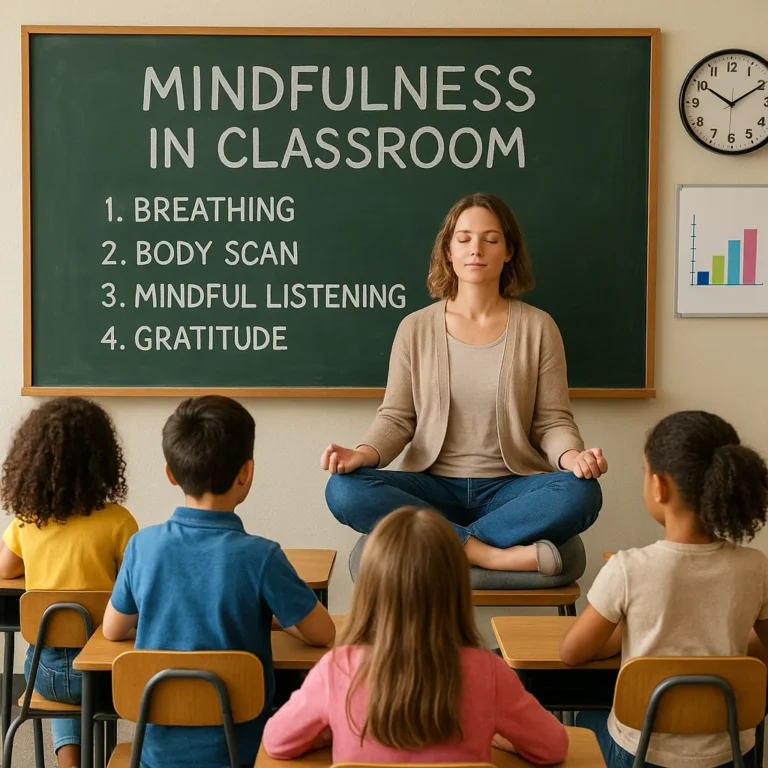
- Mindfulness Practices: Start the day with a 2-minute breathing exercise.
- The “Pause” Button: Teach students to hit the “pause” button before reacting. “Count to five, then decide.”
- Self-Reflection: End the day with a journal prompt: “What was one thing that changed today? How did I handle it?”
1. 📝 Case Study: The Transfer Job Scenario and Student Anxiety
Let’s look at a real-world example.
The Scenario: A 10-year-old student, Rohan, moves from a small town in Kerala to a metro city in Delhi due to his father’s transfer. He is terrified of the new school, the language barrier, and the new curriculum.
The Strategy:
- Pre-arrival: The new school sent a video tour and a list of “fun facts” about the city.
- Role-Play: Rohan practiced introductions with his parents.
- Buddy System: He was paired with a friendly student who showed him the ropes.
- Gradual Exposure: The teacher allowed him to bring a comfort item from home for the first week.
The Outcome: Within a month, Rohan wasn’t just surviving; he was leading a group project. He learned that change is manageable.
12. 🌐 Preparing Children for a Dynamic World: Future-Proofing Skills
Finally, we must frame this as future-proofing.
- Career Talk: Discuss how jobs change. “Did you know your parents’ jobs might not exist when you grow up? That’s why we need to be flexible.”
- Global Citizenship: Connect adaptability to understanding different cultures and perspectives.
- Lifelong Learning: Instill the idea that learning never stops.
👨 👩 👧 👦 Tips for Parents and Educators: A Unified Front for Flexibility
Adaptability doesn’t stop at the school gate. It needs to be reinforced at home. If the school says “be flexible” but the parents say “do it exactly this way,” the child gets mixed signals.
The Unified Approach
- Consistency in Messaging: Both parents and teachers should use the same language (e.g., “Let’s try a Plan B”).
- Shared Goals: Discuss the child’s progress in a weekly check-in. “Rohan struggled with the schedule change today. How did he handle it at home?”
- Modeling at Home: Parents should also model adaptability. “Oh no, the restaurant is closed! Let’s try that new place we haven’t been to.”
Differentiated Instruction for Flexibility
Just as we use Differentiated Instruction for academic needs, we must differentiate for flexibility needs.
- High Anxiety Students: Need more gradual exposure and visual schedules.
- Impulsive Students: Need more pause and reflect techniques.
Teacher Secret: Sometimes, the most adaptable student is the one who seems the most chaotic. They are just testing boundaries to see how the world reacts. Guide them, don’t crush them.
Conclusion

We started this journey by asking: Can you teach a fish to climb a tree? The answer is no, but you can teach a student to swim in any ocean.
Adaptability isn’t about losing your identity; it’s about expanding your toolkit. It’s the difference between a student who crumbles when the lesson plan changes and one who says, “Cool, let’s see what happens.”
We’ve covered the history, the science, the strategies, and the real-world applications. From the transfer job scenarios in India to the global workforce, the message is clear: Flexibility is the new currency.
So, the next time your projector breaks, or your lesson plan goes out the window, take a deep breath. Smile. And say, “Okay, let’s try something new.” Because if you can do that, your students will too.
Ready to transform your classroom? Start with one small change today.
📚 Recommended Links
Want to dive deeper into these strategies? Here are some top-tier resources and tools we recommend:
- Books on Adaptability:
Mindset: The New Psychology of Success by Carol S. Dweck – Shop on Amazon
The Growth Mindset Coach by Annie Brock – Shop on Amazon - Educational Tools:
Minecraft Education Edition – Official Website | Shop on Amazon
Kahoot! – Official Website - Teacher Resources:
Teacher Strategies™ – Visit Our Main Site for more articles on Classroom Management and Critical Thinking.
❓ FAQ: Your Burning Questions About Student Adaptability Answered

How can teachers model adaptability in the classroom?
Teachers model adaptability by narrating their thought process when things go wrong. Instead of hiding frustration, say, “I made a mistake in the instructions. Let’s fix it together.” This shows students that errors are part of learning, not failures. It also demonstrates emotional regulation in real-time.
Read more about “🚀 The Ultimate 2026 Lesson Plan Guide: 12 Steps to Classroom Magic”
What activities help students develop flexibility skills?
Activities that require rule changes or multiple solutions are best. Examples include:
- Story Cubes: Creating stories with random prompts.
- Scavenger Hunts: Where clues change mid-game.
- Building Challenges: Using limited materials to build a structure, then changing the rules (e.g., “Now it must be taller”).
- Role-Playing: Simulating new environments or social scenarios.
Read more about “12 Proven Strategies for Teaching Persuasive Writing & Argumentation (2026) 🗣️”
Why is adaptability important for student success?
Adaptability is crucial because the world is unpredictable. Students who can pivot when plans fail are less likely to experience anxiety and more likely to develop resilience. In the workforce, adaptability is linked to higher employability and leadership potential.
Read more about “10 Proven Strategies in Teaching & Learning (2026) 🚀”
How do you assess adaptability in students?
Assessing adaptability is tricky because it’s a behavioral skill, not a factual one. You can use:
- Observation Checklists: Note how students react to unexpected changes.
- Reflective Journals: Ask students to write about how they handled a change.
- Scenario-Based Assessments: Present a problem with no clear solution and evaluate their problem-solving process.
- Peer Reviews: Ask students to rate their group members on flexibility.
Read more about “🎓 The 4 Basic Steps in the Teaching Process (2026)”
What are common barriers to teaching flexibility?
- Teacher Rigidity: If the teacher is rigid, students will be too.
- Fear of Failure: Students (and teachers) often fear making mistakes.
- Over-Structured Curicula: Rigid lesson plans leave no room for spontaneous learning.
- Lack of Time: Teachers often feel they don’t have time to “waste” on flexible activities.
How can technology support adaptability training?
Technology can provide simulations and interactive scenarios that change dynamically. Apps like Minecraft or Kahoot! allow for real-time rule changes. However, passive consumption (watching videos) does not build adaptability. The key is interaction and decision-making.
What role does failure play in building student resilience?
Failure is the fuel for resilience. When students fail and are supported to try again, they learn that failure is not final. It teaches them to analyze what went wrong and adjust their approach. This is the essence of growth mindset.
Read more about “15 Powerful Strategies to Promote Student Resilience and Grit in 2026 💪”
📖 Reference Links
- Kangaroo Kids: Teaching Adaptability Skills: Coping with Change
- Connections Academy: Teaching Adaptability Helps Students Succeed
- Edutopia: Tips for New Teachers on Being Flexible
- World Economic Forum: The Future of Jobs Report
- National Education Policy 2020: Government of India
- Carol Dweck: Mindset: The New Psychology of Success