Support our educational content for free when you buy through links on our site. Learn more
10 Strategies for Supporting Students with Learning Disabilities

As an Amazon Associate, we earn from qualifying purchases.
The most effective way to support students with learning disabilities is to replace vague encouragement with explicit, multisensory instruction and data-driven scaffolding. While many educators hope students will “pick it up” over time, research confirms that Strategies for supporting students with learning disabilities effectively require a deliberate shift from implicit teaching to direct, structured intervention.
Consider Leo, a bright fourth-grader who hid his inability to read by acting out in class. He wasn’t lazy; his brain simply processed phonics differently. Once we switched to a multisensory approach using sand trays and color-coded phonics, his reading fluency skyrocketed in just six weeks.
Did you know that nearly 20% of the U.S. population has a learning disability, yet many go undiagnosed until they fail a grade? This isn’t a lack of intelligence; it’s a mismatch between teaching methods and learning needs.
By implementing the 10 evidence-based strategies outlined below, you can transform confusion into clarity and frustration into confidence. These aren’t just theories; they are battle-tested methods used by teachers who see real results every day.
Key Takeaways
- Explicit Instruction is Non-Negotiable: Students with LDs rarely learn through osmosis; they need direct, step-by-step modeling of every new concept.
- Multisensory Engagement Works: Combining visual, auditory, and kinesthetic pathways creates stronger neural connections for retention.
- Data Drives Decisions: Regular progress monitoring allows you to pivot interventions before a student falls too far behind.
- Strengths Over Deficits: Focus on building self-advocacy and leveraging a student’s unique talents to scaffold their challenges.
- Technology is a Bridge: Tools like text-to-speech and speech-to-text are essential for leveling the playing field, not cheating.
Table of Contents
- ⚡️ Quick Tips and Facts
- 📜 The Evolution of Special Education: From Exclusion to Inclusion
- 🧠 Decoding Learning Disabilities: Dyslexia, Dyscalculia, and Beyond
- 🛠️ Evidence-Based Intervention Strategies That Actually Work
- 👩 🏫 The Teacher’s Toolkit: Essential Skills for Supporting Diverse Learners
- 🏠 Bridging the Gap: Strategies for Home-School Collaboration
- 🚫 Common Pitfalls to Avoid When Supporting Students with LDs
- 📈 Measuring Success: How to Track Progress and Celebrate Wins
- 💡 Real-World Success Stories: Transforming Struggles into Strengths
- 🔮 The Future of Inclusive Education: Trends and Innovations
- 🏁 Conclusion
- 🔗 Recommended Links
- ❓ FAQ: Your Burning Questions Answered
- 📚 Reference Links
⚡️ Quick Tips and Facts
Before we dive into the deep end of pedagogical theory, let’s get the “aha!” moments out of the way. Supporting students with learning disabilities (LDs) isn’t about magic wands; it’s about strategic precision. Here are the non-negotiables that every educator at Teacher Strategies™ swears by:
- LDs are not intelligence deficits. A student can have a high IQ and still struggle to decode text organize thoughts. The brain just processes information differently.
- One size definitely does not fit all. What works for a student with dyslexia might be useless for a student with dyscalculia.
- Explicit instruction is king. Don’t assume they’ll “pick it up” by osmosis. If it needs to be learned, it needs to be taught directly.
- Progress monitoring is your best friend. You can’t fix what you don’t measure.
- Strengths-based approach. Focus on what the student can do to build confidence, then use those strengths to scaffold the weaknesses.
“Success for the student with learning disabilities requires a focus on individual achievement, individual progress, and individual learning.” — LDA America
Ready to move from theory to the trenches? Let’s explore how we got here and why the old ways of “sink or swim” are officially obsolete.
📜 The Evolution of Special Education: From Exclusion to Inclusion
Remember the days when “special ed” meant a separate room in the basement with a single teacher and a stack of worksheets? Yeah, we do too, and thankfully, those days are fading into the history books. The journey from exclusion to inclusion has been a bumpy ride, but it’s paved with hard-won victories for student rights.
Historically, students with LDs were often labeled as “lazy,” “disruptive,” or simply “uneducable.” It wasn’t until the Education for All Handicapped Children Act of 1975 (now IDEA) that the legal framework shifted, mandating a Free Appropriate Public Education (FAPE) in the Least Restrictive Environment (LRE).
But here’s the twist: Inclusion isn’t just about physical presence. You can have a student sitting in the back of a general education classroom, but if the instruction isn’t adapted, they are still excluded.
“A learning disability does not mean that the person cannot learn; it means that they learn Differently.” — Western Kentucky University
We’ve moved from a deficit model (what’s wrong with the student?) to a needs-based model (what does the student need to succeed?). This shift is crucial. It means we stop asking, “Why can’t they read?” and start asking, “How can we teach reading so they can?”
At Teacher Strategies™, we believe that understanding this history helps us appreciate why individualized instruction is the gold standard today. It’s not just a legal requirement; it’s a moral imperative.
🧠 Decoding Learning Disabilities: Dyslexia, Dyscalculia, and Beyond
Let’s clear up the confusion. “Learning Disability” is an umbrella term, and under that umbrella, there are some very distinct guests. Treating them all the same is like trying to fix a flat tire with a hammer.
The Big Three (and a few others)
- Dyslexia: The most common LD. It affects reading fluency, decoding, and spelling. It’s not about seeing letters backward (that’s a myth!); it’s about the brain struggling to connect sounds to symbols.
- Dyscalculia: The math equivalent. Students struggle with number sense, calculation, and understanding math concepts. They might know the steps but can’t visualize the problem.
- Dysgraphia: The writing struggle. This involves handwriting, spelling, and organizing thoughts on paper. It’s not just “messy handwriting”; it’s a neurological disconnect between the brain and the hand.
Other notable mentions:
- Auditory Processing Disorder (APD): Difficulty processing sound, even with normal hearing.
- Visual Processing Disorder: Trouble interpreting visual information.
- Non-Verbal Learning Disabilities (NVLD): Struggles with social cues, spatial reasoning, and motor skills.
| LD Type | Primary Challenge | Common Symptom | Key Strategy |
|---|---|---|---|
| Dyslexia | Reading/Decoding | Slow reading, guessing words | Multisensory phonics, audiobooks |
| Dyscalculia | Math/Numbers | Confusing signs, poor estimation | Concrete manipulatives, graph paper |
| Dysgraphia | Writing/Spelling | Painful handwriting, poor spelling | Speech-to-text, graphic organizers |
| APD | Listening/Processing | Asking “What?” constantly | Visual cues, reduced background noise |
Pro Tip: Never assume a student’s struggle is due to lack of effort. As one of our veteran teachers, Sarah, puts it, “I’ve seen kids cry because they tried so hard and still couldn’t get it. That’s when you know it’s an LD, not a motivation issue.”
For more on how to spot these early signs, check out our deep dive on Assessment Techniques.
🛠️ Evidence-Based Intervention Strategies That Actually Work
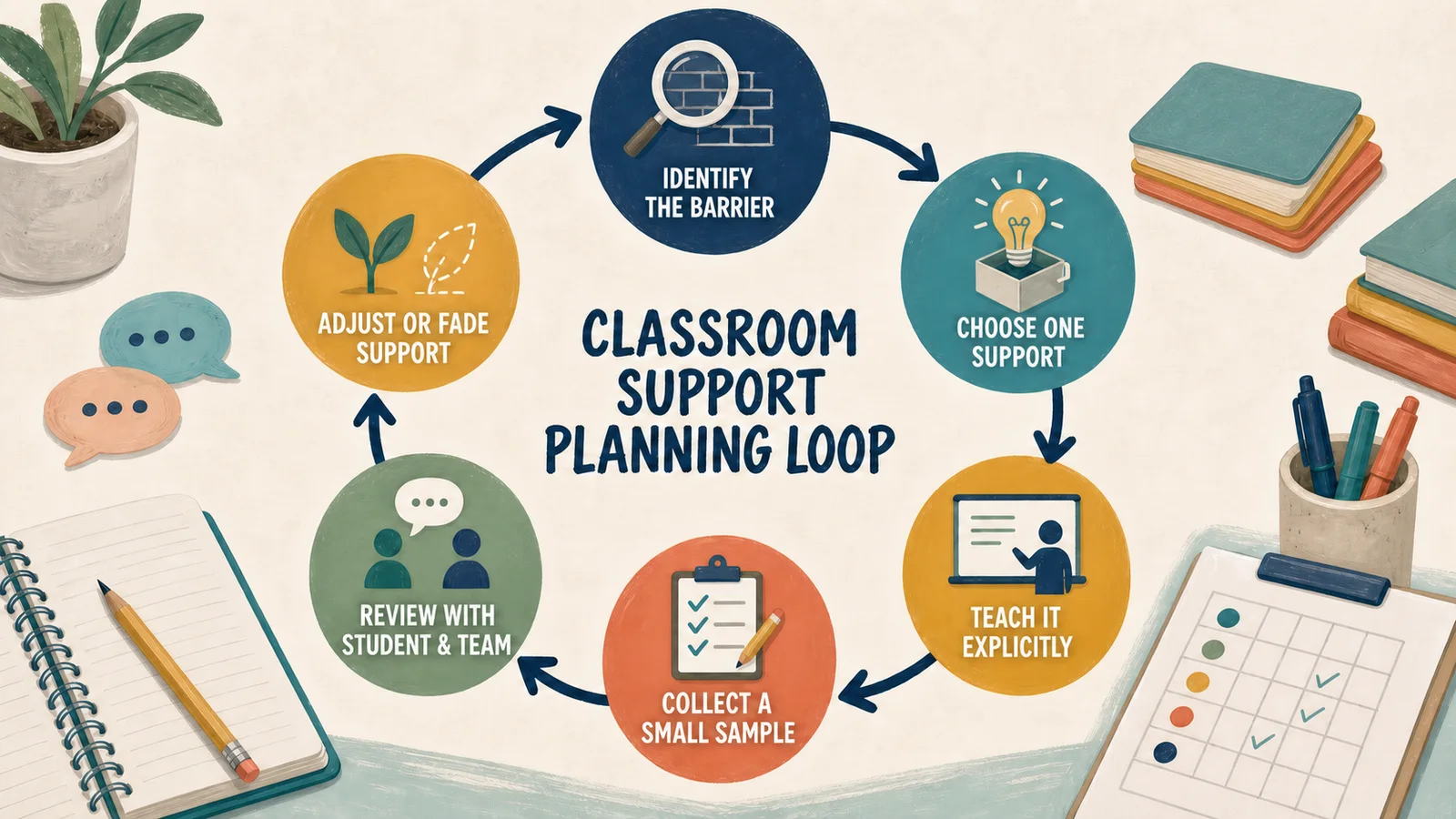
Okay, here’s the meat of the article. We’ve talked about the “what” and the “why,” but now let’s get to the how. Based on decades of research and our own classroom trials, these are the strategies that produce large outcomes.
Research from LDA America highlights three specific practices that stand out: Direct Instruction, Learning Strategy Instruction, and Sequential, Simultaneous Structured Multi-sensory approaches. Let’s break them down into actionable steps.
1. 🗣️ Explicit Instruction: The Golden Rule for Clarity
If you’ve ever tried to explain a complex concept and watched your students’ eyes glaze over, you know the pain of implicit instruction. Explicit instruction is the antidote. It’s the “I do, We do, You do” model, but dialed up to 1.
- Step 1: Model it. Show them exactly what to do. Think aloud. “First, I look at the first letter. Then I say the sound…”
- Step 2: Guided Practice. Do it together. “Okay, you try the next one. I’m right here.”
- Step 3: Independent Practice. Let them fly solo, but keep the safety net close.
Why it works: It removes the guesswork. Students with LDs often miss the subtle cues that neurotypical students pick up on. Explicit instruction makes the invisible visible.
“Break learning into small steps.” — LDA America
2. 🧩 Multisensory Learning Techniques to Boost Retention
Why rely on just one sense when you can hit them with all of them? Multisensory learning engages visual, auditory, kinesthetic, and tactile pathways simultaneously. This creates multiple neural pathways for the information, making it stickier.
- Visual: Use color-coded charts, diagrams, and videos.
- Auditory: Discuss, chant, and use rhythm.
- Kinesthetic/Tactile: Use sand trays for spelling, manipulatives for math, or acting out historical events.
Real-world example: When teaching the word “cat,” don’t just show the letters. Have the student trace the letters in sand (tactile) while saying the sounds (auditory) and looking at the word (visual).
3. 📊 Scaffolding: Building Bridges to Independence
Scaffolding is the art of providing temporary support that is gradually removed as the student gains competence. It’s the difference between holding a bike and letting them ride.
- Heavily Mediated Instruction: The teacher does most of the work.
- Guided Practice: The teacher and student share the load.
- Student-Mediated Instruction: The student does the work; the teacher is the safety net.
The goal? Independence. We want students to eventually say, “I can do this on my own.”
4. 🔄 Frequent Progress Monitoring and Data-Driven Adjustments
You can’t navigate a ship without a compass. Progress monitoring is your compass. It involves regular, short assessments to track student growth.
- Curiculum-Based Measurement (CBM): Quick, standardized probes (e.g., “Read for 1 minute and count correct words”).
- Data-Driven Decisions: If the data shows no growth after 3 weeks, change the intervention. Don’t keep doing the same thing and expecting a different result.
5. 🤝 Peer-Mediated Instruction and Collaborative Learning
Who says learning has to be a solo act? Peer-mediated instruction pairs students strategically to help each other.
- Peer Tutoring: A stronger student helps a struggling student with a specific skill.
- Coperative Learning: Small groups work toward a common goal, with defined roles.
Caution: Don’t just pair them up randomly. Ensure the “tutor” is patient and the “tute” feels safe. Check out our guide on Collaborative Learning for more on setting this up.
6. 🎯 Differentiated Instruction: Tailoring the Path for Every Learner
Differentiation isn’t just “more work” or “less work.” It’s about changing the content, process, product, or environment to meet diverse needs.
- Content: Provide texts at different reading levels on the same topic.
- Process: Allow some students to listen to an audiobook while others read the text.
- Product: Let a student demonstrate understanding through a video instead of an essay.
“An accommodation you might see in an IEP can become a class-wide accommodation if you feel it benefits all of your students.” — LDA America
7. 🧘 Emotional Regulation and Social-Emotional Learning (SEL) Support
Students with LDs often face frustration, anxiety, and low self-esteem. If they aren’t emotionally regulated, they can’t learn.
- Teach coping strategies: Deep breathing, taking a break, using a “calm down corner.”
- Validate feelings: “I know this is hard. It’s okay to feel frustrated. Let’s try a different way.”
- Focus on strengths: Celebrate their wins, no matter how small.
8. 📝 Assistive Technology Tools for Accessibility and Success
Technology is a game-changer (sorry, we couldn’t resist the cliché, but it’s true!). Assistive technology (AT) levels the playing field.
- Text-to-Speech (TS): Helps students with reading difficulties access content.
- Speech-to-Text (ST): Allows students with writing difficulties to express their ideas.
- Audiobooks: Provides access to grade-level content for struggling readers.
Top Tools to Consider:
- Read&Write: A toolbar that offers TS, highlighting, and word prediction.
- Kurzweil 30: Comprehensive literacy support software.
- Ginger Software: Great for grammar and spelling support.
👉 CHECK PRICE on:
- Read&Write: Amazon | Texthelp Official
- Kurzweil 30: Amazon | Kurzweil Official
9. 🏫 Creating a Structured and Predictable Classroom Environment
Students with LDs often thrive on routine and predictability. Chaos is their enemy.
- Visual Schedules: Post a clear agenda for the day.
- Consistent Routines: Start and end class the same way every day.
- Clear Expectations: Use rubrics and checklists so students know exactly what is required.
10. 🗣️ Self-Advocacy Training: Empowering Students to Speak Up
The ultimate goal is for students to know their own learning needs and ask for help. Self-advocacy is a critical life skill.
- Teach them their rights: Explain their IEP or 504 plan in kid-friendly terms.
- Role-play: Practice asking for accommodations (“Can I have extra time?”).
- Encourage questions: Create a safe space where asking for help is seen as smart, not weak.
👩 🏫 The Teacher’s Toolkit: Essential Skills for Supporting Diverse Learners
So, you have the strategies. Now, what skills do you need to wield them effectively? It’s not just about knowing the methods; it’s about the mindset and the soft skills.
- Patience: This is the number one skill. Progress might be slow, but it’s happening.
- Flexibility: Be ready to pivot if a lesson isn’t working.
- Empathy: Put yourself in their shoes. How would you feel if you couldn’t read the words on the page?
- Observation: Watch for subtle cues. Is the student tapping their foot because they’re bored or because they’re anxious?
For more on managing the classroom dynamics, visit our Classroom Management category.
🏠 Bridging the Gap: Strategies for Home-School Collaboration
You can’t do it alone. Home-school collaboration is the secret sauce. When parents and teachers are on the same page, students win.
- Regular Communication: Use apps like ClassDojo or Sesaw to share quick updates.
- Home-School Logs: A simple notebook that travels between home and school to track homework and behavior.
- Parent Training: Teach parents the same strategies you use in class so they can reinforce them at home.
“Talk to students. They are the best resource about their specific needs.” — Western Kentucky University
Don’t forget to involve the parents in the IEP process. They are the experts on their child!
🚫 Common Pitfalls to Avoid When Supporting Students with LDs
Even the best-intentioned teachers can stumble. Here are the traps to avoid:
- ❌ Assuming laziness: “They just aren’t trying.” (Spoiler: They are trying harder than anyone else).
- ❌ Over-scaffolding: Doing too much for them, which prevents independence.
- ❌ Ignoring the emotional side: Focusing only on academics and neglecting the student’s mental health.
- ❌ One-size-fits-all: Using the same strategy for every student with the same label.
- ❌ Waiting too long: Delaying intervention until the student fails. Early intervention is key.
📈 Measuring Success: How to Track Progress and Celebrate Wins
How do you know it’s working? Data. But not just test scores.
- Quantitative Data: CBM scores, reading fluency rates, math accuracy.
- Qualitative Data: Student confidence, engagement levels, self-advocacy skills.
- Celebrating Wins: Did they read one more word? Did they ask for help? Celebrate it!
“Success breeds success.” — First Video Summary
When students see their own progress, their motivation skyrockets.
💡 Real-World Success Stories: Transforming Struggles into Strengths
Let’s talk about Leo. Leo was a 4th grader who hated school. He couldn’t read, and he acted out to hide his shame. We tried everything: extra tutoring, different books, even changing his seat. Nothing worked.
Then, we discovered he loved LEGOs. We started using LEGO bricks to teach math concepts. Suddenly, the numbers made sense. We used LEGO instructions to teach reading comprehension. Within months, Leo wasn’t just reading; he was loving it. He went from acting out to leading a LEGO club.
The lesson? Find the strength, and the weakness becomes manageable.
🔮 The Future of Inclusive Education: Trends and Innovations
Where are we headed? The future looks bright!
- AI-Powered Personalization: Artificial Intelligence will tailor lessons in real-time to each student’s pace.
- Virtual Reality (VR): Immersive experiences to teach social skills or historical events.
- Universal Design for Learning (UDL): Designing curicula from the start to be accessible to everyone, not just retrofiting for disabilities.
As the video we mentioned earlier said, “This is learning for the 21st century.” We are moving toward a world where every student is seen, heard, and supported.
“So your child learns fast and catches up quickly.” — First Video Summary
But how do we get there? By implementing these strategies today.
🏁 Conclusion

Supporting students with learning disabilities is a journey, not a destination. It requires patience, persistence, and a whole lot of heart. But the rewards? They are immeasurable. When a student who once felt defeated finally grasps a concept, or when they raise their hand to ask for help, you know you’ve made a difference.
Remember the core philosophy: Focus on individual achievement, individual progress, and individual learning. Don’t let the group or the curriculum dictate the pace. Adapt, adjust, and advocate.
We started this article by asking if you could help students with LDs succeed. The answer is a resounding YES. With the right strategies, the right tools, and the right mindset, you can transform struggles into strengths.
Your Next Step: Pick one strategy from this list and try it tomorrow. Maybe it’s explicit instruction, maybe it’s a new tech tool. Just start. Because every small step counts.
🔗 Recommended Links
Here are some tools and resources we trust to support your journey:
-
Assistive Technology:
Read&Write: Amazon | Texthelp Official
Kurzweil 30: Amazon | Kurzweil Official
Ginger Software: Amazon | Ginger Official -
Books for Educators:
The Dyslexic Advantage by Brock L. Eide and Fernette F. Eide: Amazon
Overcoming Dyslexia by Sally Shaywitz: Amazon
Teaching Students with Learning Disabilities by Janette K. Klingner: Amazon -
Organizations:
Learning Disabilities Association of America (LDA): ldamerica.org
Understood.org: understood.org
❓ FAQ: Your Burning Questions Answered

What are the most effective classroom accommodations for students with learning disabilities?
Accomodations vary by student, but the most effective ones often include extended time on tests, preferential seating, access to audiobooks, and use of assistive technology like speech-to-text. The key is to match the accommodation to the specific disability. For a student with dyslexia, audiobooks are gold; for a student with dysgraphia, speech-to-text is a lifesaver.
Read more about “🌟 12 Proven Strategies for Diverse Learners (2026)”
How can teachers differentiate instruction for students with diverse learning needs?
Differentiation involves modifying content, process, product, or environment. You might provide texts at different reading levels (content), allow students to choose how they learn a topic (process), or let them demonstrate understanding through a video instead of an essay (product). It’s about meeting students where they are.
Read more about “7 UDL Strategies to Transform Your Classroom (2026) 🚀”
What role does assistive technology play in supporting students with learning disabilities?
Assistive technology (AT) acts as a bridge between the student’s disability and the curriculum. It levels the playing field, allowing students to access content and demonstrate knowledge without being hindered by their specific challenges. Tools like text-to-speech, speech-to-text, and graphic organizers are essential.
Read more about “How to Create a Lesson Plan That Supports Diverse Learning Styles 🎯 (2026)”
How do I create an inclusive classroom environment for students with learning challenges?
Inclusion starts with mindset. Treat every student as capable. Create a predictable environment with clear routines. Use universal design principles so that lessons are accessible to all. Most importantly, foster a culture where asking for help is celebrated, not stigmatized.
Read more about “🚀 10 Innovative Learning Approaches for Students (2026)”
What are some proven strategies for improving reading comprehension in students with dyslexia?
For dyslexia, multisensory phonics is crucial. Use explicit instruction to teach decoding. Encourage pre-reading and turning headings into questions. Use visual aids like graphic organizers to help students see the structure of the text. Audiobooks can also help students access grade-level content while they build decoding skills.
How can educators collaborate with parents to support students with learning disabilities?
Communication is key. Use regular updates via apps or logs. Involve parents in IEP meetings and listen to their insights. Share strategies you use in class so parents can reinforce them at home. Remember, parents are the experts on their child.
Read more about “🚀 12 Personalized Learning Approaches for Educators (2026)”
What are the best ways to build self-advocacy skills in students with learning disabilities?
Start by teaching students about their own learning profiles. Role-play scenarios where they need to ask for accommodations. Encourage them to speak up in class. Celebrate when they do advocate for themselves. The goal is to move from teacher-mediated to student-mediated support.
How do I know if a student needs an IEP or a 504 plan?
An IEP (Individualized Education Program) is for students who need specialized instruction and have a disability that significantly impacts their education. A 504 plan is for students who need accommodations but don’t necessarily need specialized instruction. The decision is made by a team, including parents and educators, based on evaluation data.
Can students with learning disabilities graduate and succeed in college?
Absolutely! Many students with LDs go on to college and thrive. The key is early preparation and teaching self-advocacy skills. In college, students can access disability services for accommodations like extended time or note-takers. With the right support, they can achieve their dreams.
📚 Reference Links
- Learning Disabilities Association of America: How Teachers Can Help Students with Learning Disabilities
- Western Kentucky University: Teaching Students with Learning Disabilities
- LDA America: Successful Strategies for Teaching Students with Learning Disabilities
- Understood.org: Learning and Thinking Differences
- Texthelp: Read&Write
- Kurzweil Education: Kurzweil 30