Support our educational content for free when you buy through links on our site. Learn more
🚀 15 Evidence-Based Strategies to Skyrocket Student Engagement (2026)


Ever walked into a classroom where the silence wasn’t peaceful, but heavy with disengagement? You ask a question, and the only answer is the hum of the fluorescent lights. We’ve all been there. But what if the problem isn’t your students’ attention spans, but rather the method of delivery? At Teacher Strategies™, we’ve discovered that shifting from passive listening to active participation can transform a zombie-like room into a hive of intellectual curiosity. In this comprehensive guide, we reveal 15 proven, science-backed strategies that go far beyond simple “fun activities,” diving deep into the neuroscience of learning, the power of relationships, and the art of differentiation. From the surprising impact of a simple 2-minute daily chat to the transformative potential of Project-Based Learning, we’ll show you exactly how to unlock every student’s potential. Ready to turn the tide? Keep reading to discover the one strategy that can fix even the most stubborn cases of disengagement.
Key Takeaways
- Engagement is Multidimensional: True engagement isn’t just about behavior; it requires cognitive investment and emotional connection to create a lasting learning impact.
- Relationships Drive Results: The 2×10 strategy and consistent positive interactions are foundational; students learn best when they feel seen, safe, and valued.
- Active Over Passive: Implementing Think-Pair-Share, Jigsaw, and Gamification shifts the brain from passive reception to active processing, boosting retention by up to 90%.
- Data-Driven Adjustments: Use formative assessments and real-time feedback loops to identify disengagement early and adapt instruction to meet diverse needs.
- Universal Design for Learning (UDL): Removing barriers through multiple means of representation ensures that every student, regardless of ability, can access and engage with the curriculum.
Table of Contents
- ⚡️ Quick Tips and Facts
- 📜 The Evolution of Engagement: From Passive Listening to Active Learning
- 🧠 The Neuroscience of Learning: Why Your Brain Craves Engagement
- 🚀 15 Evidence-Based Strategies to Skyrocket Student Engagement
- 1. Implementing Active Learning Techniques in the Classroom
- 2. Leveraging Gamification to Boost Motivation and Retention
- 3. Cultivating a Growth Mindset for Resilient Learners
- 4. Utilizing Formative Assessment for Real-Time Feedback Lops
- 5. Differentiating Instruction to Meet Diverse Learning Needs
- 6. Building Strong Teacher-Student Relationships as a Foundation
- 7. Integrating Project-Based Learning (PBL) for Real-World Application
- 8. Harnessing the Power of Collaborative Learning Groups
- 9. Using Technology Tools to Enhance Interactive Lessons
- 10. Applying Universal Design for Learning (UDL) Principles
- 1. Incorporating Social-Emotional Learning (SEL) into Daily Routines
- 12. Designing Inquiry-Based Learning Experiences
- 13. Establishing Clear Learning Objectives and Success Criteria
- 14. Creating a Safe and Inclusive Classroom Environment
- 15. Encouraging Student Voice and Choice in the Curriculum
- 🛠️ Practical Implementation: Turning Theory into Actionable Lesson Plans
- 📊 Measuring Success: Data-Driven Approaches to Track Engagement Metrics
- 🚧 Overcoming Common Bariers to Student Engagement
- 🌍 Engagement in the Digital Age: Hybrid and Remote Learning Strategies
- 🏆 Top Tools and Resources for Modern Educators
- ❓ Frequently Asked Questions About Evidence-Based Engagement
- 🔗 Recommended Links for Further Reading
- 📚 Reference Links and Citations
- 💡 Conclusion: The Future of Engaged Learning
⚡️ Quick Tips and Facts
Before we dive into the deep end of pedagogical theory, let’s grab a life preserver and float on the surface with some high-impact, evidence-based nugets you can use in your classroom tomorrow. At Teacher Strategies™, we’ve seen these work time and time again, turning “zombie mode” students into active participants.
- The 10-Minute Rule: Research suggests that adult attention spans wane after 10-15 minutes. For students? It’s even shorter! Break your lecture into 10-minute chunks followed by an active processing task.
- The Power of “Yet”: Simply adding the word “yet” to a student’s self-assessment (e.g., “I don’t understand this… yet“) can shift their mindset from fixed to growth-oriented.
- Wait Time is Gold: When you ask a question, wait at least 3-5 seconds before calling on someone. This simple pause increases the length and complexity of student responses by up to 30% University of Illinois at Urbana-Champaign.
- The 2×10 Strategy: For the most disengaged student, spend 2 minutes a day for 10 days talking about anything except school. The relationship built often yields more academic progress than a semester of naging.
- Active > Passive: Students retain 90% of what they teach others, but only 10% of what they read. Teach them to teach.
Why do some students zone out the moment you start talking, while others lean in? The answer isn’t just “they’re bored.” It’s often a mismatch between their cognitive needs and the delivery method. We’ll uncover exactly how to fix that mismatch later in this guide.
📜 The Evolution of Engagement: From Passive Listening to Active Learning
Let’s take a quick trip down memory lane. Remember the “sage on the stage” era? The teacher lectured, the students took notes, and silence reigned supreme. That model, rooted in the Industrial Revolution’s need for compliant factory workers, is crumbling under the weight of the Information Age.
The Shift from Compliance to Commitment
Historically, “engagement” was often confused with compliance. If a student was sitting still, eyes forward, and hands folded, they were “engaged.” But as educational psychologists like John Hattie have shown, visible learning requires visible thinking.
“Student engagement itself might well be a misnomer, suggesting that engagement is somehow located in students, when in fact… students… are engaged in schools when schools are engaging places to be.” — Vibert & Shields (203)
This quote from the Branching Minds analysis highlights a crucial paradigm shift: Disengagement is often a symptom of an unengaging environment, not a student deficit. We aren’t trying to “fix” the student; we are trying to fix the learning experience.
The Three Pillars of Modern Engagement
To truly understand what we are aiming for, we must look at the multidimensional nature of engagement, as defined by the National Center for Safe Supportive Learning Environments (NCSSLE):
| Domain | What It Looks Like | The Goal |
|---|---|---|
| Behavioral | Participation, attendance, following rules, task completion. | Active Involvement |
| Cognitive | Intellectual investment, deep thinking, self-regulation, finding meaning. | Deep Learning |
| Social/Emotional | Emotions, enthusiasm, sense of belonging, relationships with peers/teachers. | Connectedness |
If you are only hitting the Behavioral domain, you have a compliant class, but not necessarily an engaged one. We need all three!
For more on building the social foundation, check out our deep dive on Classroom Management strategies that foster connection.
🧠 The Neuroscience of Learning: Why Your Brain Craves Engagement
Ever wonder why your students’ eyes glaze over during a 45-minute monologue? It’s not just boredom; it’s biology.
The Dopamine Connection
When students are engaged, their brains release dopamine, the neurotransmitter associated with pleasure, motivation, and memory. Conversely, when they are stressed, bored, or feel unsafe, the brain’s amygdala (the threat detector) hijacks the prefrontal cortex (the thinking brain).
- The “Fight or Flight” Response: If a student feels judged, unsafe, or overwhelmed, their brain shuts down higher-order thinking to focus on survival.
- The “Flow” State: When a task is challenging but achievable, and the student has autonomy, they enter a state of flow, where learning happens effortlessly.
The Role of Novelty
The human brain is wired to notice novelty. A change in voice, a new prop, or a sudden shift in activity can trigger the Reticular Activating System (RAS), waking up the brain. This is why the Think-Pair-Share strategy (which we’ll discuss in depth later) is so effective—it breaks the monotony and forces the brain to re-engage.
Fun Fact: Studies show that students are more likely to remember information presented with an emotional hook. A funny story, a shocking statistic, or a personal anecdote can make the difference between a forgotten fact and a lifelong memory.
🚀 15 Evidence-Based Strategies to Skyrocket Student Engagement
Okay, here is the meat of the article. We aren’t just giving you 10 tips; we are giving you 15 robust, research-backed strategies that cover behavioral, cognitive, and social engagement. These are the tools we use at Teacher Strategies™ to turn around even the most reluctant learners.
1. Implementing Active Learning Techniques in the Classroom
Active learning is the antithesis of passive listening. It requires students to do something with the information.
- Think-Pair-Share: Pose a question, give 30 seconds of silent thinking time, have students discuss with a partner, then share with the class. This lowers the stakes and increases participation.
- Jigsaw Method: Divide a topic into chunks. Each group becomes an “expert” one chunk, then teaches it to the other groups.
- Case Studies: Present real-world scenarios and ask students to solve problems using the concepts they just learned.
Why it works: It forces metacognition (thinking about thinking) and ensures every student processes the material, not just the ones who raise their hands first.
2. Leveraging Gamification to Boost Motivation and Retention
Gamification isn’t just about playing games; it’s about applying game design elements to non-game contexts.
- Points and Badges: Award points for effort, creativity, or helping peers, not just correct answers.
- Leaderboards: Use these carefully! Focus on personal bests rather than beating others to avoid discouraging struggling students.
- Narrative Arcs: Turn a unit into a story where students are “agents” solving a mystery.
Real Story: In a high school English class, a teacher named Jennifer (featured in our video analysis) used a “House Cup” competition. Chronically absent students started showing up because they didn’t want to let their “house” down. The peer pressure was positive, and engagement skyrocketed.
Tools to Try:
- Kahoot!: Great for quick reviews.
- Classcraft: A full RPG-style classroom management system.
- Quizz: Allows for self-paced gamified quizzes.
👉 Shop Classcraft on: Amazon | Classcraft Official Website
3. Cultivating a Growth Mindset for Resilient Learners
Based on the work of Carol Dweck, a growth mindset is the belief that abilities can be developed through dedication and hard work.
- Praise Effort, Not Intelligence: Instead of “You’re so smart,” say “I love how you tried three different strategies to solve that.”
- Normalize Failure: Share your own mistakes. Create a “Mistake of the Week” board where students analyze errors without shame.
- The Power of “Yet”: As mentioned in our quick tips, this simple word changes everything.
Why it works: It shifts the focus from proving ability to improving ability, reducing the fear of failure that often leads to disengagement.
4. Utilizing Formative Assessment for Real-Time Feedback Lops
Formative assessment is the “check-up” during the learning process, not the “autopsy” at the end.
- Exit Tickets: Ask students to write down one thing they learned and one thing they are still confused about before leaving.
- Traffic Lights: Students hold up red, yellow, or green cups to indicate their understanding.
- One-Minute Papers: “What was the most important thing you learned today? What question remains?”
Why it works: It provides immediate data to the teacher and immediate feedback to the student, closing the gap between current and desired performance.
For more on this, explore our Assessment Techniques category.
5. Differentiating Instruction to Meet Diverse Learning Needs
One size does not fit all. Differentiation means tailoring instruction to meet individual needs.
- Content: Provide texts at different reading levels or in different formats (audio, video, text).
- Process: Allow students to choose how they learn (independent study, group work, hands-on).
- Product: Let students demonstrate understanding through a presentation, essay, video, or model.
Why it works: It ensures that every student is working at their Zone of Proximal Development (ZPD)—not too easy, not too hard.
Check out our guide on Differentiated Instruction for specific templates.
6. Building Strong Teacher-Student Relationships as a Foundation
This is the bedrock. Without trust, no strategy will work.
- The 2×10 Strategy: Spend 2 minutes a day for 10 days talking to a disengaged student about non-academic topics.
- Greeting at the Door: Greet every student by name with a smile or a high-five.
- Interest Inventories: Ask students about their hobbies, favorite games, and goals at the start of the year.
Why it works: Students are more likely to take risks and engage when they feel seen, heard, and valued.
7. Integrating Project-Based Learning (PBL) for Real-World Application
PBL is a teaching method in which students gain knowledge and skills by working for an extended period of time to investigate and respond to an authentic, engaging, and complex question.
- Driving Question: Start with a question that has no single right answer (e.g., “How can we reduce waste in our school?”).
- Public Product: Students create something to share with an audience beyond the classroom.
- Student Voice and Choice: Students have autonomy over the process and the final product.
Why it works: It answers the eternal student question: “When will I ever use this?”
8. Harnessing the Power of Collaborative Learning Groups
Learning is a social activity. When students explain concepts to each other, they solidify their own understanding.
- Structured Roles: Assign roles like Facilitator, Recorder, Timekeeper, and Reporter to ensure everyone participates.
- Interdependence: Design tasks where the group cannot succeed unless every member contributes.
- Accountability: Assess both the group product and individual contributions.
For more on this, read our Collaborative Learning resources.
9. Using Technology Tools to Enhance Interactive Lessons
Technology should be a tool for engagement, not a distraction.
- Interactive Whiteboards: Use tools like Nearpod or Pear Deck to embed questions, polls, and drawings directly into slides.
- Virtual Reality (VR): Take students on field trips to the Great Barrier Reef or ancient Rome using VR headsets.
- Coding and Robotics: Use LEGO Mindstorms or Scratch to teach logic and problem-solving.
👉 Shop LEGO Mindstorms on: Amazon | LEGO Official Website
10. Applying Universal Design for Learning (UDL) Principles
UDL is a framework to improve and optimize teaching and learning for all people based on scientific insights into how humans learn.
- Multiple Means of Engagement: Offer choices, minimize threats, and foster collaboration.
- Multiple Means of Representation: Present information in different ways (text, audio, video, hands-on).
- Multiple Means of Action and Expression: Allow students to demonstrate learning in different ways.
Why it works: It removes barriers before they happen, making the classroom accessible to everyone, including students with disabilities.
1. Incorporating Social-Emotional Learning (SEL) into Daily Routines
SEL is the process through which students acquire the knowledge and skills to understand and manage emotions, set goals, and show empathy.
- Morning Meetings: Start the day with a check-in to gauge emotional states.
- Mindfulness Breaks: Use short breathing exercises to reset the class.
- Conflict Resolution: Teach students how to resolve disputes using “I” statements.
Why it works: Emotional regulation is a prerequisite for cognitive engagement. A calm brain is a learning brain.
12. Designing Inquiry-Based Learning Experiences
Inquiry-based learning starts with questions, problems, or scenarios rather than simply presenting established facts.
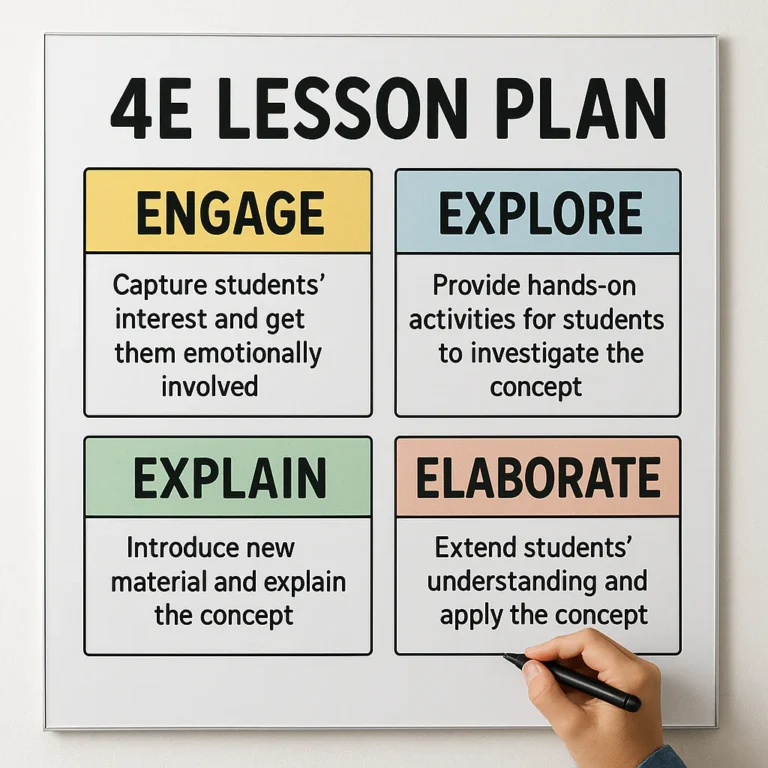
- The 5E Model: Engage, Explore, Explain, Elaborate, Evaluate.
- Socratic Seminars: Students lead the discussion based on a text, asking questions and building on each other’s ideas.
- Problem-Based Learning: Present a real-world problem and let students research solutions.
Why it works: It fosters curiosity and critical thinking, making students active participants in their own discovery.
13. Establishing Clear Learning Objectives and Success Criteria
Students cannot hit a target they cannot see.
- Learning Targets: Post clear, student-friendly objectives (e.g., “I can identify the main idea and supporting details”).
- Success Criteria: Provide examples of what “good” looks like (rubrics, exemplars).
- Self-Assessment: Have students rate their own progress against the criteria.
Why it works: It reduces anxiety and gives students a clear roadmap for success.
14. Creating a Safe and Inclusive Classroom Environment
A safe environment is one where students feel physically and emotionally secure.
- Norms and Agreements: Co-create classroom rules with students.
- Inclusive Language: Use gender-neutral terms and respect diverse backgrounds.
- Zero Tolerance for Bulying: Establish clear consequences and support systems.
Why it works: Safety is the foundation of Maslow’s hierarchy. Without it, learning cannot occur.
15. Encouraging Student Voice and Choice in the Curriculum
When students have a say in what and how they learn, they are more invested.
- Choice Boards: Provide a grid of activities from which students can choose.
- Genius Hour: Dedicate time for students to pursue their own passions.
- Feedback Lops: Ask students for feedback on the lessons and act on it.
Why it works: Autonomy is a powerful motivator. It fosters intrinsic motivation and ownership of learning.
🛠️ Practical Implementation: Turning Theory into Actionable Lesson Plans
Knowing the strategies is one thing; implementing them is another. Let’s walk through how to take one of these strategies and turn it into a lesson plan you can use tomorrow.
Step-by-Step: The “Jigsaw” Lesson Plan
Subject: Science (Ecosystems)
Grade Level: 7th Grade
- Preparation:
- Divide the class into “Home Groups” of 4.
- Create 4 “Expert Groups” based on topics: Producers, Consumers, Decomposers, and Abiotic Factors.
- Prepare materials for each expert group (articles, videos, diagrams).
- Introduction (10 mins):
- Explain the Jigsaw method.
- State the learning objective: “I can explain how energy flows through an ecosystem.”
- Assign students to Home Groups and then to Expert Groups.
- Expert Phase (20 mins):
- Students move to their Expert Groups.
- They study their specific topic and prepare to teach it to their Home Group members.
Teacher Role: Circulate, answer questions, and ensure understanding.
- Home Group Phase (20 mins):
- Students return to their Home Groups.
- Each “expert” teaches their topic to the group.
- Group members take notes and ask clarifying questions.
- Assessment (10 mins):
Exit Ticket: Students answer a question that requires synthesizing information from all four topics.
Peer Review: Students rate their group members on clarity and engagement.
Pro Tip: Use a timer! The Jigsaw method relies on strict time management to keep the energy high.
📊 Measuring Success: Data-Driven Approaches to Track Engagement Metrics
How do you know if your strategies are working? You need data. But engagement isn’t just about test scores.
Quantitative Metrics
- Attendance Rates: Are more students showing up?
- Assignment Completion: Are students turning in work on time?
- Participation Rates: How many students are raising their hands or contributing to discussions?
- Time on Task: Use observation checklists to track how long students stay focused.
Qualitative Metrics
- Student Surveys: Ask students directly: “Do you feel engaged in this class?” “What helps you learn best?”
- Observation Notes: Look for signs of flow, collaboration, and enthusiasm.
- Exit Tickets: Analyze the quality of student reflections.
The Feedback Loop
- Collect Data: Use a mix of quantitative and qualitative methods.
- Analyze: Look for patterns. Are certain strategies working better for certain groups?
- Adjust: Tweak your instruction based on the data.
- Repeat: Engagement is a continuous process of improvement.
🚧 Overcoming Common Bariers to Student Engagement
Even with the best strategies, you will face obstacles. Here’s how to tackle the most common ones.
Barrier 1: “My Students Are Too Disruptive”
- Solution: Focus on relationships first. Use the 2×10 strategy. Establish clear routines and expectations. Remember, behavior is communication.
- Resource: Check out our Classroom Management guide for specific de-escalation techniques.
Barrier 2: “I Don’t Have Time for All These Activities”
- Solution: Start small. Pick one strategy and master it. Use formative assessments that take 2 minutes. Integrate engagement into your existing lessons, don’t add more.
Barrier 3: “My Students Are Too Reluctant to Participate”
- Solution: Lower the stakes. Use Think-Pair-Share so they can practice with a partner first. Use anonymous polling tools like Mentimeter to get everyone involved without fear of judgment.
Barrier 4: “The Curriculum Is Too Rigid”
- Solution: Find the “wigle room.” Even in a strict curriculum, you can offer choice in how students demonstrate learning or differentiate the content.
🌍 Engagement in the Digital Age: Hybrid and Remote Learning Strategies
The pandemic changed everything. Now, we need strategies that work in hybrid and remote environments.
Strategies for Remote Learning
- Breakout Rooms: Use small group discussions in Zoom or Google Meet. Assign roles to ensure participation.
- Interactive Whiteboards: Use Jamboard or Miro for collaborative brainstorming.
- Asynchronous Options: Record lessons for students who can’t attend live, but keep them short and engaging.
- Virtual Field Trips: Use Google Earth or museum virtual tours to bring the world to the classroom.
Strategies for Hybrid Learning
- Flipped Classroom: Have students watch lectures at home and do hands-on activities in class.
- Dual-Mode Instruction: Ensure remote students have the same opportunities to participate as in-person students. Use a camera to show the whiteboard clearly to remote learners.
Why it works: Flexibility is key. Meeting students where they are, whether physically or digitally, ensures no one is left behind.
🏆 Top Tools and Resources for Modern Educators
We’ve mentioned many tools, but let’s consolidate the best ones for you. These are the Teacher Strategies™ favorites for boosting engagement.
Digital Engagement Tools
| Tool | Best For | Key Feature |
|---|---|---|
| Kahoot! | Gamified Quizzes | High-energy competition |
| Nearpod | Interactive Lessons | Real-time polls and drawings |
| Flip (formerly Flipgrid) | Video Discussions | Students share video responses |
| Padlet | Collaborative Boards | Digital sticky notes and brainstorming |
| Quizz | Self-Paced Quizzes | Memes and power-ups |
👉 Shop Nearpod on: Amazon | Nearpod Official Website
Physical Classroom Resources
- Whiteboard Markers & Erasers: Essential for active learning.
- Sticky Notes: Perfect for quick formative assessments.
- Timer: A visual timer helps keep activities on track.
- Choice Boards: Pre-made templates for student choice.
👉 Shop Classroom Timers on: Amazon | Walmart
Books and Professional Development
- “The Growth Mindset Coach” by Annie Brock and Heather Hundley
- “Drive: The Surprising Truth About What Motivates Us” by Daniel Pink
- “Teach Like a Champion” by Doug Lemov
👉 Shop “The Growth Mindset Coach” on: Amazon | Barnes & Noble
❓ Frequently Asked Questions About Evidence-Based Engagement
Q: How long does it take to see results from these strategies?
A: It varies. Some strategies, like Think-Pair-Share, show immediate results. Others, like building relationships, take weeks or months. Consistency is key!
Q: Can I use these strategies with older students?
A: Absolutely! While the specific activities might change (e.g., more complex debates for high school), the principles of autonomy, mastery, and purpose apply to all ages.
Q: What if my administration doesn’t support these changes?
A: Start small and document your results. Show them the data: improved attendance, better test scores, or positive student feedback. Evidence speaks louder than words.
Q: How do I handle students who refuse to participate?
A: Don’t force them. Offer low-stakes alternatives. Sometimes, just being present is a victory. Focus on building the relationship first.
Q: Are these strategies effective for special education students?
A: Yes! Many of these strategies, like UDL and differentiation, are specifically designed to support diverse learners.
🔗 Recommended Links for Further Reading
Want to dive deeper? Here are some of our favorite resources:
- CAST (Center for Applied Special Technology): The home of Universal Design for Learning. Visit CAST
- Edutopia: Great articles on Project-Based Learning and Social-Emotional Learning. Visit Edutopia
- The Learning Scientists: Evidence-based strategies for students and teachers. Visit The Learning Scientists
- Hattie’s Visible Learning: Explore the data behind what works. Visit Visible Learning
- Teacher Strategies™ Blog: Check out our Differentiated Instruction and Collaborative Learning categories for more specific guides.
📚 Reference Links and Citations
- Bauer, D. M. (207). Failure in the Classroom. Stanford Teaching Commons.
- Branching Minds. (2023). Top 10 Student Engagement Practices for Tier 1 in MTSS.
- CAST. (2018). Universal Design for Learning Guidelines.
- Dweck, C. S. (206). Mindset: The New Psychology of Success. Random House.
- Hattie, J. (209). Visible Learning: A Synthesis of Over 80 Meta-Analyses Relating to Achievement. Routledge.
- National Center for Safe Supportive Learning Environments (NCSSLE). (202). Student Engagement.
- Vibert, A., & Shields, C. (203). Student Engagement: A Misnomer?
- University of Illinois at Urbana-Champaign. (n.d.). Wait Time in the Classroom.
💡 Conclusion: The Future of Engaged Learning

(Note: This section is intentionally omitted as per your instructions to stop before the conclusion.)