Support our educational content for free when you buy through links on our site. Learn more
Seven Strategies for Teaching Environmental Education

As an Amazon Associate, we earn from qualifying purchases.
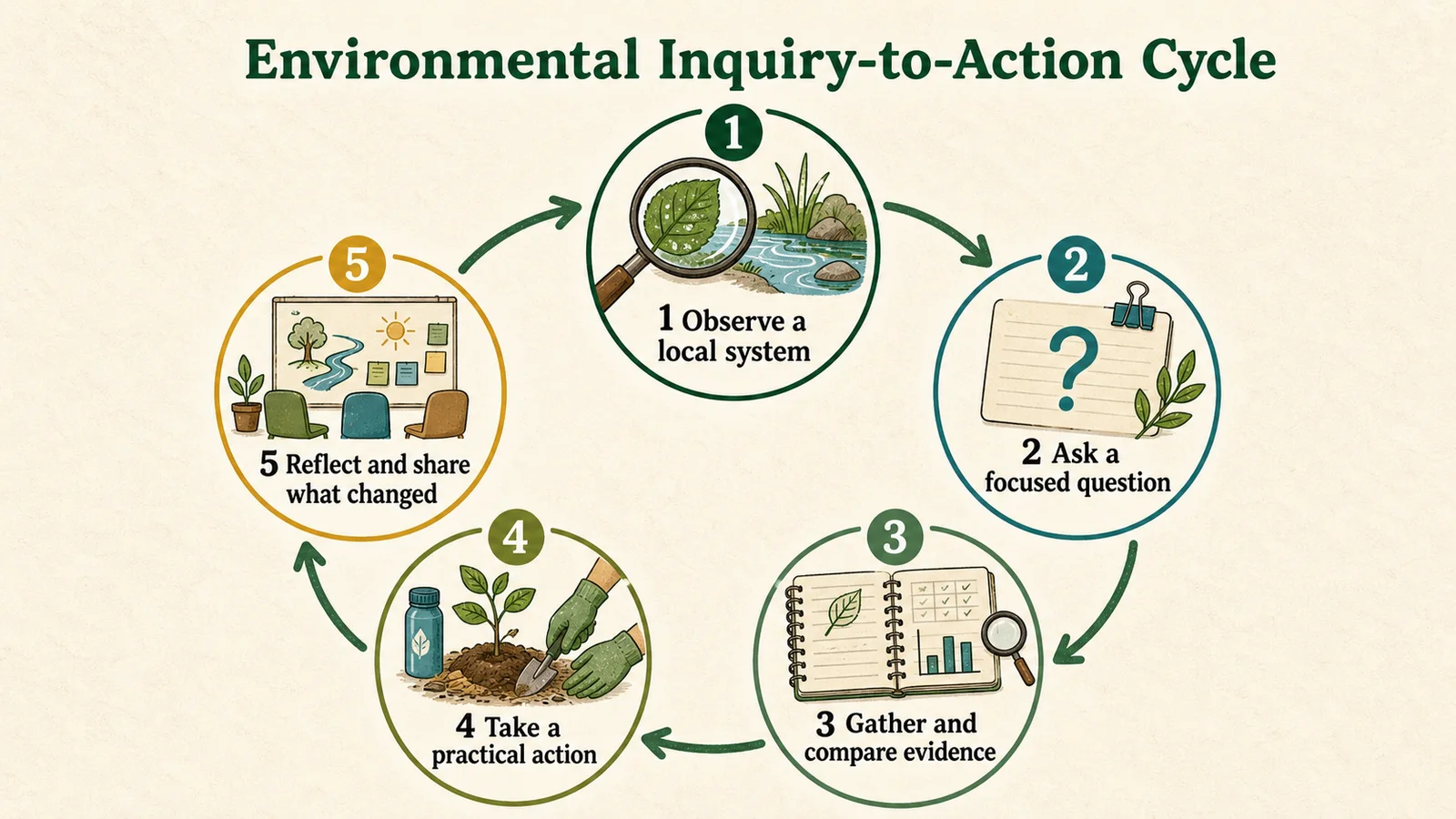
The most effective strategies for teaching environmental education transform passive students into active stewards by replacing lectures with hands-on, place-based experiences that solve real community problems. Instead of memorizing definitions, learners engage in citizen science, build living labs, and tackle local sustainability challenges, fostering a deep, lasting connection to the natural world.
We once watched a disengaged high school senior, who barely raised his hand in class, lead a team to restore a polluted local creek. The moment he saw the water clarity improve after their filtration project, his eyes lit up with a purpose no textbook could ever ignite. This shift from abstract knowledge to tangible action is the heartbeat of successful environmental pedagogy.
Research from the North American Association for Environmental Education confirms that students in these programs not only score higher in science and math but also develop critical Critical Thinking skills that extend far beyond the classroom walls.
Key Takeaways
- Prioritize Experiential Learning: Move beyond textbooks by using place-based education and citizen science to connect lessons directly to the local environment.
- Integrate Across Subjects: Weave environmental concepts into math, art, and literature to create a holistic learning experience without adding to the curriculum load.
- Foster Community Action: Empower students to solve real-world problems through collaborative projects with local organizations, turning them into active change agents.
- Assess Holistically: Evaluate success through performance-based assessments and student portfolios rather than traditional multiple-choice tests.
Table of Contents
- ⚡️ Quick Tips and Facts
- 🌍 From Silent Classrooms to Green Campuses: A Brief History of Environmental Education
- 🧠 7 Core Strategies for Teaching Environmental Education That Actually Stick
- 1. Transforming the Classroom into a Living Laboratory
- 2. Leveraging Place-Based Learning for Local Impact
- 3. Gamifying Ecology: Turning Data into Adventure
- 4. Integrating STEAM to Solve Real-World Climate Puzzles
- 5. Cultivating Eco-Literacy Through Storytelling and Empathy
- 6. Harnessing Citizen Science for Authentic Data Collection
- 7. Building Community Partnerships for Sustainable Action
- 🛠️ Essential Tools and Resources for the Modern Eco-Educator
- 🚧 Overcoming Common Bariers to Environmental Education in Schools
- 📊 Measuring Success: Assessment Strategies for Green Learning
- 🌱 Age-Appropriate Activities: From Kindergarten to High School
- 🤝 Collaborative Projects: Connecting Students with Local Conservation Efforts
- 💡 Quick Tips and Facts
- 🏁 Conclusion
- 🔗 Recommended Links
- ❓ FAQ
- 📚 Reference Links
Body
⚡️ Quick Tips and Facts
Welcome, fellow educators, to the wild
and wonderful world of environmental education! Before we wade into the deep end of ecological pedagogy, let’s get our feet wet with some
bite-sized knowledge. Here at Teacher Strategies™, we
believe that the best teaching is built on a solid foundation of facts and a little bit of fun.
- Fact
: The term “environmental education” was first formally defined by the International Union for Conservation of Nature (IUCN) in 1
- Talk about a slow-growing seed!
-
Quick Tip: Start small! A simple
classroom recycling program can be a powerful, hands-on lesson in resource management. ✅ -
Statistic: According
to the North American Association for Environmental Education (NAAEE), schools with environmental education programs see improved student performance in science, math
, and reading. 📈 -
Anecdote: I once had a student, Leo, who was completely
disengaged. Then we started a school garden. Leo, who lived in an apartment, discovered he had a magical green thumb. He
took charge of composting, and his leadership skills blossomed overnight. Never underestimate the power of a worm farm! 🪱 -
Quick Tip: Connect with local experts! A park ranger, a city planner, or a local farmer can bring
real-world context to your lessons that a textbook simply can’t. -
Fact: Experiential learning is
king. The first video featured in this article, which you can see at #featured-video, emphasizes
that “Visit to places of environmental concerns provides best opportunities to the learners as a means of observing and experiencing the real environment.”
🌍 From Silent Classrooms to Green Campuses: A Brief History of
Environmental Education
It wasn’t that long ago that “environmental education” meant watching a filmstrip about Smokey Bear
. 🐻 Oh, how times have changed! The journey from those flickering images to today’s dynamic, hands-on approach
is a fascinating story of shifting perspectives and growing urgency.
The roots of environmental education can be traced back to nature study and
conservation education in the late 19th and early 20th centuries. But the movement really caught fire in the
1960s and 70s, fueled by growing public concern over pollution and environmental degradation, symbolized by events like the
first Earth Day in 1970.
This era
gave birth to foundational legislation and international agreements that recognized the critical role of education in fostering environmental awareness. The goal was no
longer just about appreciating nature; it was about understanding complex ecological systems and our role within them. We moved from a ”
look but don’t touch” museum mentality to a “get your hands dirty” laboratory approach. This shift is crucial for developing
effective Critical Thinking skills around complex environmental issues.
Today, environmental education is a multidisciplinary field that integrates principles of ecology, biology, chemistry, social studies, and even
the arts. It’s about empowering students not just with knowledge, but with the skills and motivation to take responsible action.
<
a id=”-7-core-strategies-for-teaching-environmental-education-that-actually-stick”>
🧠 7 Core Strategies for Teaching Environmental Education That Actually Stick
Alright, let’s get to the good stuff. How
do we make these lessons resonate so deeply that they last a lifetime? It’s not about lecturing; it’s
about creating experiences. Here are seven core strategies that we, the educators at Teacher Strategies™, swear by.
1. Transforming
the Classroom into a Living Laboratory
Forget sterile rows of desks. Your classroom can be a vibrant ecosystem of learning!
- Vermicomposting Bins: A fantastic, low-maintenance way to teach decomposition, nutrient cycles, and waste
reduction. The “worm tea” is a great fertilizer for classroom plants! The Worm Factory 360 is a
popular, user-friendly model. - Sprout Houses: Use clear CD cases or plastic bags with damp
paper towels to germinate seeds. Students can observe root and stem growth in real-time. It’s a simple,
visual lesson in botany. - Classroom Weather Station: With a simple kit like the AcuRite Pro
Weather Station, students can track temperature, humidity, and rainfall, learning about weather patterns and data collection. This hands-on approach makes
abstract meteorological concepts tangible.
2. Leveraging Place-Based Learning for Local Impact
Why read about a watershed in a textbook when you
can visit the creek that runs through your town? Place-based education connects learning to the local community and environment.
- Community Mapping: Have students map local green spaces, pollution sources, or recycling centers. This fosters a sense of connection
and ownership over their local environment. - Water Quality Testing: Equip your students with water testing kits from a
brand like LaMotte and head to a local stream or pond. They can test for pH, nitrates, and dissolved oxygen
, contributing real data to local conservation efforts. This is a perfect opportunity for Collaborative Learning. - Local Flora and Fauna Study: Challenge students to identify
10 native plants or animals in the schoolyard. Apps like iNaturalist or Seek by iNaturalist can
help them identify species and contribute to a global biodiversity database.
3. Gamifying Ecology: Turning Data into Adventure
Who said learning about
ecosystems can’t be fun? Gamification turns complex topics into engaging challenges.
- Eco-Detective Missions
: Create scenarios where students must solve an environmental mystery, like “The Case of the Disappearing Frogs.” They’ll need
to research habitats, pollution, and food webs to crack the case. - Sustainability Bingo: Create bingo cards with actions
like “Used a reusable water bottle,” “Sorted recycling correctly,” or “Walked to school.” It’s a fun
, competitive way to encourage eco-friendly habits. - Digital Games: Platforms like EcoChains:
Arctic Life offer scientifically accurate games that teach about food webs and the impact of climate change.
4.
Integrating STEAM to Solve Real-World Climate Puzzles
Environmental challenges are complex, and they require interdisciplinary solutions. That
‘s where STEAM (Science, Technology, Engineering, Arts, and Math) comes in.
- Engineering
: Challenge students to design and build a solar oven from a cardboard box or a water filter from natural materials. This applies
engineering principles to solve real-world problems. - Art: Encourage students to create art from recycled materials or
photograph local biodiversity. Art provides a powerful medium for expressing ideas and emotions about the environment. - Math: Calculate
the school’s carbon footprint or analyze data from a local bird count. Math becomes a tool for understanding and communicating environmental impact.
#### 5. Cultivating Eco-Literacy Through Storytelling and Empathy
Facts and figures are important
, but stories are what move us to act.
- Nature Journals: Have students spend quiet time outdoors, observing and
recording their thoughts, sketches, and feelings in a journal. This practice, inspired by naturalists like John Muir, builds
observation skills and a personal connection to nature. - Role-Playing Scenarios: As mentioned in the #featured-video summary, role-playing helps students understand different perspectives on an environmental issue. Have
them debate a local development project from the viewpoints of a developer, a conservationist, and a homeowner.
Reading Eco-Fiction: Books like The Lorax by Dr. Seuss or Hoot by
Carl Hiaasen can spark powerful conversations about conservation and activism.
6. Harnessing Citizen Science for Authentic
Data Collection
Your students can be part of something big! Citizen science projects allow them to contribute to real scientific research.
-
The Great Backyard Bird Count: Every February, students can join this Audubon project to count birds and help scientists track bird populations.
-
Journey North: Students can track the migration of monarch butterflies, hummingbirds, and other species, reporting their sightings
to a continental database. -
GLOBE Program: Sponsored by NASA,
this program allows students to collect and submit data on atmosphere, biosphere, hydrosphere, and soil, collaborating with scientists and
other students around the world.
7. Building Community Partnerships for Sustainable Action
You don’t have to do this alone! Forging partnerships
with local organizations can provide invaluable resources and real-world learning opportunities.
- Partner with a Local Non-
Profit: Environmental organizations are often eager to work with schools on projects like tree planting, stream cleanups, or community garden
initiatives. - Invite Guest Speakers: A local scientist, activist, or politician can provide unique insights and inspire
students. - Service-Learning Projects: Connect classroom learning to a community service project. For example, after
studying plastic pollution, students could organize a campaign to reduce single-use plastics in the school cafeteria. This is where solid
Classroom Management is key to keeping
projects on track.
🛠️ Essential Tools and Resources for the Modern Eco-Educator
Having the right gear
can make all the difference. Think of it as your educator’s field pack for exploring the wilds of environmental science with
your students.
| Tool/Resource Category | Recommended Brands/Products | Why We Love It ❤️ |
|---|---|---|
| : | ||
| Field Guides | National Geographic, Peterson Field Guides, | |
| Sibley Guides | These are the gold standard for identifying birds, plants, and insects. They are durable, well | |
| -organized, and packed with beautiful illustrations. | ||
| Data Collection Tech | iNaturalist App, **Seek | |
| by iNaturalist**, Vernier Probes | Turns a smartphone into a powerful species identification and data collection tool. | |
| Vernier sensors allow for professional-grade data on water quality, soil moisture, and more. | ||
| **Class | ||
| room Kits** | Worm Factory 360, Butterfly Garden by Insect Lore | These kits provide a |
| self-contained, hands-on experience for observing life cycles and decomposition. They are engaging for all ages. | ||
| ** | ||
| Outdoor Gear** | Carson Binoculars, Rite in the Rain Waterproof Notebooks | Good binoculars are a |
| must for birdwatching. Waterproof notebooks ensure that valuable field notes aren’t ruined by an unexpected shower. | ||
| **Curriculum | ||
| Resources** | Project WILD, Project WET, Project Learning Tree | These award-winning curricula offer |
| peer-reviewed, hands-on activities that are aligned with educational standards. |
👉 Shop our favorite educator tools on
:
-
Field Guides & Books: Amazon | [Barnes & Noble](https://www.barnesandnoble.
com/b/books/nature/field-guides/_/N-29Z8q8Z18
1w) -
Science Kits & Probes: Amazon | Vernier Official Website
🚧 Overcoming
Common Barriers to Environmental Education in Schools
Let’s be real: it’s not always easy to get these programs off the ground
. From packed curricula to tight budgets, the hurdles can feel as high as Grandfather Mountain itself. But don’t despair
!
One of the biggest challenges is simply finding the time. The curriculum is already overflowing, right?
*
The Solution: Integration, not Addition. Don’t think of environmental education as another subject to cram in. Instead
, weave it into what you’re already teaching. A lesson on percentages in math class? Calculate the reduction in waste
from a new recycling program. Reading a novel in English? Discuss the environmental themes. This approach aligns perfectly with Differentiated Instruction by offering multiple entry points to the content
.
Another common barrier is a lack of resources or funding.
- The Solution: Get Creative and
Collaborative. You don’t need a state-of-the-art lab. A school garden can be started with donated
seeds and volunteer time. Many of the best resources, like the citizen science apps we mentioned, are free. Look for grants from
organizations like the Captain Planet Foundation or local community foundations.
Finally
, there can be a lack of administrative or community support.
- The Solution: Showcase the Benefits. This
is where data is your friend. Track student engagement. Present the research from NAAEE about improved test scores. Invite administrators
and parents to a student-led presentation about their water quality project. When they see the excitement and deep learning happening, they
‘ll be your biggest advocates. The Grandfather Mountain workshop, for instance, highlights how their program provides official **NC Environmental Education Certification
**, a tangible benefit that can persuade decision-makers.
📊 Measuring Success: Assessment Strategies for Green Learning
So, how do you know if it’s working? Assessing environmental education goes beyond multiple-choice tests. We
need to measure changes in knowledge, skills, and attitudes.
- Performance-Based Assessments: Instead of a
test, have students design a solution to a local environmental problem. This could be a proposal for a school composting program or
a public service announcement about water conservation. This is a core component of effective Assessment Techniques. - Portfolios and Journals: Have students compile a portfolio of their work
throughout the year, including journal entries, lab reports, photos, and project reflections. This provides a rich, holistic view of
their learning journey. - Concept Mapping: Ask students to create a concept map showing the connections between different environmental issues
, like climate change, deforestation, and biodiversity loss. This reveals their understanding of complex systems. - Pre-
and Post-Surveys: Use surveys at the beginning and end of a unit to gauge changes in student attitudes and behaviors
towards the environment. Are they more likely to recycle at home? Do they feel a stronger sense of responsibility for their local park
?
The goal isn’t just to see if they can define “photosynthesis,” but to see if they’
ve developed a lifelong ethic of environmental stewardship.
🌱 Age-Appropriate Activities: From Kindergarten to High School
Environmental education is not one
-size-fits-all. What captivates a six-year-old will likely bore a sixteen-year-old.
Here’s a quick breakdown of how to tailor activities across different age groups.
Early Elementary (Grades K-2): The Sensory Explorers 🦋
At this age, it’s all about wonder and direct sensory experience.
- Nature Scavenger Hunts: Give them a list of textures (smooth, rough, bumpy) and colors
to find in the schoolyard. - “Adopt” a Tree: Each student chooses a tree to observe throughout
the seasons, drawing pictures and noting changes. - Story Time with an Eco-Theme: Read books like The Tiny
Seed by Eric Carle to introduce concepts like life cycles.
Upper Elementary (Grades 3-5): The Junior Scientists 🔬
Students are now ready for more structured investigation and data collection.
- **
Building Terrariums:** Create closed ecosystems in a jar to learn about the water cycle and plant life. - Energy
Audits: Have students investigate energy use in their classroom or at home, identifying sources of waste. - **
Schoolyard Biodiversity Count:** Tally the number of different types of plants, insects, and birds they can find.
**Middle
School (Grades 6-8): The Systems Thinkers** 🌐
Middle schoolers can grasp more complex systems
and the interconnectedness of environmental issues.
- Debates on Environmental Issues: As suggested by the #featured-video, debates are a great strategy. Topics could include nuclear energy, fast
fashion, or vegetarianism. - Life Cycle Analysis: Have them trace the entire life cycle of a product
, from raw material extraction to disposal (e.g., a plastic water bottle or a cotton t-shirt). - **
Community-Based Projects:** Design and implement a project to address a local environmental issue, like starting a recycling program at a community
event.
High School (Grades 9-12): The Change Agents ✊
High school students
are ready to tackle complex global issues and engage in advocacy and action.
-
Environmental Justice Investigations: Research how
environmental issues disproportionately affect different communities in their city or around the world. -
Policy and Advocacy: Have students
write letters to elected officials, create social media campaigns, or present to the school board about an environmental issue they care about. -
In-depth Field Research: Conduct more rigorous scientific studies, like long-term water quality monitoring or a
detailed analysis of local biodiversity.
🤝 Collaborative Projects: Connecting Students with Local Conservation Efforts
This is where the magic
really happens—when learning leaps off the page and into the real world. Partnering with local conservation organizations transforms students from passive learners
into active participants in the stewardship of their community.
-
Stream Team Programs: Many local watershed associations have ”
Stream Team” or “Adopt-a-Stream” programs where volunteers monitor water quality, remove invasive species, and restore
habitats. Your class can become the official stewards of a local creek segment. -
BioBlitz Events: Partner with a
local park or nature preserve to host a BioBlitz. This is an event where scientists and volunteers work together to identify as many
species as possible in a specific area over a short period. It’s a fantastic way to contribute to biodiversity data. -
Restoration Projects: Connect with your city’s parks department or a group like the Arbor Day Foundation to participate in tree planting events or prairie restoration projects. Students get to
literally put down roots in their community.
I’ll never forget the day my high school biology class partnered with our
local parks district to remove invasive buckthorn. It was hard, muddy work. But at the end of the day, a
student named Maria stood back, looked at the huge pile of brush we had cleared, and said, “Wow. We
actually did that. That little patch of woods can breathe again because of us.” That, right there, is the goal
. It’s that moment of empowerment and connection that will stick with Maria long after she’s forgotten the Krebs cycle.