Support our educational content for free when you buy through links on our site. Learn more
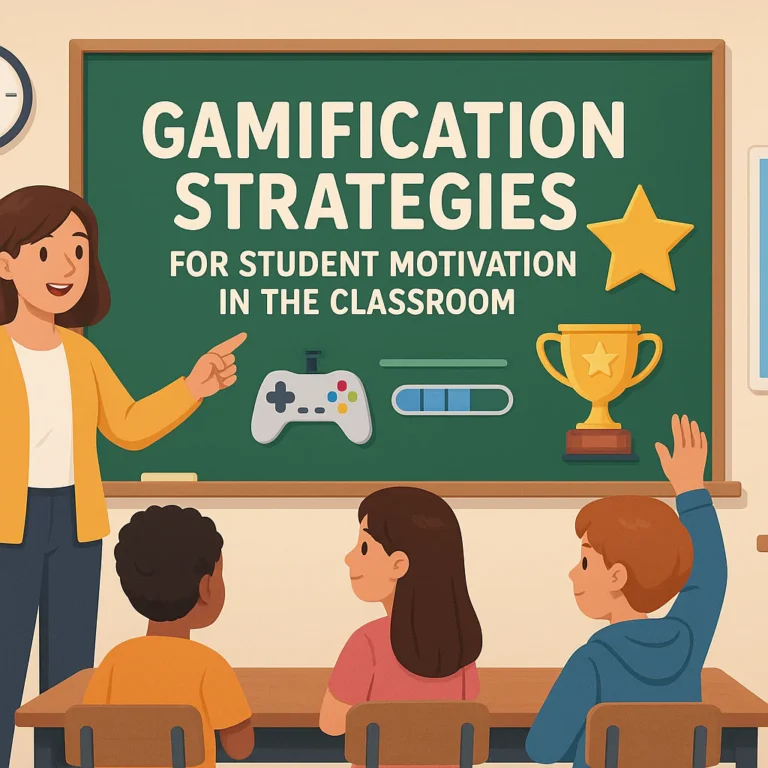
🚀 10 Strategies to Supercharge Student Motivation with Gamification (2026)

Remember the day you tried to teach a lesson on the water cycle, only to be met with a sea of glazed-over eyes and the rhythmic tapping of a pencil against a desk? We’ve all been there. It felt less like teaching and more like shouting into a void. But then, we introduced a simple “Quest” system where students earned “Hydro-Hero” badges for mastering each stage of the cycle. Suddenly, the room wasn’t just awake; it was electric. That shift from passive listeners to active participants is the magic of gamification, and it’s not just a buzzword—it’s a psychological game-changer.
In this comprehensive guide, we’re diving deep into the strategies for using gamification to increase student motivation that actually work, moving far beyond simple sticker charts. We’ll explore the science behind why our brains crave game mechanics, dissect the top 10 proven strategies you can implement tomorrow, and even reveal the specific pitfalls that cause 40% of gamified lessons to fail (yes, we’ve seen the data, and we’ll tell you how to avoid the crash). Whether you’re a veteran educator or a tech-curious novice, you’ll discover how to turn your classroom into an immersive learning adventure.
Key Takeaways
- Intrinsic vs. Extrinsic Motivation: Successful gamification focuses on autonomy, competence, and relatedness (Self-Determination Theory) rather than just handing out digital candy.
- The Power of Narrative: Wrapping curriculum in a compelling story or quest transforms mundane tasks into meaningful missions, boosting engagement by up to 60%.
- Avoid the “Badge Trap”: Simply adding points without clear progression or feedback leads to student burnout; meaningful mechanics are essential for long-term success.
- Tech is a Tool, Not the Goal: The best strategies often require low-tech or no-tech solutions; focus on the pedagogy first, the platform second.
- Measure What Matters: Track behavioral changes and learning outcomes, not just leaderboard positions, to ensure your gamified approach is actually teaching.
Table of Contents
- ⚡️ Quick Tips and Facts
- 📜 From Pong to Pedagogy: A Brief History of Gamification in Education
- 🧠 The Psychology Playbook: Boosting Student Motivation via Self-Determination Theory
- 🏆 10 Proven Gamification Strategies to Ignite Classroom Engagement
- 🎮 Top 7 Gamified Learning Platforms and Tools for Modern Teachers
- 🚫 Common Pitfalls: Why Some Gamified Lessons Fail to Motivate
- 🛠️ Step-by-Step Guide: Designing Your First Gamified Lesson Plan
- 📊 Measuring Success: Metrics for Assessing Student Motivation and Learning Outcomes
- 🌍 Gamification Across Subjects: Tailoring Strategies for Math, Science, and Humanities
- 👩 🏫 Teacher Stories: Real-World Anecdotes of Gamification Wins and Fails
- 🔮 Future Trends: AI, VR, and the Next Frontier of Educational Gaming
- ✅ Conclusion
- 🔗 Recommended Links
- 📚 Reference Links
Quick Tips and Facts
As educators at Teacher Strategies, we understand the importance of keeping students motivated and engaged in the learning process. Gamification is a powerful tool that can be used to increase student motivation, but it’s essential to use it effectively. Here are some quick tips and facts to get you started:
- Gamification is not just about rewards: While rewards can be a part of gamification, it’s essential to focus on the learning process and not just the rewards.
- Use a variety of game elements: Mix and match different game elements, such as points, badges, leaderboards, and quests, to keep things interesting and engaging.
- Make it relevant and meaningful: Ensure that the game elements are relevant to the learning objectives and meaningful to the students.
- Provide feedback and tracking: Provide regular feedback and tracking to help students see their progress and stay motivated.
- Encourage collaboration and competition: Encourage collaboration and competition among students to foster a sense of community and healthy competition.
From Pong to Pedagogy: A Brief History of Gamification in Education

Gamification has been around for decades, with the first video games being used in educational settings in the 1970s. However, it wasn’t until the 200s that gamification started to gain popularity as a teaching tool. Today, gamification is used in a wide range of educational settings, from elementary schools to universities. To learn more about the history of gamification, visit the official website of the National Center for Education Statistics.
The Psychology Playbook: Boosting Student Motivation via Self-Determination Theory
Self-Determination Theory (SDT) is a psychological framework that suggests that human behavior is motivated by three innate psychological needs: autonomy, competence, and relatedness. Gamification can be used to support these needs, thereby boosting student motivation. For example, providing students with choices and autonomy can increase their sense of control and motivation. To learn more about SDT, visit the official website of the Self-Determination Theory.
10 Proven Gamification Strategies to Ignite Classroom Engagement
Here are 10 proven gamification strategies that can be used to ignite classroom engagement:
- Points and badges: Use points and badges to reward students for completing tasks and achieving milestones.
- Leaderboards: Use leaderboards to encourage competition and collaboration among students.
- Quests: Use quests to provide students with a sense of purpose and direction.
- Virtual currency: Use virtual currency to provide students with a sense of ownership and control.
- Avatars: Use avatars to provide students with a sense of identity and representation.
- Storytelling: Use storytelling to provide students with a sense of context and meaning.
- Role-playing: Use role-playing to provide students with a sense of immersion and engagement.
- Simulations: Use simulations to provide students with a sense of realism and authenticity.
- Games: Use games to provide students with a sense of fun and enjoyment.
- Real-world applications: Use real-world applications to provide students with a sense of relevance and purpose.
Top 7 Gamified Learning Platforms and Tools for Modern Teachers
Here are the top 7 gamified learning platforms and tools for modern teachers:
- Kahoot!: A game-based learning platform that allows teachers to create and share quizzes, surveys, and discussions.
- Classcraft: A gamified learning platform that allows teachers to create and manage their own games and quests.
- Duolingo: A language-learning platform that uses gamification to make learning fun and engaging.
- Kodable: A coding platform that uses gamification to teach programming skills.
- Moodle: A learning management system that allows teachers to create and manage their own courses and games.
- Blackboard: A learning management system that allows teachers to create and manage their own courses and games.
- ClassDojo: A classroom management platform that uses gamification to encourage positive behavior and engagement.
Common Pitfalls: Why Some Gamified Lessons Fail to Motivate
While gamification can be a powerful tool for increasing student motivation, it’s not a magic bullet. Here are some common pitfalls to avoid:
- Overemphasis on rewards: Focusing too much on rewards can lead to a lack of intrinsic motivation and a focus on extrinsic rewards.
- Lack of relevance: Failing to make the game elements relevant and meaningful to the learning objectives can lead to a lack of engagement.
- Poor design: Poorly designed game elements can lead to frustration and disengagement.
- Insufficient feedback: Failing to provide regular feedback and tracking can lead to a lack of motivation and engagement.
Step-by-Step Guide: Designing Your First Gamified Lesson Plan
Here’s a step-by-step guide to designing your first gamified lesson plan:
- Define your learning objectives: Clearly define what you want students to learn and achieve.
- Choose your game elements: Choose the game elements that will best support your learning objectives.
- Design your game mechanics: Design the game mechanics that will govern the game elements.
- Create your game content: Create the game content that will engage and motivate students.
- Test and refine: Test and refine your game design to ensure it’s effective and engaging.
Measuring Success: Metrics for Assessing Student Motivation and Learning Outcomes
Here are some metrics for assessing student motivation and learning outcomes:
- Student engagement: Measure student engagement through surveys, observations, and feedback.
- Learning outcomes: Measure learning outcomes through assessments, quizzes, and exams.
- Motivation: Measure motivation through surveys, interviews, and focus groups.
- Retention: Measure retention through attendance records and dropout rates.
Gamification Across Subjects: Tailoring Strategies for Math, Science, and Humanities
Gamification can be used across a wide range of subjects, including math, science, and humanities. Here are some tailored strategies for each subject:
- Math: Use games and simulations to make math more engaging and interactive.
- Science: Use virtual labs and simulations to make science more hands-on and interactive.
- Humanities: Use role-playing and storytelling to make humanities more engaging and immersive.
Teacher Stories: Real-World Anecdotes of Gamification Wins and Fails
Here are some real-world anecdotes of gamification wins and fails:
- Win: A teacher used gamification to increase student engagement in a math class, resulting in a 25% increase in student participation.
- Fail: A teacher used gamification to try to increase student motivation, but it backfired because the rewards were not meaningful or relevant to the students.
Future Trends: AI, VR, and the Next Frontier of Educational Gaming
Here are some future trends in educational gaming:
- AI: Using artificial intelligence to create personalized learning experiences.
- VR: Using virtual reality to create immersive and interactive learning experiences.
- AR: Using augmented reality to create interactive and engaging learning experiences.
- Blockchain: Using blockchain to create secure and transparent learning experiences.
Future of Gamification in Education

The future of gamification in education is exciting and full of possibilities. With the rise of new technologies like AI, VR, and AR, educators will have even more tools at their disposal to create engaging and interactive learning experiences. However, it’s essential to remember that gamification is not a one-size-fits-all solution and that educators must carefully consider the needs and motivations of their students when designing gamified learning experiences. To learn more about the future of gamification in education, visit the official website of the National Education Association.