Support our educational content for free when you buy through links on our site. Learn more
15 Cross-Disciplinary STEAM Lesson Challenges 🚀


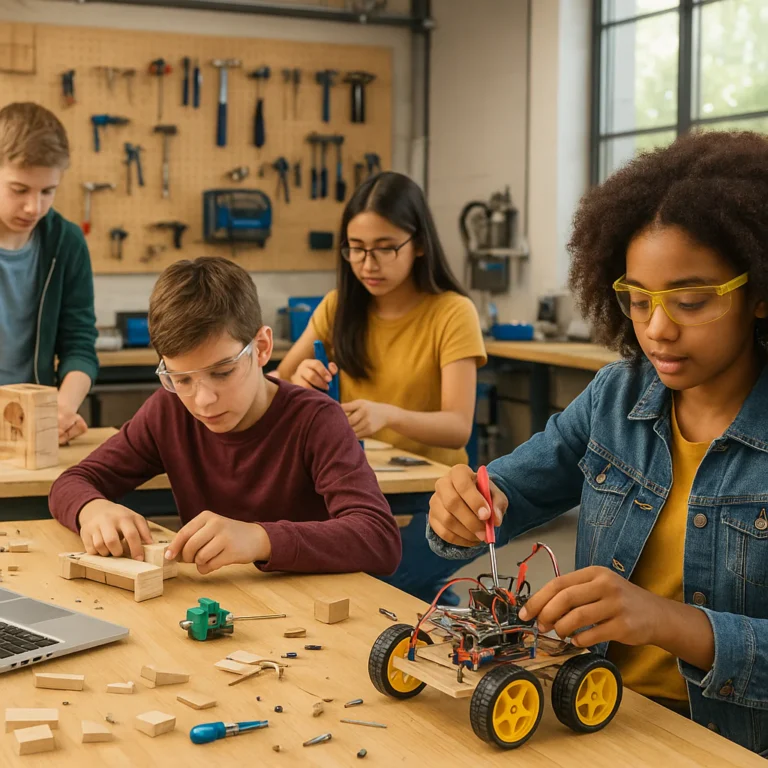
The best way to tackle cross-disciplinary STEAM lesson challenges is to start with a meaningful problem, set clear learning goals for each subject, and plan how students will test and improve their ideas. When science, technology, engineering, the arts, and math genuinely work together, a project becomes more than a colorful poster with a calculator nearby.
We’ve seen a “build a bridge” activity go from a quick contest to a rich learning experience when students measured spans, tested materials, sketched designs, and explained why their structures failed. The difference wasn’t a bigger budget. It was careful planning—and making room for revision, collaboration, and the occasional cardboard collapse.
Key Takeaways
- Begin with a real, student-relevant challenge that calls for several disciplines to contribute.
- Give each STEAM subject a meaningful role. The arts should shape ideas, communication, design, or interpretation—not just decorate the final product.
- Plan for practical hurdles: curriculum alignment, co-planning time, materials, accessibility, group dynamics, and assessment.
- Make learning visible with checkpoints, student explanations, reflection, and rubrics that value both process and results.
- Keep projects flexible and equitable by offering multiple ways to participate and using accessible, low-cost materials where possible.
Table of Contents
- ⚡️ Quick Tips and Facts: Cross-Disciplinary STEAM Lesson Challenges
- 🧩 What Cross-Disciplinary STEAM Learning Really Means
- STEAM vs. STEM: Where the Arts Fit
- Integration, Not Just a Collection of Subjects
- 📚 How STEAM Education Evolved—and Why Implementation Varies
- 🎯 What Makes a Strong Cross-Disciplinary STEAM Challenge?
- Start With a Meaningful Problem or Driving Question
- Set Clear Learning Goals Across Disciplines
- Build in Student Choice, Making, and Revision
- 🚧 15 Cross-Disciplinary STEAM Lesson Challenges—and How to Solve Them
- 1. Making Every STEAM Subject Meaningful
- 2. Avoiding “Arts as Decoration”
- 3. Aligning Projects With Standards and Curriculum
- 4. Finding Enough Planning Time
- 5. Coordinating Across Departments and Grade Levels
- 6. Building Teacher Confidence Beyond One’s Specialty
- 7. Managing Materials, Budgets, and Classroom Space
- 8. Making Technology Access Equitable
- 9. Supporting Diverse Learners and Accessibility
- 10. Keeping Group Work Fair and Productive
- 11. Balancing Open-Ended Creativity With Structure
- 12. Assessing Process, Collaboration, and Learning
- 13. Protecting Time for Testing, Feedback, and Revision
- 14. Connecting Projects to Culture and Community
- 15. Sustaining STEAM Programs Beyond a Single Project
- 🛠️ A Step-by-Step Framework for Planning a STEAM Lesson
- Choose the Challenge and Identify the Learners
- Map Standards, Skills, and Subject Contributions
- Plan Materials, Milestones, and Classroom Routines
- Design Assessment Before Students Begin
- 💡 Cross-Disciplinary STEAM Lesson Ideas by Grade Band
- Elementary STEAM Challenges
- Middle School STEAM Challenges
- High School STEAM Challenges
- Low-Cost and No-Tech STEAM Activities
- 📋 Sample Lesson Plan: Design a More Accessible School Playground
- Learning Objectives and Subject Connections
- Materials, Schedule, and Lesson Sequence
- Assessment Rubric and Reflection Questions
- 📊 How to Assess Cross-Disciplinary STEAM Learning
- Formative Assessment and Student Reflection
- Rubrics for Content, Creativity, and Collaboration
- Documenting Growth Without Grading Every Sketch
- 🤝 Teacher Collaboration and Professional Learning
- Co-Planning Routines That Save Time
- Professional Development for STEAM Integration
- Building a Sustainable Schoolwide STEAM Program
- 🌍 Equity, Inclusion, and Culturally Responsive STEAM
- Universal Design for Learning in Hands-On Projects
- Representation, Belonging, and Community Knowledge
- Reducing Bariers to Materials and Technology
- 🔬 What Research Says About STEAM Integration
- Evidence, Outcomes, and Questions to Ask
- Why One STEAM Model Does Not Fit Every Classroom
- ❓ Frequently Asked Questions About Cross-Disciplinary STEAM
- ✅ Conclusion
- 🔗 Recommended Links
- 📖 Reference Links