Support our educational content for free when you buy through links on our site. Learn more
🚀 15 Effective Methods for Classroom Management That Actually Work (2026)

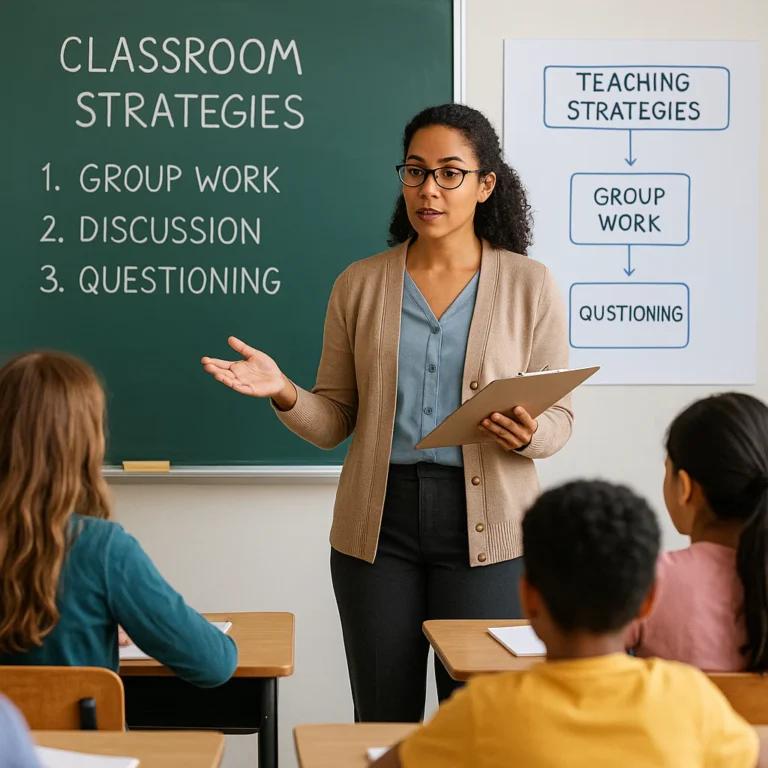
The secret to a calm, productive classroom isn’t stricter rules or louder voices; it’s proactive relationship-building paired with crystal-clear routines that students help create. While many teachers struggle to find effective methods for classroom management that don’t lead to burnout, the most successful educators focus on prevention rather than reaction.
Imagine walking into a room where 30 students are already settled, working quietly, because they know exactly what to do the second they walk in. It sounds like a dream, but it’s a reality for teachers who master the art of predictable consistency. Did you know that 75% of teachers cite student inattention as a major barrier to learning, yet the solution often lies in the first five minutes of class?
We’ve seen classrooms transform from chaotic battlegrounds to collaborative hubs simply by shifting the focus from “catching them being bad” to “celebrating them being good.” It’s not about magic; it’s about strategy.
Ready to stop fighting fires and start building a community? Let’s dive into the 15 strategies that will change your classroom forever.
Key Takeaways
- Proactive over Reactive: The most effective methods for classroom management focus on preventing issues through clear routines and strong relationships, not just punishing bad behavior.
- Relationships are the Foundation: Students are significantly more likely to follow rules when they feel seen, heard, and valued by their teacher.
- Consistency is King: Applying logical consequences fairly and predictably builds trust and reduces anxiety for both students and teachers.
- Engagement is the Best Deterent: Boredom fuels disruption; active learning and differentiated instruction keep students too busy to misbehave.
- Flexibility Matters: No single strategy works for everyone; successful teachers reflect and adjust their plans based on student needs and feedback.
Table of Contents
- ⚡️ Quick Tips and Facts
- 📜 From Chaos to Calm: A Brief History of Classroom Management
- 🧠 Defining the Beast: What Is Effective Classroom Management Really?
- 🏗️ 15 Proven Classroom Management Strategies for Teachers
- 1. Set Crystal-Clear Expectations and Routines
- 2. Build a Positive Classroom Culture and Community
- 3. Use Instructional Approaches That Promote Student Engagement
- 4. Implement Positive Reinforcement and Reward Systems
- 5. Employ Effective Disciplinary Techniques and Consequences
- 6. Design Classroom Layouts That Facilitate Success
- 7. Master the Art of Non-Verbal Cues and Signals
- 8. Differentiate Instruction to Prevent Behavioral Issues
- 9. Establish Strong Teacher-Student Relationships
- 10. Utilize Classroom Management Technology Tools
- 1. Collaborate With Colleagues and Find a Mentor
- 12. Manage Transitions and Downtime Effectively
- 13. Address Bulying and Social-Emotional Conflicts
- 14. Adapt Strategies for Special Education and Inclusion
- 15. Reflect, Analyze, and Adjust Your Management Plan
- 🚀 How Effective Classroom Management Improves the Educational Process
- 🛠️ Essential Tools and Resources for Modern Teachers
- 🧩 Troubleshooting Common Classroom Management Challenges
- 📚 Keeping Up to Date: Research and Trends in Behavior Management
- Conclusion
- Recommended Links
- FAQ
- Reference Links
⚡️ Quick Tips and Facts
Before we dive into the deep end of the pool, let’s grab a life preserver. You might be thinking, “Can I really fix a chaotic classroom in a week?” The answer is a resounding yes, but it requires a shift in mindset from “policing” to “coaching.”
Here are the non-negotiables that the teachers at Teacher Strategies™ swear by:
- The 2:1 Ratio: Research suggests that for every correction, you need at least two positive interactions to maintain a healthy classroom climate. If you’re only correcting, you’re losing the room.
- Silence is Golden (Sometimes): Did you know that waiting 5-7 seconds after asking a question increases the quality of student responses by 30%? It also gives you time to scan the room for off-task behavior without saying a word.
- The “First 5 Minutes” Rule: The first five minutes of class set the tone for the next 5. If you start late or disorganized, you’ve already lost the battle.
- Proximity is Power: Simply standing next to a talking student is often more effective than shouting across the room. It’s the least invasive intervention available.
- Consistency Over Intensity: A mild consequence applied every single time is infinitely better than a severe punishment applied sporadically.
Pro Tip: If you’re wondering why your “cool” new reward system isn’t working, it’s likely because the expectations weren’t taught explicitly. You can’t expect students to read your mind!
For more on how these strategies fit into the bigger picture of teaching, check out our deep dive on What are examples of effective teaching strategies?.
📜 From Chaos to Calm: A Brief History of Classroom Management

You might think classroom management is just about “keeping kids quiet,” but it’s actually a fascinating evolution of educational philosophy.
In the 19th century, the “factory model” of education ruled. Rows of desks, strict silence, and the teacher as the absolute dictator were the norms. The goal was compliance, not engagement. If a student spoke out of turn, the consequence was often public humiliation or physical punishment.
Fast forward to the mid-20th century, and we saw the rise of behaviorism. Pioners like B.F. Skinner introduced the idea of positive and negative reinforcement. The classroom became a laboratory of rewards (stickers, gold stars) and punishments (detention, loss of recess). While effective for short-term compliance, it often failed to build intrinsic motivation.
By the 1980s and 90s, the pendulum swung toward humanistic approaches. Educators like Lee and Marlene Canter introduced “Assertive Discipline,” emphasizing clear rules and consequences, while others like Rudolf Dreikurs focused on logical consequences and the idea that all behavior has a purpose (often a cry for attention or power).
Today, in the 21st century, we are in the era of Restorative Practices and Social-Emotional Learning (SEL). The focus has shifted from “How do I stop this behavior?” to “Why is this behavior happening, and how do we repair the harm?” We now understand that a managed classroom is one where students feel safe, seen, and valued.
Did you know? A 2024 NCES survey revealed that 75% of public schools reported student inattention as a moderate to severe negative effect on learning. This historical shift wasn’t just philosophical; it was a necessary response to the changing needs of modern students.
🧠 Defining the Beast: What Is Effective Classroom Management Really?
Let’s clear up a massive misconception right now: Classroom management is not crowd control.
If you think management is just about getting 30 kids to sit still and listen, you’re setting yourself up for burnout. Effective classroom management is the proactive creation of an environment where learning can flourish. It’s the invisible architecture that supports instruction.
According to the definition used by leading educational bodies, it encompasses:
- Establishing routines that minimize downtime.
- Building relationships that foster trust.
- Designing instruction that keeps students engaged.
- Addressing behavior in a way that teaches, rather than punishes.
Think of it like this: If teaching is the engine of the car, classroom management is the road. You can have the most powerful engine in the world, but if the road is full of potholes and detours, you’re never going to get to your destination.
The Teacher Strategies™ Insight: We’ve seen teachers with “perfect” rules fail because they lacked raport. Conversely, we’ve seen teachers with “lose” rules succeed because their students wanted to please them. The secret sauce? It’s the balance of structure and warmth.
For a deeper look at how these elements interact, explore our guide on Classroom Management.
🏗️ 15 Proven Classroom Management Strategies for Teachers
Okay, let’s get to the meat of the matter. You want actionable steps, not just theory. Here are 15 strategies that have stood the test of time (and our own chaotic classrooms).
1. Set Crystal-Clear Expectations and Routines
You cannot enforce a rule you haven’t taught. It’s that simple.
- The “I Do, We Do, You Do” Method: Don’t just post rules on the wall. Model the behavior. Show them exactly how to enter the room, how to hand in papers, and how to ask for help.
- Co-Create the Rules: Involve students in the process. Ask, “What do we need to feel safe and learn best?” When students help write the rules, they are more likely to own them.
- Post and Reference: Keep the rules visible, but more importantly, reference them constantly. “Remember our rule about respect? How does that apply to what just happened?”
Real Story: One of our teachers, Sarah, spent the first week of school only teaching routines. No math, no reading. Just how to walk in line, how to sharpen a pencil, and how to transition. By week two, her transition time dropped from 10 minutes to 90 seconds. Patience pays off.
2. Build a Positive Classroom Culture and Community
A classroom where students feel like a family is a classroom where management issues are rare.
- Morning Meetings: Start the day with a check-in. It builds community and gives you a pulse on who might be having a rough day.
- Shared Language: Develop inside jokes, class mottos, or handshakes. This creates a sense of belonging.
- Celebrate Small Wins: Did someone hold the door? Did someone help a peer? Shout it out!
3. Use Instructional Approaches That Promote Student Engagement
Boredom is the enemy of management. If students are engaged, they don’t have time to misbehave.
- Active Learning: Ditch the 45-minute lecture. Use Think-Pair-Share, group projects, and hands-on activities.
- Relevance: Connect lessons to the real world. If they see why they are learning it, they care more.
- Variety: Change the pace every 10-15 minutes. Switch from listening to moving, from individual work to group work.
For more on this, check out our resources on Differentiated Instruction and Collaborative Learning.
4. Implement Positive Reinforcement and Reward Systems
Catch them being good!
- Specific Praise: Instead of “Good job,” say, “I love how you waited your turn to speak, Alex.”
- Group Contingencies: “If everyone is ready in 2 minutes, we get 5 extra minutes of recess.” This encourages peer accountability.
- Token Economies: Use a system where students earn tokens for good behavior that can be exchanged for privileges (like choosing a seat or a class job).
Caution: Avoid over-relying on extrinsic rewards. The goal is to move students toward intrinsic motivation where they behave well because it feels right, not just for a prize.
5. Employ Effective Disciplinary Techniques and Consequences
When things go wrong, how you respond matters more than the rule itself.
- Logical Consequences: The consequence should be related to the behavior. If a student makes a mess, they clean it up. If they disrupt a group, they work alone for a bit.
- Restorative Justice: Instead of “You’re in detention,” ask “Who was hurt by your action, and how can we fix it?”
- Private Correction: Never call a student out in front of the class for minor infractions. It triggers defensiveness. Pull them aside or use a non-verbal cue.
6. Design Classroom Layouts That Facilitate Success
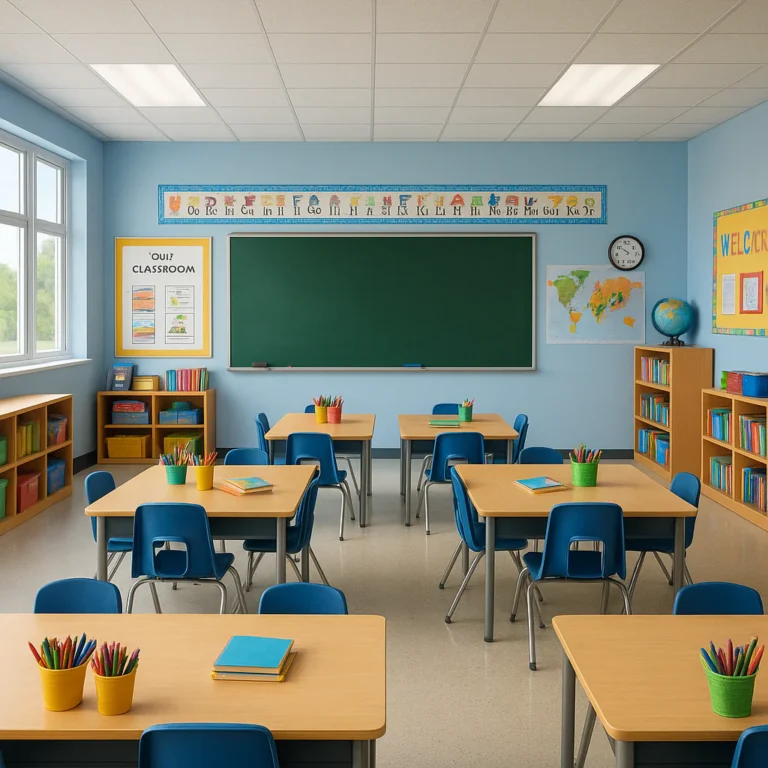
Your room is a tool. Use it!
- Flexible Seating: Not every student learns best at a desk. Consider bean bags, standing desks, or floor cushions.
- Traffic Flow: Ensure you can walk to every student’s desk without tripping over backpacks.
- Zones: Create specific areas for group work, quiet reading, and direct instruction.
7. Master the Art of Non-Verbal Cues and Signals
Stop talking over students. It’s exhausting and ineffective.
- The “Silent Signal”: Raise your hand, use a chime, or flash the lights. Wait for complete silence before speaking.
- Proximity Control: Walk around the room while students work. Your presence is a powerful deterrent to off-task behavior.
- Eye Contact: A look can say more than a lecture.
8. Differentiate Instruction to Prevent Behavioral Issues
Often, “bad behavior” is just a student who is bored or overwhelmed.
- Scaffold Tasks: Break big assignments into smaller chunks.
- Offer Choices: Let students choose how they demonstrate learning (e.g., write an essay, make a video, or build a model).
- Tiered Assignments: Provide different levels of difficulty for the same concept.
For more strategies, visit our Assessment Techniques page.
9. Establish Strong Teacher-Student Relationships
This is the single most important factor in classroom management.
- The “2×10” Strategy: Spend 2 minutes a day for 10 days talking to a challenging student about anything other than school. The bond you build will transform their behavior.
- Greet at the Door: Say hello to every student by name. It sets a positive tone immediately.
- Show Interest: Ask about their weekends, their pets, their hobbies.
10. Utilize Classroom Management Technology Tools
Tech can be a double-edged sword, but used right, it’s a lifesaver.
- Random Name Pickers: Apps like ClassDojo or Wheel of Names make participation fair and fun.
- Behavior Trackers: Use digital tools to log incidents and spot patterns.
- Focus Timers: Visual timers help students manage their time during independent work.
👉 Shop
- ClassDojo: Amazon | Official Website
- Kahoot!: Amazon | Official Website
1. Collaborate With Colleagues and Find a Mentor
You don’t have to do this alone.
- Peer Observation: Watch how other teachers handle transitions or disruptions.
- Mentorship: Find a veteran teacher who can offer advice and a listening ear.
- Professional Learning Communities (PLCs): Discuss challenges and brainstorm solutions with your team.
12. Manage Transitions and Downtime Effectively
Transitions are where chaos breeds.
- Clear Signals: Use a specific sound or phrase to signal a transition.
- Timers: Give students a countdown. “You have 30 seconds to get your books out.”
- Routine Practice: Practice transitions just like you practice a math problem until they are automatic.
13. Address Bulying and Social-Emotional Conflicts
Bulying destroys the classroom climate.
- Zero Tolerance for Bulying: Make it clear that bullying is never acceptable.
- Teach Empathy: Use literature and role-playing to help students understand others’ feelings.
- Intervention: Address conflicts immediately and privately. Use restorative circles to resolve issues.
14. Adapt Strategies for Special Education and Inclusion
Every student is different.
- IEP/504 Plans: Always follow the accommodations outlined in these plans.
- Visual Supports: Use visual schedules and cue cards for students who need them.
- Sensory Breaks: Allow students to take a break if they are feeling overwhelmed.
15. Reflect, Analyze, and Adjust Your Management Plan
There is no “one size fits all.”
- Keep a Journal: Note what worked and what didn’t each day.
- Student Feedback: Ask your students, “What helps you learn best? What makes it hard?”
- Be Flexible: If a strategy isn’t working, change it. Don’t be afraid to admit you need to try something new.
🚀 How Effective Classroom Management Improves the Educational Process
Why go through all this trouble? Because the payoff is massive.
When management is effective:
- Instructional Time Increases: Less time spent on discipline means more time for learning.
- Student Anxiety Decreases: A predictable environment makes students feel safe.
- Teacher Burnout Drops: You spend less energy on “puting out fires” and more on teaching.
- Academic Achievement Rises: Students who feel safe and engaged learn better.
The Big Question: But what happens when you have a student who just won’t comply, no matter what you do? We’ll tackle that in the troubleshooting section below.
🛠️ Essential Tools and Resources for Modern Teachers
You can’t fight a war without weapons. Here are some of our favorite tools to help you manage the chaos.
Physical Tools
- Visual Timers: Essential for transitions.
- Noise Meters: Like the Too Loud app or physical decibel meters, to help students self-regulate volume.
- Sticky Notes: For quick, private feedback.
Digital Tools
- ClassDojo: Great for tracking behavior and communicating with parents.
- Google Classroom: Streamlines assignment distribution and grading.
- Sesaw: Excellent for portfolio building and parent communication.
👉 Shop
- ClassDojo: Amazon | Official Website
- Kahoot!: Amazon | Official Website
- Nearpod: Amazon | Official Website
Books
- The First Days of School by Harry Wong
- Teach Like a Champion by Doug Lemov
- Restorative Practices in the Classroom by Paul J. Thibodeau
🧩 Troubleshooting Common Classroom Management Challenges
Even the best-laid plans hit a snag. Here’s how to handle the tough stuff.
The “I Don’t Care” Student
This student has checked out.
- Strategy: Build a relationship first. Ignore the behavior (if safe) and focus on connection. Ask, “What’s going on?” instead of “Why are you doing this?”
- Why it works: Often, “I don’t care” is a defense mechanism for “I’m scared I’ll fail.”
The Chronic Disruptor
This student thrives on attention.
- Strategy: Use planned ignoring for minor behaviors. Give attention only when they are on task. Use private conferences to set goals.
- Why it works: It removes the “reward” (attention) for the negative behavior.
The Group Chaos
When the whole class goes off the rails.
- Strategy: Stop everything. Reset the room. Re-teach the expectation. Use a “brain break” to reset everyone’s energy.
- Why it works: It breaks the momentum of the chaos and gives everyone a fresh start.
Video Insight: Remember the advice from the featured video about the “NOISE” strategy? It’s a game-changer for group work. If the volume gets too high, erase a letter. It turns volume control into a game, and students love the challenge.
📚 Keeping Up to Date: Research and Trends in Behavior Management
The field of education is always evolving. Here’s what the latest research is saying.
- Restorative Practices: Studies show that restorative justice reduces suspension rates and improves school climate.
- Social-Emotional Learning (SEL): Integrating SEL into the curriculum has been linked to improved academic performance and reduced behavioral issues.
- Trauma-Informed Teaching: Understanding the impact of trauma on behavior is crucial. Teachers are learning to respond with empathy rather than punishment.
- AI in the Classroom: Emerging tools are helping teachers track behavior patterns and predict potential issues before they escalate.
Did you know? A 2023 study in Current Psychology found that teacher humor significantly boosts student well-being and engagement. So, don’t be afraid to crack a joke!
For more on the latest trends, check out our Critical Thinking resources.
Conclusion

So, there you have it. The journey from chaos to calm isn’t a straight line, but it is a path worth traveling. Effective classroom management isn’t about being a dictator; it’s about being a leader, a mentor, and a guide.
We started this article by asking if you could fix a chaotic classroom in a week. The answer is yes, but it takes intentionality, consistency, and patience. You have to be willing to invest time in building relationships, teaching routines, and reflecting on your practice.
Remember, the goal isn’t a silent classroom; it’s a productive one. A classroom where students feel safe to make mistakes, where they are engaged in learning, and where they know you care about them.
Our Top Recommendation: Start small. Pick one strategy from this list—maybe the “2×10” relationship building or the “NOISE” volume control—and master it before moving on. Don’t try to overhaul your entire classroom overnight.
You’ve got this. And if you ever feel like you’re drowning, remember: you are not alone. Reach out to your colleagues, find a mentor, and keep learning. The best teachers are the ones who never stop growing.
Recommended Links
Here are some of our favorite resources to help you on your journey:
- ClassDojo: Amazon | Official Website
- Kahoot!: Amazon | Official Website
- The First Days of School (Book): Amazon
- Teach Like a Champion (Book): Amazon
- Restorative Practices in the Classroom (Book): Amazon
FAQ

What role do clear expectations and consistent consequences play in maintaining a well-managed classroom?
Clear expectations act as the blueprint for behavior. Without them, students are left guessing, which leads to anxiety and misbehavior. Consistent consequences ensure that the rules are taken seriously and that the classroom is a fair environment. When students know exactly what is expected and what will happen if they break the rules, they feel more secure and are more likely to comply.
What strategies can be used to manage disruptive student behavior and minimize distractions?
- Proximity Control: Standing near the student.
- Non-Verbal Cues: Using hand signals or eye contact.
- Private Correction: Addressing the issue away from the class.
- Redirection: Guiding the student back to the task.
- Logical Consequences: Ensuring the consequence is related to the behavior.
How can teachers establish a positive and respectful classroom environment?
- Model Respect: Treat students with respect, and they will treat you the same.
- Build Relationships: Get to know your students personally.
- Celebrate Diversity: Embrace and celebrate the unique backgrounds of your students.
- Encourage Collaboration: Create opportunities for students to work together and support each other.
Read more about “10+ Proven Strategies for Classroom Behavior & Positive Learning 🚀”
What are the key elements of a successful classroom management plan?
- Clear Expectations: Well-defined rules and routines.
- Positive Relationships: Strong connections between teacher and students.
- Engaging Instruction: Lessons that keep students interested.
- Consistent Consequences: Fair and predictable responses to behavior.
- Flexibility: The ability to adapt to changing circumstances.
Read more about “🚀 The Ultimate 2026 Lesson Plan Guide: 12 Steps to Classroom Magic”
How can teachers build positive relationships to improve classroom management?
- Greet Students: Say hello to every student by name.
- Listen Actively: Show genuine interest in what students have to say.
- Show Empathy: Understand and validate students’ feelings.
- Be Consistent: Follow through on promises and commitments.
- Celebrate Success: Acknowledge and celebrate students’ achievements.
Read more about “🚀 6 Management Techniques Teachers Must Master (2026)”
What are the most effective strategies for managing disruptive behavior in large classes?
- Group Contingencies: Reward the whole class for good behavior.
- Visual Cues: Use signals to manage the whole class at once.
- Structured Transitions: Have clear routines for moving between activities.
- Differentiated Instruction: Ensure all students are engaged at their level.
- Proximity: Move around the room to monitor and support students.
How do you establish clear classroom rules and consequences that actually work?
- Involve Students: Let them help create the rules.
- Be Specific: Avoid vague rules like “be good.” Use specific language like “raise your hand to speak.”
- Post Them: Make sure the rules are visible.
- Teach Them: Model and practice the rules.
- Review Regularly: Revisit the rules often to reinforce them.
What role does student engagement play in preventing classroom management issues?
Engagement is the best prevention. When students are actively involved in their learning, they have less time and energy to misbehave. Engaging lessons that are relevant, challenging, and varied keep students focused and motivated.
Read more about “🔄 12 Restorative Practices to Transform Classroom Management (2026)”
Reference Links
- Warner Pacific University: Classroom Management Strategies for Teachers
- Grand Canyon University: 10 Positive Classroom Management Strategies
- National Center for Education Statistics (NCES): Student Inattention Survey
- Pew Research Center: Teacher Surveys on Student Behavior
- American Psychological Association: Classroom Management Resources
- Common Sense Media: Digital Citizenship and Classroom Management
- TeachHUB: Classroom Layouts and Management
- Responsive Classroom: Logical Consequences
- ClassDojo: Official Website
- Kahoot!: Official Website