Support our educational content for free when you buy through links on our site. Learn more
Formative Assessment Strategies: 16 Classroom Checks


Remember the sinking feeling of grading a stack of essays only to realize half your class missed the core concept you taught three days ago? We’ve all been there, staring at red ink, wondering where the learning went off the rails. That’s the danger of waiting until the end to check for understanding. But what if you could catch those misunderstandings before they become permanent? Enter formative assessment strategies: the secret weapon that turns teaching from a monologue into a dynamic, responsive dialogue.
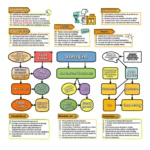
From our featured video: Our video organizes formative assessment around why to check understanding, when to check it, and five practical example formats. We use that sequence to keep the assessment tied to an instructional decision rather than collecting responses without acting on them.
In this comprehensive guide, we’re ditching the boring theory for 16+ high-impact, battle-tested strategies that you can implement in your classroom tomorrow. From the classic “One-Minute Paper” to digital powerhouses like Socrative and Plickers, we’ll show you how to activate students as learning resources for one another and turn confusion into clarity. Whether you’re a veteran educator looking to refresh your toolkit or a new teacher navigating the chaos of the first week, these techniques will help you stop guessing and start knowing exactly where your students stand.
The strongest check is one tied to a decision: move forward, provide another example, regroup students, or reteach. The sections below explain how to collect evidence efficiently and act on it.
Key Takeaways
- Formative assessment is not about grading; it’s about gathering real-time evidence to adjust instruction during the learning process.
- Student engagement skyrockets when strategies like Think-Pair-Share and Whiteboard Wars ensure every voice is heard, not just the loudest ones.
- Immediate feedback is crucial; waiting days to correct a misconception allows it to solidify, making it much harder to unlearn later.
- Technology amplifies impact when used correctly, with tools like Kahoot! and Google Forms providing instant data dashboards for differentiated instruction.
- 16+ proven strategies are detailed in this post, offering a diverse toolkit for every teaching style and classroom environment.
Table of Contents
- ⚡️ Quick Tips and Facts
- 📜 The Evolution of Formative Assessment: From Ancient Roots to Modern Classrooms
- 🧠 What Exactly Is Formative Assessment? (And Why It’s Not Just a Pop Quiz)
- 🚀 15+ High-Impact Formative Assessment Strategies to Transform Your Teaching
- 1. The One-Minute Paper: Capturing Instant Understanding
- 2. Exit Tickets: The Daily Pulse Check
- 3. Think-Pair-Share: Amplifying Student Voices
- 4. Traffic Light Systems: Visualizing Comprehension
- 5. Whiteboard Wars: Rapid-Fire Response
- 6. The 3-2-1 Bridge: Structuring Reflection
- 7. Misconception Mapping: Catching Errors Early
- 8. Peer Assessment Protocols: Students as Teachers
- 9. Digital Polling Tools: Real-Time Data Dashboards
- 10. The “Fist to Five” Check: Quick Consensus Building
- 1. Sentence Starters and Frames: Scaffolding Explanations
- 12. Gallery Walks: Collaborative Idea Development
- 13. The “Muddiest Point”: Identifying Confusion
- 14. Self-Assessment Rubrics: Fostering Metacognition
- 15. Hinge Point Questions: Deciding the Next Step
- 16. Two Stars and a Wish: Constructive Feedback Lops
- 🔍 Activating Prior Knowledge: The Secret Sauce for New Learning
- 🧩 Visible Thinking Routines: Making Student Thought Processes Transparent
- 🗣️ Student Explanation and Sense-Making: Moving Beyond “Right” or “Wrong”
- 🤝 Collaborative Learning Structures: Building Knowledge Together
- 🪞 Reflection and Metacognition: Teaching Students to Think About Their Thinking
- 🛠️ Diging Deper: Digital Tools and Apps for Formative Assessment
- 👩 🏫 10 Powerful Questions Teachers Must Ask to Drive Formative Assessment
- 🏫 7 Strategic Questions for School Leaders to Support Assessment Culture
- 📊 Common Pitfalls: What to Avoid When Implementing Formative Strategies
- 📈 Measuring the Impact: How Formative Assessment Boosts Student Achievement
- 🎓 Recommended for You: Further Reading and Professional Development
- 📚 Assessments, Solutions, and Research: The Evidence Base
- 💡 Conclusion: Turning Assessment into Action
- 🔗 Recommended Links
- ❓ FAQ: Your Burning Questions About Formative Assessment Answered
- 📖 Reference Links
⚡️ Quick Tips and Facts
Before we dive into the deep end of pedagogical theory, let’s grab a life jacket and float on the surface with some high-yield truths about formative assessment. If you’re a teacher feeling the weight of grading stacks of papers that tell you nothing until it’s too late, you are not alone. We’ve been there, staring at a red pen, wondering why the student who aced the quiz failed the essay.
Here is the golden rule that changes everything: Formative assessment is never graded. 🚫📝
If you assign points, you turn a diagnostic tool into a judgment. The moment a student sees a grade, they stop thinking about learning and start thinking about scoring. The goal is to gather evidence of learning while it is happening, not after the ship has sailed.
| Fact | Why It Matters |
|---|---|
| Frequency | Effective formative assessment happens multiple times per lesson, not just once a week. |
| Speed | Feedback should be imediate. Waiting 3 days to correct a misconception is like waiting 3 days to put out a fire. |
| Student Role | Students must be active participants, not passive recipients. They need to know what they don’t know. |
| Data Usage | The data must change instruction in real-time. If you collect data and ignore it, you aren’t assessing; you’re just collecting paper. |
Pro Tip from the Teacher Strategies™ Team: We once had a colleague who used to say, “If I can’t adjust my lesson plan based on what I see in the next 5 minutes, I’m just lecturing into the void.” That’s the spirit!
For a deeper dive into how these strategies fit into the bigger picture of teaching, check out our guide on Teacher Strategies to see how we approach classroom success holistically.
📜 The Evolution of Formative Assessment: From Ancient Roots to Modern Classrooms
You might think “formative assessment” is a buzzword born in the 21st century, but the concept is as old as education itself. Imagine a Socratic dialogue in ancient Athens. Socrates wasn’t just dumping facts; he was constantly probing, asking “Why?” and “How do you know?” to gauge his students’ understanding. That, my friends, was the original formative assessment.
Fast forward to the 1960s and 70s, when educational psychologists like Benjamin Bloom began formalizing the distinction between formative (during learning) and summative (after learning) assessment. Bloom argued that if we check understanding frequently, we can fix errors before they become permanent.
However, it wasn’t until the work of Dylan Wiliam and Siobhan Leahy in the 20s that the “Five Key Strategies” framework really took off, shifting the focus from “testing” to “responsive teaching.” Wiliam famously stated, “The most important thing that happens in a classroom is not the lesson plan, but the interaction between the teacher and the student.”
Today, we’ve moved from simple “thumbs up/down” to sophisticated digital dashboards, but the core philosophy remains unchanged: Teaching is a feedback loop, not a monologue.
🧠 What Exactly Is Formative Assessment? (And Why It’s Not Just a Pop Quiz)
Let’s clear up a massive misconception right now: A pop quiz is not a formative assessment. 🛑
If you give a quiz, grade it, put it in the gradebook, and move on, that is a summative assessment (or a low-stakes summative). It measures what happened in the past.
Formative assessment is the compass you use while you are walking the path. It answers three critical questions:
- Where is the learner now? (Current understanding)
- Where is the learner going? (Learning goals)
- How do we get them there? (Instructional next steps)
The “In-the-Moment” Difference
According to NWEA, formative assessment involves “in-the-moment check-ins used by teachers to gauge student understanding of content during instruction.” The primary goal is to provide instant feedback to identify learners needing help and adjust instruction accordingly.
Think of it like a chef tasting the soup while it’s cooking. If it’s too salty, they add water. If it’s bland, they add salt. They don’t wait until the customer takes a bite (the final exam) to realize the soup is inedible.
Why do we do this? Because learning gaps compound. If a student doesn’t understand fractions in 4th grade, they will drown in algebra in 8th grade. Formative assessment catches the leak before the boat sinks.
🚀 15+ High-Impact Formative Assessment Strategies to Transform Your Teaching
Ready to swap your boring worksheets for dynamic engagement? We’ve compiled a list of 16 strategies that go far beyond the standard “raise your hand if you get it.” These are battle-tested in real classrooms, from chaotic middle school halls to quiet elementary reading corners.
1. The One-Minute Paper: Capturing Instant Understanding
This is the classic for a reason. At the end of a lesson, ask students to answer two questions on a slip of paper:
- What was the most important thing you learned today?
- What question do you still have?
Why it works: It forces metacognition. Students have to synthesize the lesson and identify their own confusion.
Teacher Tip: Don’t just collect them; read them before the next class and start the next lesson by addressing the top 3 questions.
2. Exit Tickets: The Daily Pulse Check
Similar to the One-Minute Paper but often more specific. Use a prompt like: “Solve this one problem,” or “Explain this concept in one sentence.”
Variation: Use Google Forms for automatic data collection. You can instantly see who got the answer wrong and group them for the next day’s small group instruction.
3. Think-Pair-Share: Amplifying Student Voices
Don’t just ask a question and wait for the first hand.
- Think: Give students 30 seconds of silent thinking time.
- Pair: Have them discuss with a partner.
- Share: Call on random pairs to share.
The Secret Sauce: The “Think” time is crucial. It allows quieter students to formulate ideas and prevents the “I don’t know” reflex. This aligns with Dylan Wiliam’s strategy of activating students as learning resources for one another.
4. Traffic Light Systems: Visualizing Comprehension
Give students three colored cards (Red, Yellow, Green) or use cups on their desks.
- 🟢 Green: “I get it, I can teach it.”
- 🟡 Yellow: “I’m getting there, but I have questions.”
- 🔴 Red: “I’m lost, I need help immediately.”
Pro Move: Walk the room during independent work. If you see a sea of red, stop the class and reteach. If you see mostly green, let them move to the next challenge.
5. Whiteboard Wars: Rapid-Fire Response
Give every student a small whiteboard, marker, and eraser. Ask a question. Everyone writes the answer and holds it up on the count of three.
Why it’s better than hands: Every student can submit a response, allowing the teacher to scan the room for patterns and decide who needs another example or additional support.
6. The 3-2-1 Bridge: Structuring Reflection
Ask students to write:
- 3 things they learned.
- 2 interesting facts or surprises.
- 1 question they still have.
- Bridge: Ask them to revisit this at the end of the unit to see how their thinking has changed.
7. Misconception Mapping: Catching Errors Early
Present a statement that contains a common error (e.g., “The sun revolves around the earth”). Ask students to identify if it’s true or false and explain why.
Why it works: It forces students to confront their own mental models. It’s much harder to unlearn a misconception than to learn a new fact.
8. Peer Assessment Protocols: Students as Teachers
Give students a rubric and a peer’s work. Ask them to find “Two Stars and a Wish” (two things done well, one thing to improve).
Crucial Step: You must model this first! Show them what “good feedback” looks like. If you don’t, they will just write “Good job” or “Fix this.”
9. Digital Polling Tools: Real-Time Data Dashboards
Tools like Kahoot!, Quizz, or Socrative allow you to see data in real-time.
- Kahoot! is great for energy and gamification.
- Socrative is better for serious, low-stakes checks where you want to see individual responses without the competition.
- Plickers is a lifesaver for classrooms with no student devices (you scan paper cards with your phone).
👉 Shop Socrative on: Amazon | Socrative Official
10. The “Fist to Five” Check: Quick Consensus Building
Ask a question. Students hold up their hand:
- Fist: “I have no idea.”
- 1-2 fingers: “I’m confused.”
- 3-4 fingers: “I get it, but I’m not sure.”
- 5 fingers: “I could teach this to someone else.”
This gives you an instant visual histogram of the class’s understanding.
1. Sentence Starters and Frames: Scaffolding Explanations
For students who struggle to articulate their thoughts, provide sentence stems:
- “I think ______ because ______.”
- “The evidence for this is ______.”
- “I disagree with ______ because ______.”
This lowers the cognitive load and focuses the assessment on their reasoning, not their ability to construct a sentence from scratch.
12. Gallery Walks: Collaborative Idea Development
Post questions or problems on chart paper around the room. Groups rotate, adding their answers or comments to each station.
Why it works: It gets kids moving and allows you to see the process of their thinking as they build on each other’s ideas.
13. The “Muddiest Point”: Identifying Confusion
Simply ask: “What was the muddiest point in today’s lesson?”
This is a direct line to the students’ confusion. It validates that it’s okay to be confused and gives you a specific target for the next day’s review.
14. Self-Assessment Rubrics: Fostering Metacognition
Give students the rubric before they start the assignment. Ask them to rate their own work against the criteria before turning it in.
The Magic: When students self-assess, they often grade themselves more harshly than you would, and they identify exactly what they need to fix.
15. Hinge Point Questions: Deciding the Next Step
A “hinge point” is a critical moment in a lesson where the teacher must decide: “Do we move on, or do we stop and reteach?”
Design a question that reveals if the student has grasped the core concept. If more than 50% get it wrong, you must stop and reteach. If 80% get it right, you can move on.
16. Two Stars and a Wish: Constructive Feedback Lops
As mentioned in peer assessment, but also great for self-reflection.
- Star 1: Something I did well.
- Star 2: Another strength.
- Wish: One thing I want to improve next time.
🔍 Activating Prior Knowledge: The Secret Sauce for New Learning
You can’t build a house on a swamp. Similarly, you can’t teach new concepts if you don’t know what students already know (or think they know). Activating prior knowledge is the first step in the formative assessment cycle.
Strategies to Uncover the Past
- KWL Charts: What do you Know? What do you Want to know? What did you Learn? (The “K” column is your pre-assessment).
- Brainstorming Webs: Put the topic in the center and let students shout out associations. Map their misconceptions in real-time.
- Entrance Tickets: Before the lesson starts, ask a question that requires them to use a skill from the previous unit.
Connect to prior knowledge: Ask a short question that reveals what students already know, then use the responses to choose an example, explanation, or prerequisite review.
For more on how to differentiate based on what students already know, visit our Differentiated Instruction category.
🧩 Visible Thinking Routines: Making Student Thought Processes Transparent
Sometimes, the answer is right, but the thinking is wrong. Or the answer is wrong, but the thinking is brilliant. Visible Thinking Routines (popularized by Project Zero at Harvard) help you see the process, not just the product.
Key Routines
- See-Think-Wonder:
See: What do you observe? (Facts)
Think: What do you think is going on? (Interpretation)
Wonder: What questions do you have? (Curiosity) - Claim-Support-Question:
Claim: Make a statement.
Support: Provide evidence.
Question: Ask a question about the claim.
These routines are excellent for Critical Thinking development and help you spot logical fallacies before they become habits.
🗣️ Student Explanation and Sense-Making: Moving Beyond “Right” or “Wrong”
The most powerful formative assessment question is: “Tell me how you got that answer.”
When a student says “42,” ask “How?” If they say “I just knew it,” you haven’t assessed their understanding. If they say “I added 20 and 2,” you know they have the algorithm. If they say “I counted on my fingers,” you know they need a different strategy.
The “Explain What Matters” Technique
Ask students to summarize the single most critical idea of the lesson in two sentences or fewer. This forces them to distinguish between the “noise” and the “signal.”
🤝 Collaborative Learning Structures: Building Knowledge Together
Dylan Wiliam emphasizes that students should be “activated as learning resources for one another.” When students explain concepts to each other, they solidify their own understanding (the “Protégé Effect”).
Effective Structures
- Jigsaw: Each student becomes an expert one part of a topic and teaches it to their group.
- Carousel Brainstorming: Groups rotate around the room, adding ideas to a central prompt.
- Think-Pair-Share: (Mentioned earlier, but worth reiterating as the gold standard for collaboration).
Warning: Don’t just say “work in groups.” Without structure, this devolves into “social time.” Give them a specific task and a clear output.
🪞 Reflection and Metacognition: Teaching Students to Think About Their Thinking
Metacognition is the “secret sauce” of lifelong learning. It’s the ability to monitor one’s own learning.
How to Foster It
- Learning Logs: Have students write daily reflections on what helped them learn and what didn’t.
- Goal Setting: At the start of a unit, have students set a specific goal. At the end, have them reflect on whether they met it and why/why not.
- Error Analysis: Instead of just correcting a mistake, ask the student to analyze why they made the error. Was it a calculation error? A conceptual misunderstanding? A reading error?
🛠️ Diging Deper: Digital Tools and Apps for Formative Assessment
Technology can supercharge formative assessment, but remember: The tool is not the strategy. A fancy app won’t fix a bad question. However, the right tools can make data collection instant and engaging.
Top Tools Comparison
| Tool | Best For | Pros | Cons |
|---|---|---|---|
| Kahoot! | Gamified quizzes | High engagement, fun | Can be too fast-paced for deep thinking |
| Quizz | Self-paced quizzes | Students go at their own speed, memes | Less real-time teacher control |
| Socrative | Quick checks | Clean interface, instant data | Less “gamified” |
| Plickers | No-device classrooms | Free, uses paper cards | Requires teacher to scan each card |
| Flip | Video responses | Great for oral language, shy students | Can be time-consuming to watch |
| Google Forms | Custom surveys | Free, integrates with Sheets | Can be dry if not designed well |
👉 Shop Plickers on: Amazon | Plickers Official
Note: While Flipgrid was a favorite for video responses, it has been discontinued. Flip (formerly Flipgrid) is the successor, but some educators are moving to Sesaw for portfolio-style video assessments.
👩 🏫 10 Powerful Questions Teachers Must Ask to Drive Formative Assessment
The quality of your assessment depends on the quality of your questions. Avoid “Yes/No” questions at all costs.
- “What makes you say that?”
- “Can you explain that to someone who wasn’t here?”
- “How does this connect to what we learned yesterday?”
- “What would happen if we changed this variable?”
- “Is there another way to solve this?”
- “Where do you think you got stuck?”
- “What evidence supports your answer?”
- “If you had to teach this to a 5-year-old, how would you explain it?”
- “What is the most confusing part of this for you right now?”
- “How do you know you’re ready to move on?”
🏫 7 Strategic Questions for School Leaders to Support Assessment Culture
Formative assessment isn’t just a teacher thing; it’s a school culture thing. Leaders need to ask:
- “How are we protecting time for teachers to analyze formative data?”
- “Are we grading formative work, or are we using it for feedback only?”
- “What professional development are we providing on questioning techniques?”
- “How do we ensure equity in who gets called on during formative checks?”
- “Are we using data to differentiate instruction, or just to group students?”
- “How are we supporting teachers who are struggling with the ‘hinge point’ decision?”
- “What does a ‘culture of error’ look like in our hallways?”
📊 Common Pitfalls: What to Avoid When Implementing Formative Strategies
Even the best intentions can go sideways. Here are the traps to avoid:
- The “Grading Trap”: Turning a formative check into a graded assignment. This kills the risk-taking necessary for learning.
- The “Data Hoarding Trap”: Collecting data but never using it. If you don’t adjust instruction, the assessment is useless.
- The “One-Size-Fits-All” Trap: Using the same strategy for every lesson. Mix it up!
- The “Speed Trap”: Moving too fast. Formative assessment takes time. If you feel rushed, you’re likely skipping the “check” phase.
📈 Measuring the Impact: How Formative Assessment Boosts Student Achievement
Does it actually work? Yes.
Research by John Hattie (Visible Learning) places formative assessment at the top of the list of factors influencing student achievement, with an effect size of 0.90 (well above the average of 0.40).
Why?
- Early Intervention: Catches errors before they become permanent.
- Student Agency: Students take ownership of their learning.
- Responsive Teaching: Teachers stop teaching to the middle and start teaching to the individual.
🎓 Recommended for You: Further Reading and Professional Development
Want to go deeper? Here are some resources we swear by:
- Book: Embedded Formative Assessment by Dylan Wiliam. This is the bible of the field.
- Book: Classroom Assessment for Student Learning by Rick Stiggins.
- Website: NWEA’s Teach. Learn. Grow. blog for practical strategies.
- Website: Edutopia for video examples and case studies.
For more strategies on Assessment Techniques, explore our dedicated category.
📚 Assessments, Solutions, and Research: The Evidence Base
The evidence formative assessment is robust. From Rosenshine’s Principles of Instruction to Cognitive Load Theory, the research consistently points to the same conclusion: Feedback loops drive learning.
- Rosenshine: Emphasizes checking for understanding at every step.
- Hattie: Highlights the power of feedback.
- Black & Wiliam: Their seminal work Inside the Black Box (198) revolutionized the field.
💡 Conclusion: Turning Assessment into Action

So, we’ve covered the history, the strategies, the tools, and the pitfalls. But here is the million-dollar question: What will you do tomorrow?
You don’t need to overhaul your entire curriculum. Start small. Pick one strategy from this list—maybe the Fist to Five or the One-Minute Paper—and try it in your next lesson. Watch the room. Look for the red flags. Adjust your teaching.
Remember, the goal isn’t to collect data; it’s to change what happens next. If you can do that, you’ve mastered formative assessment.
Final Thought: As we said at the beginning, poor teachers teach regardless of understanding. Master teachers use assessment to decide whether to move forward or stop and reteach. Which one do you want to be?
🔗 Recommended Links
Books & Resources:
- Embedded Formative Assessment by Dylan Wiliam: Amazon | Solution Tree Press
- Classroom Assessment for Student Learning by Rick Stiggins: Amazon
- NWEA Formative Assessment Archive: NWEA Blog
Tools:
- Kahoot!: Kahoot! Official
- Socrative: Socrative Official
- Plickers: Plickers Official
❓ FAQ: Your Burning Questions About Formative Assessment Answered

What tools and technologies enhance formative assessment in the classroom?
While low-tech tools like whiteboards and sticky notes are incredibly effective, digital tools like Kahoot!, Socrative, Plickers, and Google Forms can streamline data collection and provide instant visualizations. The best tool is the one that fits your specific classroom context and doesn’t distract from the learning.
Read more about “12 Game-Changing Strategies for Struggling Learners 🚀 (2026)”
How can formative assessments help identify student learning gaps early?
By checking for understanding during the lesson, teachers can spot misconceptions immediately. For example, if a student consistently chooses the wrong answer on a “hinge point” question, the teacher knows to reteach that specific concept before moving on, preventing the gap from widening.
Read more about “15 Formative Assessment Strategies to Transform Your Classroom in 2025 🎯”
What are some quick formative assessment techniques for busy teachers?
- Exit Tickets: 2 minutes at the end of class.
- Thumbs Up/Down: Instant visual check.
- Think-Pair-Share: No prep required.
- One-Minute Paper: Quick reflection.
- Whiteboards: Rapid response for the whole class.
Read more about “📝 15 Best Lesson Plan Templates for Teachers (2026)”
How do formative assessment strategies support differentiated instruction?
Formative assessment provides the data needed to differentiate. If you know that 30% of the class is struggling with a concept, you can pull them into a small group for reteaching while the rest of the class works on an extension activity. It moves you from “teaching to the middle” to “teaching to the individual.”
Read more about “🚀 12 Proven Strategies to Differentiate Instruction for Every Student (2026)”
What role do formative assessments play in student engagement?
When students see that their feedback matters and that the lesson changes based on their input, they feel more invested. Strategies like Think-Pair-Share and Whiteboard Wars ensure that every student is participating, not just the ones who raise their hands first.
Read more about “🚀 15 Evidence-Based Strategies to Skyrocket Student Engagement (2026)”
How can teachers implement formative assessments to improve student learning?
- Clarify learning goals so students know what they are aiming for.
- Elicit evidence of learning through questions and tasks.
- Provide feedback that moves learning forward (not just a grade).
- Activate students as resources for each other.
- Activate students as owners of their own learning.
Read more about “🚀 15 Strategies to Master Student Self-Assessment (2026)”
What are the most effective formative assessment strategies for classroom success?
There is no single “best” strategy, but Dylan Wiliam’s Five Key Strategies are widely considered the most effective framework. Within that, Hinge Point Questions and Exit Tickets are particularly powerful for real-time decision making.
Read more about “🚀 The 5 Pedagogy Strategies That Actually Work (2026)”
What are some examples of low-stakes formative assessments that can be used in the classroom?
- Traffic Light Cups: Students signal their understanding with colors.
- Muddiest Point: Students write down their biggest confusion.
- Fist to Five: Students rate their confidence.
- Two Stars and a Wish: Peer feedback on work.
Read more about “50+ Exit Ticket Strategies to Assess Understanding Instantly 🎟️”
How can formative assessments be used to differentiate instruction for diverse learners?
Use the data to group students flexibly. If a formative check shows that some students have mastered the concept, they can move to enrichment. Those who haven’t can receive targeted support. This ensures that every student is working at their “just right” level.
Read more about “🧠 15 Strategies for Using Graphic Organizers to Support Learning (2026)”
How can teachers use data from formative assessments to inform instruction?
The data should dictate the next step. If the majority of the class got a question wrong, stop and reteach. If only a few got it wrong, pull them aside for a mini-lesson. If everyone got it right, move on.
Read more about “🚀 12 Personalized Learning Approaches for Educators (2026)”
What are the benefits of using technology formative assessments?
Technology can provide instant data, reduce the grading burden, and engage students who might be shy in face-to-face interactions. It also allows for easy tracking of progress over time.
Read more about “7 Assessment Methods That Actually Work in Lesson Planning (2026) 🚀”
How can formative assessments improve student learning outcomes?
By closing the gap between where a student is and where they need to be, formative assessment ensures that learning is cumulative and secure. It prevents the “snowball effect” of misunderstandings.
Read more about “🚀 15 Genius Differentiated Instruction Lesson Plans for 2026”
What are some effective formative assessment strategies for the classroom?
- Exit Tickets
- Think-Pair-Share
- Whiteboard Wars
- Traffic Light Systems
- Hinge Point Questions
- One-Minute Papers
Read more about “7 Strategies for Teaching Scientific Inquiry & Experimentation 🧪”
📖 Reference Links
- Dylan Wiliam’s Five Brilliant Formative Assessment Strategies: Teacherhead
- NWEA: Easy Formative Assessment Strategies: NWEA Blog
- Edutopia: 7 Smart, Fast Ways to Do Formative Assessment: Edutopia
- Black, P., & Wiliam, D. (198). Inside the Black Box: Raising Standards Through Classroom Assessment: Phi Delta Kappan
- Hattie, J. (209). Visible Learning: A Synthesis of Over 80 Meta-Analyses Relating to Achievement: Routledge
- Rosenshine, B. (2012). Principles of Instruction: American Educator