Support our educational content for free when you buy through links on our site. Learn more
🚀 15 Proven Strategies for Teaching STEM Subjects Effectively (2026)

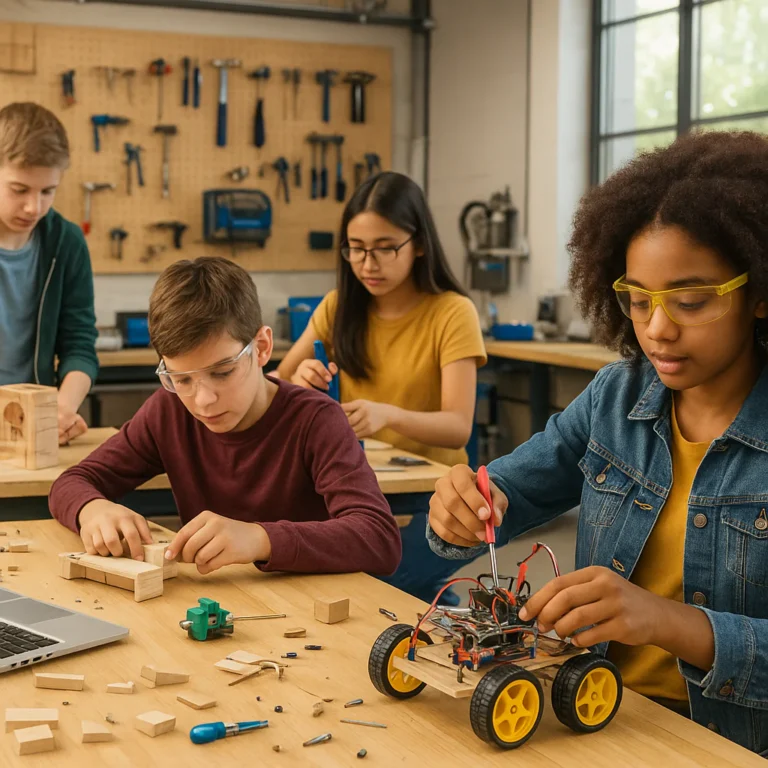
The secret to mastering Strategies for teaching STEM subjects effectively isn’t a fancy new gadget or a perfect lesson plan; it’s creating a classroom culture where failure is celebrated as the first step toward discovery. We’ve seen students who hated math suddenly light up when they realized their “wrong” answer helped them build a bridge that actually held weight.
Forget the old-school drills that turned science into a memorization contest. Real STEM learning happens when students are hands-on, minds-on, and ready to iterate. As one study from the National Science Foundation found, students engaged inquiry-based learning show significantly higher retention rates than those taught via traditional lectures.
Imagine a classroom where a spilled cup of glue isn’t a disaster, but a data point for the next experiment. That shift in perspective is the magic ingredient. It transforms the dreaded “I’m not a math person” into “I’m an engineer who just needs to tweak the design.”
Ready to turn your classroom into an innovation hub? Here is exactly how to do it.
Key Takeaways
- Shift the Mindset: Success relies on normalizing failure as a critical part of the engineering design process, not a sign of incompetence.
- Prioritize Inquiry: Move away from rote memorization and embrace Project-Based Learning (PBL) and Inquiry-Based Learning to foster genuine curiosity.
- Integrate Real-World Context: Connect abstract concepts to real-world applications immediately to answer the eternal student question: “When will I ever use this?”
- Ensure Inclusivity: Effective strategies must be accessible and inclusive, ensuring every student, regardless of background or ability, can build a strong STEM identity.
- Leverage the Right Tools: Balance hands-on projects with digital literacy tools like virtual simulations to maximize engagement and understanding.
Table of Contents
- ⚡️ Quick Tips and Facts
- 📜 From Sputnik to Standards: A Brief History of STEM Education
- 🚀 15 Proven Strategies for Teaching STEM Subjects Effectively
- 1. Embrace the Power of Project-Based Learning (PBL)
- 2. Master the Art of Inquiry-Based Learning
- 3. Integrate Real-World Applications Immediately
- 4. Leverage Technology and Digital Literacy Tools
- 5. Foster a Growth Mindset and Resilient STEM Identity
- 6. Prioritize Accessibility and Inclusivity in Every Lesson
- 7. Align Instruction with Next Generation Science Standards (NGSS)
- 8. Utilize Hands-On STEM Projects and Kits
- 9. Implement Collaborative Group Work Dynamics
- 10. Connect Math and Science Through Interdisciplinary Units
- 1. Use Formative Assessment to Drive Instruction
- 12. Incorporate Engineering Design Processes
- 13. Build Strong Community and Industry Partnerships
- 14. Secure STEM Grants and Funding Opportunities
- 15. Create a Safe Environment for Failure and Iteration
- 🛠️ Essential STEM Education Strategies for the Modern Classroom
- 🌟 Benefits of Effective STEM Teaching Strategies
- 🧩 Overcoming Common Challenges in STEM Instruction
- 📊 Comparing STEM Curriculum Providers: Kid Spark, Mystery Science, and More
- 🤝 We Help Children Learn and Love STEM: Building Student Confidence
- 🔍 STEM Education Solutions for Diverse Learners
- 💡 Hands-On STEM Projects That Actually Work
- 📱 Integrating Technology Without Losing the Human Touch
- 🧠 Cultivating STEM Identity in Underepresented Groups
- 🌐 Digital Literacy and Computational Thinking in STEM
- 🏆 Conclusion
- 🔗 Recommended Links
- ❓ FAQ
- 📚 Reference Links
⚡️ Quick Tips and Facts
Before we dive into the nitty-gritty of lesson planning, let’s hit the reset button on what you think you know about STEM. We’ve all been there: staring at a stack of textbooks wondering how to make “Newton’s Laws” feel less like a snoze-fest and more like a superhero origin story.
Here are the non-negotiable truths we’ve learned from years of classroom chaos and triumphs:
- STEM is a Verb, Not a Noun: It’s not just about the subjects; it’s about the process. If your students aren’t failing, iterating, and trying again, are they really doing STEM? ❌
- The “Aha!” Moment is Rarely Instant: It usually comes after three failed prototypes and a spilled cup of glue. Patience is your best teaching tool. ✅
- Tech is a Tool, Not a Teacher: A tablet won’t teach a child to code if the teacher hasn’t taught them how to think logically first.
- Failure is Data: In STEM, a “wrong” answer is just data pointing toward the right one. We need to rebrand “failure” as “iteration.”
Pro Tip: If you’re feeling overwhelmed, remember that differentiated instruction is your secret weapon. Not every student needs to build a robot to understand engineering; some just need to design the blueprint. Check out our guide on Differentiated Instruction to see how to tailor these high-level concepts to every learner.
📜 From Sputnik to Standards: A Brief History of STEM Education
Why do we teach STEM the way we do? To understand where we’re going, we have to look at the rocket fuel that got us here.
It wasn’t always about “innovation” and “critical thinking.” For a long time, science and math were taught in silos, often through rote memorization. Then came 1957. When the Soviet Union launched Sputnik, the US education system had a collective panic attack. The fear? We were falling behind in the space race.
This led to the National Defense Education Act, which poured money into science and math, but the focus was still heavily on content delivery rather than application. Fast forward to the 21st century, and the conversation shifted. We realized that knowing the formula for gravity isn’t as useful as understanding how to use that formula to land a rover on Mars.
The Next Generation Science Standards (NGSS) emerged from this shift, moving us away from “what do you know?” to “what can you do with what you know?” This framework emphasizes three dimensions:
- Disciplinary Core Ideas (The content)
- Science and Engineering Practices (The doing)
- Crosscuting Concepts (The connecting)
As we navigate these modern standards, we often find ourselves asking: How do we balance the rigor of NGSS with the reality of a 45-minute class period? The answer lies in the strategies we’re about to unpack.
🚀 15 Proven Strategies for Teaching STEM Subjects Effectively
You asked for a list, and we’re delivering a kitchen-sink approach. We’ve compiled 15 strategies that move beyond theoretical and into the practical. These aren’t just buzzwords; they are the tactics that turn a room of bored teenagers into a hive of active problem solvers.
1. Embrace the Power of Project-Based Learning (PBL)
Forget the worksheet. PBL is about authentic inquiry. It’s not “here’s a problem, solve it.” It’s “here’s a community issue, how do we fix it?”
- The Process:
- Identify the Problem: Students find a real-world issue (e.g., local water quality).
- Plan a Solution: Research and design a prototype.
- Develop: Build the solution.
- Refine: Test, fail, and improve based on feedback.
Why it works: As noted by Kid Spark Education, “A major reason why hands-on learning is so effective is because this type of education promotes student agency.” When students own the problem, they own the solution.
2. Master the Art of Inquiry-Based Learning
Stop giving answers. Start asking better questions. Inquiry-based learning flips the script: the teacher becomes the facilitator, and the students become the investigators.
- How to do it: Instead of telling students the parts of a cell, ask, “If this cell were a city, what would the nucleus be?” Let them hypothesize, test, and discover. This builds critical thinking skills that textbooks can’t teach. For more on fostering this mindset, explore our resources on Critical Thinking.
3. Integrate Real-World Applications Immediately
The number one question we hear? “When will I ever use this?”
- The Fix: Connect every lesson to their life.
Math: Calculate the trajectory of a basketball shot.
Science: Analyze the chemistry of their favorite snack.
Engineering: Design a better lunchbox.
As the “first YouTube video” perspective suggests, “STEM is not only what happens in the classroom; STEM is every single day!” Whether it’s the biology of their own bodies or the math of grocery shopping, making these connections is crucial.
4. Leverage Technology and Digital Literacy Tools
Technology shouldn’t be a distraction; it should be a magnifier of learning.
- Tools: Use CAD software for design, coding platforms for logic, and virtual labs for dangerous experiments.
- The Balance: Be careful not to let tech replace the human element. As the video warns, over-reliance on voice assistants can hinder mental calculation. Use tech to enhance reasoning, not replace it.
5. Foster a Growth Mindset and Resilient STEM Identity
Many students, especially girls and underepresented minorities, suffer from “I’m not a math person” syndrome.
- Strategy: Celebrate the struggle. When a bridge collapses, don’t say “try again.” Say, “Great data! Now we know what not to do.”
- Goal: Build a STEM identity where students see themselves as capable creators, not just consumers of knowledge.
6. Prioritize Accessibility and Inclusivity in Every Lesson
STEM is for everyone. If your lab requires fine motor skills that exclude some students, you need a backup plan.
- Action: Use universal design principles. Provide digital alternatives, varied group roles, and multiple ways to demonstrate understanding. Check out our Differentiated Instruction category for specific strategies.
7. Align Instruction with Next Generation Science Standards (NGSS)
NGSS isn’t just a checklist; it’s a roadmap.
- Focus: Ensure your lessons hit the three dimensions: Core Ideas, Practices, and Crosscuting Concepts.
- Tip: Use the “5E” model (Engage, Explore, Explain, Elaborate, Evaluate) to structure your NGSS-aligned lessons.
8. Utilize Hands-On STEM Projects and Kits
There is no substitute for getting your hands dirty.
- Why: Physical manipulation of materials cements abstract concepts.
- Resource: Programs like Kid Spark Education provide robust, reusable materials designed for long-term investment, ensuring students can learn key concepts while aligning with NGSS.
9. Implement Collaborative Group Work Dynamics
STEM is rarely a solo sport.
- Strategy: Assign specific roles (Project Manager, Data Analyst, Engineer, Scribe) to ensure everyone participates.
- Benefit: This mirrors the real-world workplace and builds Collaborative Learning skills.
10. Connect Math and Science Through Interdisciplinary Units
Stop teaching math and science in isolation.
- Example: Use physics to teach algebra. Use biology to teach statistics.
- Result: Students see the “big picture” and understand that these subjects are interconnected tools for solving problems.
1. Use Formative Assessment to Drive Instruction
Stop waiting for the final exam to see if they get it.
- Methods: Use exit tickets, “think-pair-share,” and quick polls.
- Goal: Adjust your teaching in the moment. If 50% of the class is confused about a concept, don’t move on. Re-teach it differently. Learn more about Assessment Techniques to master this.
12. Incorporate Engineering Design Processes
Teach students to think like engineers.
- The Cycle: Ask -> Imagine -> Plan -> Create -> Improve.
- Application: Even in science class, have students design an experiment as if they were engineering a solution to a problem.
13. Build Strong Community and Industry Partnerships
Bring the real world into the classroom.
- Ideas: Invite local engineers for Q&As, partner with universities for lab access, or have students solve problems for local businesses.
14. Secure STEM Grants and Funding Opportunities
Don’t let budget be the excuse.
- Action: Look for grants from organizations like DonorsChoose, National Science Foundation, or local industry partners.
- Tip: Write compelling proposals that highlight student impact and alignment with standards.
15. Create a Safe Environment for Failure and Iteration
This is the most important one. If students are afraid to fail, they won’t take risks.
- Culture: Make “failure” a celebrated part of the process. Display “failed” prototypes alongside successful ones.
- Mantra: “We don’t fail; we iterate.”
🛠️ Essential STEM Education Strategies for the Modern Classroom
Now that we have the 15 strategies, let’s zoom in on the how. How do you actually implement these in a classroom that might be short on time, space, or funds?
Breaking Down the Abstract
One of the biggest hurdles in STEM is visualization. As ExploreLearning points out, concepts like atoms, galaxies, or plate tectonics are impossible to see with the naked eye.
- Strategy: Break these concepts into “digestible chunks.”
- Analogy: Compare animal cell to a city. The nucleus is city hall, the mitochondria are power plants.
- Visual Aids: Use mind maps, flow charts, and 3D models.
The Role of Storytelling
Humans are wired for stories.
- Technique: Turn a lesson on the water cycle into an adventure of a droplet named “Drip.”
- Impact: This improves memory retention and engagement. It transforms dry facts into a narrative journey.
Virtual vs. Physical Labs
Can you replace a physical lab with a virtual one? Sometimes, yes.
- When to use Virtual: For dangerous experiments (e.g., handling hazardous chemicals) or when resources are scarce.
- When to use Physical: For developing fine motor skills and the tactile experience of “real” science.
- Hybrid Approach: Use virtual simulations (like ExploreLearning Gizmos) to prep students for the physical lab, or to allow them to repeat trials they couldn’t afford to do in real life.
🌟 Benefits of Effective STEM Teaching Strategies
Why go through all this trouble? Why not just stick to the textbook?
- Student Engagement: When students see the relevance, they care.
- Critical Thinking: They learn to analyze, not just memorize.
- Future Readiness: The workforce needs problem solvers, not fact-recallers.
- Equity: Effective strategies close the gap for underepresented groups, fostering a diverse future workforce.
🧩 Overcoming Common Challenges in STEM Instruction
Let’s be real: it’s not all smooth sailing. Here are the hurdles we face and how to jump them.
| Challenge | Why it Happens | The Fix |
|---|---|---|
| Lack of Time | Curriculum is packed; labs take forever. | Use “micro-labs” or integrate STEM into other subjects (e.g., math in art). |
| Limited Resources | No budget for kits or tech. | Use low-cost materials (recyclables) and free virtual simulations. |
| Student Anxiety | Fear of math/science failure. | Normalize failure; use growth mindset language. |
| Teacher Confidence | “I’m not a science person.” | Lean on high-quality curriculum resources and professional development. |
📊 Comparing STEM Curriculum Providers: Kid Spark, Mystery Science, and More
Not all curicula are created equal. Let’s look at how some of the big players stack up against the needs of a modern classroom.
Feature Comparison Table
| Feature | Kid Spark Education | Mystery Science | ExploreLearning Gizmos |
|---|---|---|---|
| Primary Focus | Hands-on, NGSS-aligned labs | Video-driven, inquiry-based lessons | Virtual simulations & data analysis |
| Best For | Elementary/Middle School | K-5 (with some 6-8) | Math & Science (K-12) |
| Materials | Physical kits provided | Minimal (mostly household items) | Digital only |
| NGSS Alignment | Explicitly aligned | Aligned | Aligned |
| Tech Integration | Moderate (suplemental) | High (video-centric) | Very High (simulation-centric) |
| Student Agency | High (Project-based) | Moderate (Guided inquiry) | High (Exploration-based) |
Deep Dive: Kid Spark Education
Kid Spark shines when it comes to hands-on learning. Their labs are designed to be reusable and robust, making them a great long-term investment.
- Pros: Promotes student agency, aligns perfectly with NGSS, includes professional learning for teachers.
- Cons: Requires physical storage space for kits; initial cost can be higher than digital-only options.
Deep Dive: ExploreLearning Gizmos
Gizmos is the go-to for visualizing the abstract.
- Pros: Allows for unlimited trials, eliminates waste, perfect for remote or hybrid learning.
- Cons: Lacks the tactile experience of physical labs; requires reliable internet.
Deep Dive: Mystery Science
Mystery Science is fantastic for engagement and ease of use.
- Pros: High-quality videos, minimal prep time for teachers, uses household materials.
- Cons: Less focus on deep engineering design compared to Kid Spark; digital dependency.
Verdict: If you have the budget and space, Kid Spark offers the most comprehensive hands-on experience. If you need to visualize complex concepts or have limited resources, Gizmos is unbeatable. For quick, engaging lessons with minimal prep, Mystery Science is a winner.
🤝 We Help Children Learn and Love STEM: Building Student Confidence
At Teacher Strategies™, we believe that the goal isn’t just to teach STEM; it’s to help children love STEM.
- The Shift: Move from “I have to do this” to “I get to do this.”
- The Method: Create an environment where curiosity is rewarded.
- The Outcome: Students who see themselves as scientists, engineers, and mathematicians.
When a student says, “I built this,” they aren’t just holding a project; they are holding a piece of their own identity.
🔍 STEM Education Solutions for Diverse Learners
One size does not fit all.
- ELL Students: Use visual aids, sentence stems, and hands-on models to bridge language gaps.
- Students with Disabilities: Ensure materials are accessible (e.g., tactile models for visually impaired students).
- Gifted Learners: Provide extension activities that challenge them to go deeper or apply concepts in novel ways.
💡 Hands-On STEM Projects That Actually Work
Here are three projects you can try tomorrow:
- The Paper Bridge Challenge:
Goal: Build a bridge that holds 10 pennies using only paper and tape.
Skills: Engineering design, structural integrity, budgeting. - The Egg Drop:
Goal: Protect an egg from a 10-foot drop.
Skills: Physics (gravity, impact), material science, iteration. - The Water Filtration System:
Goal: Clean dirty water using sand, gravel, and charcoal.
Skills: Environmental science, chemistry, problem-solving.
📱 Integrating Technology Without Losing the Human Touch
Technology is a double-edged sword.
- The Risk: Students become passive consumers of screens.
- The Solution: Use tech as a tool for creation.
- Have students code their own games.
- Use 3D printers to create prototypes.
- Use data logers to collect real-world data.
- The Rule: If the tech is doing the thinking, it’s not STEM. If the student is using the tech to think, it is.
🧠 Cultivating STEM Identity in Underepresented Groups
We have a representation problem in STEM.
- The Issue: Girls and minorities often don’t see themselves in STEM roles.
- The Fix:
- Highlight diverse role models.
- Create inclusive classroom cultures.
- Ensure all students have access to high-quality STEM experiences.
- Impact: When students see people like them succeeding in STEM, they believe they can too.
🌐 Digital Literacy and Computational Thinking in STEM
It’s not just about coding; it’s about computational thinking.
- Decomposition: Breaking big problems into small ones.
- Pattern Recognition: Seeing trends in data.
- Abstraction: Focusing on the important details.
- Algorithms: Creating step-by-step solutions.
These skills are essential for the future workforce, regardless of the specific career path.
🏆 Conclusion

So, we’ve covered the history, the strategies, the tools, and the challenges. But here’s the real question: Are you ready to make the shift?
Teaching STEM effectively isn’t about having the fanciest lab or the most expensive kit. It’s about mindset. It’s about creating a space where failure is a stepping stone, where curiosity is the engine, and where every student sees themselves as a capable problem solver.
Whether you choose the hands-on approach of Kid Spark, the visual power of Gizmos, or the engaging simplicity of Mystery Science, the key is to start. Start small. Start with one project. Start by asking a better question.
Remember the words from our earlier video: “The only way and the best way for you to love teaching STEM or helping our students in STEM is to help them realize that STEM is everywhere!”
You have the strategies. You have the tools. Now, go make some magic.
🔗 Recommended Links
👉 Shop STEM Curriculum and Kits:
- Kid Spark Education: Kid Spark Education Official Website | Search for Kid Spark on Amazon
- ExploreLearning Gizmos: ExploreLearning Official Website | Search for Gizmos on Amazon
- Mystery Science: Mystery Science Official Website
Books for Teachers:
- STEM by Design by Anne Jolly – Find on Amazon
- The STEM Classroom by Douglas Fisher – Find on Amazon
Professional Development:
❓ FAQ

What are common challenges in teaching STEM and how to overcome them?
Common challenges include lack of time, limited resources, and student anxiety.
- Overcoming Time: Integrate STEM into other subjects (e.g., math in art) or use “micro-labs.”
- Overcoming Resources: Use low-cost materials (recyclables) and free virtual simulations like Gizmos.
- Overcoming Anxiety: Normalize failure and use growth mindset language.
Read more about “🎬 10 Proven Strategies for Teaching Media Production (2026)”
How can teachers foster collaboration in STEM subjects?
Assign specific roles (Project Manager, Data Analyst, etc.) to ensure everyone participates. Use Collaborative Learning strategies where students must rely on each other to solve problems. Check out our Collaborative Learning resources for more.
Read more about “🚀 10 Strategies for Promoting Interdisciplinary Teaching Approaches (2026)”
How do you engage diverse learners in STEM classrooms?
Use Universal Design for Learning (UDL) principles. Provide multiple means of representation (visuals, audio, text), engagement (hands-on, digital, social), and expression (writing, building, speaking). Ensure materials are accessible to students with disabilities and ELL students.
Read more about “12 Proven Strategies for Managing Hybrid and Remote Classrooms (2026) 🚀”
What are effective assessment methods for STEM education?
Move beyond multiple-choice tests. Use formative assessments like exit tickets, project rubrics, and peer reviews. Assess the process (how they solved the problem) as well as the product (the final result).
Read more about “🌲 10 Proven Strategies for Integrating Outdoor Education (2026)”
How can technology be integrated into STEM teaching effectively?
Use technology as a tool for creation, not just consumption. Have students code, design 3D models, or analyze data. Avoid using tech to replace the human element; instead, use it to enhance reasoning and problem-solving.
Read more about “7 Proven Strategies for Promoting Interdisciplinary STEAM Education 🚀”
What strategies help engage underepresented students in STEM fields?
Highlight diverse role models, create inclusive classroom cultures, and ensure equitable access to high-quality STEM experiences. Foster a STEM identity where all students see themselves as capable scientists and engineers.
How can teachers encourage collaboration in STEM learning?
(See “How can teachers foster collaboration…”) Use structured group work with defined roles and encourage peer-to-peer teaching.
Read more about “🤖 12 Proven Strategies for Teaching Coding with Robotics (2026)”
What are effective assessment methods for STEM subjects?
(See “What are effective assessment methods…”) Focus on process-oriented assessments like project rubrics and formative checks.
Read more about “🧠 10 Proven Ways to Develop Metacognitive Skills in Students (2026)”
How do you differentiate instruction in STEM classrooms?
Use Differentiated Instruction strategies to tailor content, process, and product to individual student needs. Provide varied levels of challenge and multiple ways to demonstrate understanding.
Read more about “10 Proven Strategies for Promoting Bilingualism in Classrooms 🌍”
What role does project-based learning play in STEM teaching?
PBL is central to STEM. It promotes student agency, connects learning to real-world problems, and fosters critical thinking. It allows students to apply knowledge in authentic contexts.
Read more about “🧠 10 Trauma-Informed Teaching Strategies for 2026”
How can technology be integrated into STEM education effectively?
(See “How can technology be integrated…”) Focus on creation and problem-solving. Use simulations, coding, and data analysis tools to enhance learning.
Read more about “🚀 15 Strategies for Utilizing Collaborative Digital Platforms in Group Work (2026)”
What are the best hands-on activities for teaching STEM subjects?
The Paper Bridge Challenge, Egg Drop, and Water Filtration System are excellent starting points. They are low-cost, high-engagement, and teach core engineering and scientific principles.
Read more about “📝 15 Best Lesson Plan Templates for Teachers (2026)”
📚 Reference Links
- Kid Spark Education: Strategies for Teaching STEM Subjects Effectively
- ExploreLearning: Strategies to Teach STEM Topics
- National Science Teaching Association (NSTA): NGSS Framework
- National Research Council: A Framework for K-12 Science Education
- PISA: STEM Education and Skills